Eurostars Hotel Company: reinventing hotel spaces after Covid
Written by ISP Integration editorial teamCategory: SUCCESS STORIES
Published:
In recent months, hotels have had to adapt to face an unprecedented scenario.
Beyond guaranteeing health safety in their facilities, they have also had to meet other needs linked to new uses of spaces and to the services and amenities guests expect to find in a hotel.
To tackle these new challenges, the hotel chain Eurostars Hotel Company is challenging its customers, through the innovation platform Eurostars Hotel Tester Ideas , to rethink its various spaces with design solutions that are both functional and friendly.
This is how the chain’s customers imagine the transformation hotel interiors will undergo
Safe environments
Guaranteeing safe and secure environments is undoubtedly the first need hotels will have to meet. As well as implementing the relevant protocols, there are other measures to bear in mind:
- Use of more minimalist furniture and fewer items in rooms.
- New materials for surfaces and textiles that make cleaning and disinfection easier.
- Flow design, especially in access areas and lifts. Creation of larger, open-plan spaces that make circulation and access easier in transit areas.
Technology and digitalisation
Technology is one of the pillars on which many of the solutions customers put forward in their proposals are based. The main aims of its use are to minimise close contact, simplify formalities on arrival and increase guest comfort in the room.
Technology solutions are applied both in the lobby, to speed up guests’ check-in, and in the room, where home automation to improve guest comfort takes priority, applied to lighting, curtain opening, the shower and other functions.
These are joined by:
- Digital screens for communicating with guests
- Mobile apps to avoid contact with surfaces or people
- Automated doors and access
- Payment management via mobile devices
- QR information platforms, digital menus or service directories to consult online
Multifunctional spaces
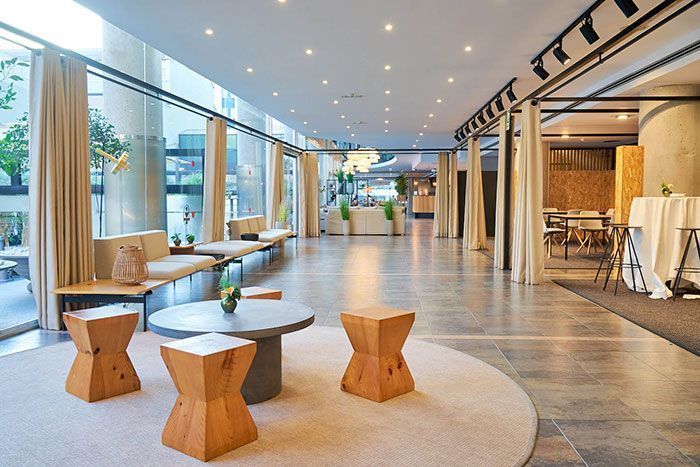
Versatility in the design of spaces is the goal. This translates into flexible solutions in both layout and furniture design. The hotel becomes a safe and secure environment, and many activities take place on the premises without the need to go outside. In this respect, the restaurant and café gain weight and prominence.
In addition, many guests combine work and leisure during their stay, extending weekends or prolonging their holidays. The new flexibility in working arrangements turns the hotel into an alternative residence, which has an impact on the services and amenities it must offer.
The room is also being rethought, bearing in mind that guests will carry out a greater number of activities and routines in it. These range from physical exercise in the room itself – which requires free space – to remote working. Guests no longer just need a desk; they want facilities to work from the bed itself, the centrepiece of the room.
This requires providing mobile auxiliary furniture and ensuring there are connectors and power sockets
Layouts adapted for bubble groups are also being considered, meaning accommodation units that include connecting rooms and small areas for collective use restricted to a small group of guests. This point embraces the concept of coliving, a trend some hotels have adopted as an alternative to the holiday tourist.
Modular and reconfigurable elements that make the most of the facilities and allow the same space to serve different purposes, especially communal areas designed for working,
relaxing or socialising.
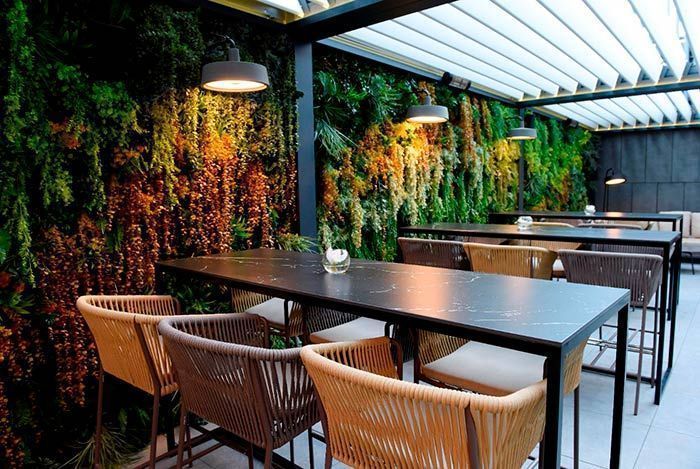
Natural light and plants
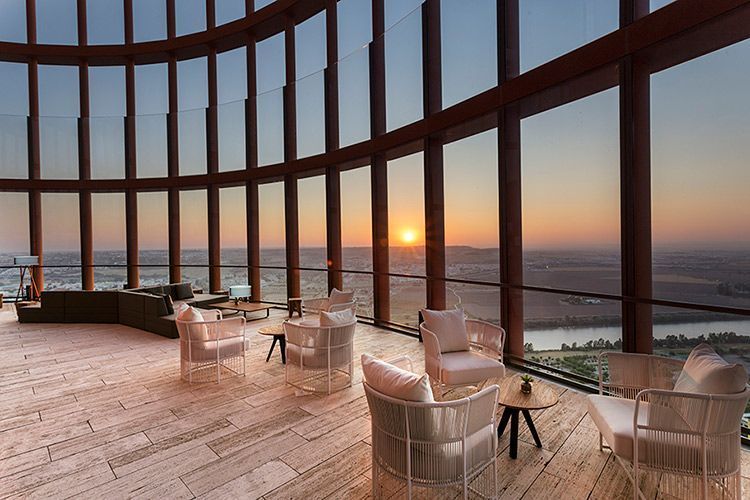
One of the most widespread concerns among guests is greater sensitivity towards wellbeing and reconnecting with nature. Natural ventilation is favoured, and making use of outdoor facilities is encouraged in order to gain new spaces for guests.
Plants and vertical gardens are gaining followers, and there is a clear preference for glazed walls and display windows that let in natural light.
You may also like
Martin Audio TORUS powers Rotterdam's reborn Baroeg
Optimal Audio sets the sound at Unc's Pizza in Detroit
LEDVANCE cuts street lighting energy by up to 75%
Vokkero keeps the Ura Bere Bidean crew connected
Biamp Vocia: a paging system running for over ten years
31 Million Pixels Revolutionise Simulation
Genelec provides sound for a mini-golf venue in Germany
A journey through imagery, interaction and architecture
A new look for the Barcelona Metro with Soltec
Invisible Technology, Great Experiences
Fewer loudspeakers, greater clarity in the classroom
Communication in critical situations with UDE
The Value of Sound in Hospitality and Retail
Acoustics designed for sports and events

Platform for remote projector control

Real-time information for British Airways
Crestron turns the classroom into Wall Street
Church finds its voice with OPTIMUS
Integrated audio for fine dining environments
Networked audio for multifunctional spaces
Coordinates police alerts and emergencies
Sony technology to inspire architects
25 Barco projectors bring an AI museum to life
Anolis Illuminates the Natural Water Cycle
Aetria for Antarctic Exploration
Outdoor Displays for All Weather Conditions
Premium audio serving retail and hospitality
Immersive AV engineering to bring history to life
INFiLED LED at the World's Tallest Hotel
From live sound to home with L-Acoustics
Hikvision improves flood response
Premium audio drives retail performance
A digital canvas for the heart of Seattle
Atmospheres of light in the Qatari desert
Martin Audio brings sonic energy until dawn
Bilbao Brings Fans Together Through Digital Signage
A Sound Atmosphere Tailored for Retail
Universidad Europea Boosts Learning with Nureva
A Camp Nou designed for frictionless operation
HYRISS Technology in Residential Environments
HYRISS technology in residential environments
From isolated systems to smart security
ONGC’s Operational Brain Strengthens with Datapath
DATALAND, the new museum of AI arts
Frankfurt unveils the first native DooH terminal
Invisible audio to reinvent retail environments
Image, sound and space: a new interpretation
AV integration projects in Barcelona
Strategic reinforcement in the LED lighting area
Advanced hybrid education with Shure ecosystem
Multi-zone audio integration in a historic hotel in Lyon
Networked audio optimizes hotel spaces in Barcelona
Hyperclassroom in Granada with professional audio
Collaborative workplace for the future
Mariano Bula Stadium transformed with Optimus
More precise medical imaging with Barco technology
Video mapping enhances Salamanca Cathedral
Outdoor mounting for harsh environments