The meeting room learns to listen and broadcast
Written by Editorial TeamCategory: NEWS
Published:
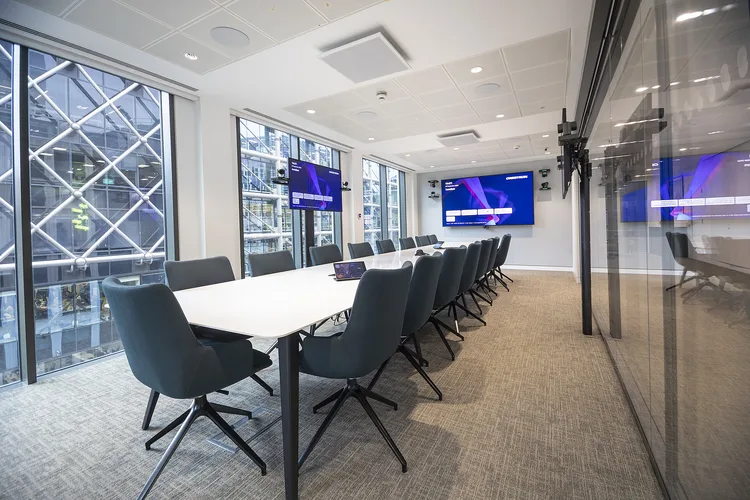
Artificial intelligence has entered the meeting room to frame, transcribe and summarise, and many companies are now building their own studios. ISE 2027 will show it in two demonstration spaces. What changes in the project and what to know before specifying.
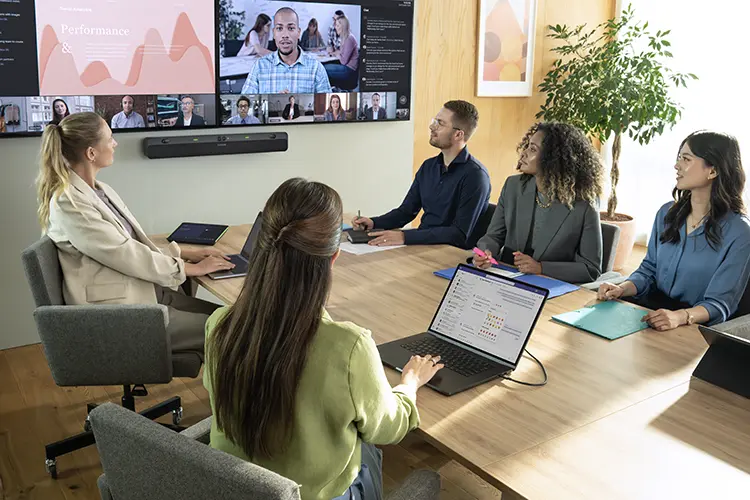
For years, the meeting room was sold on connectivity: the video call had to start and nobody had to call the technician. In 2026 the debate has moved on. AI no longer lives only in the meeting platform but in the room's equipment: the camera decides the framing, the microphone separates voices and the assistant writes the minutes. And across the corridor, the same company is building a studio to record its announcements.
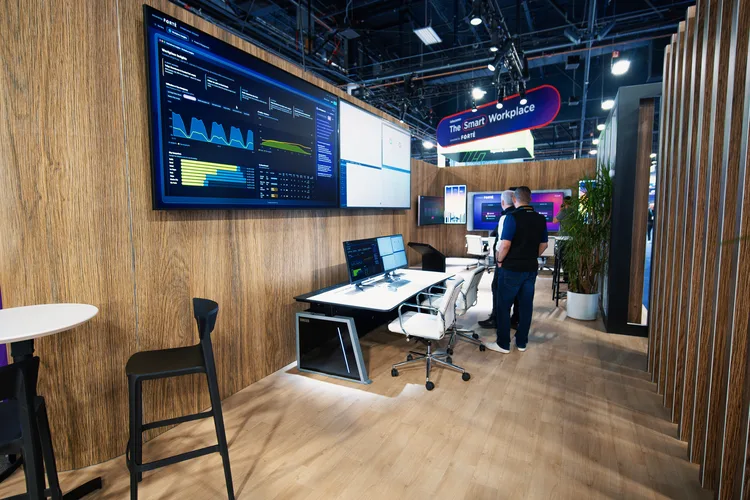
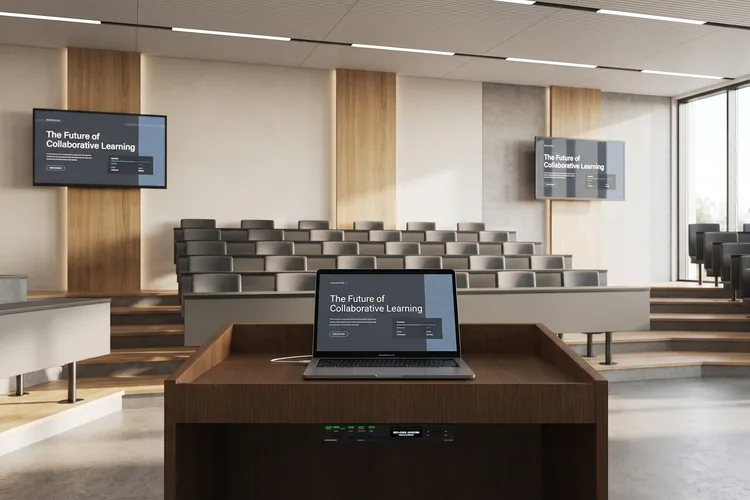
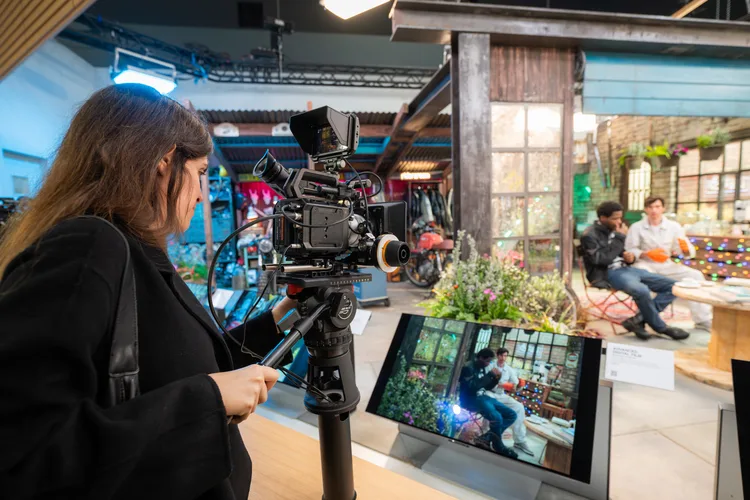
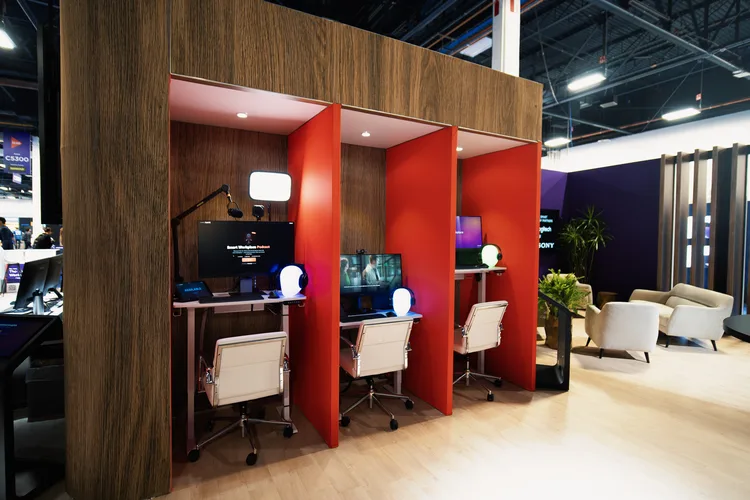
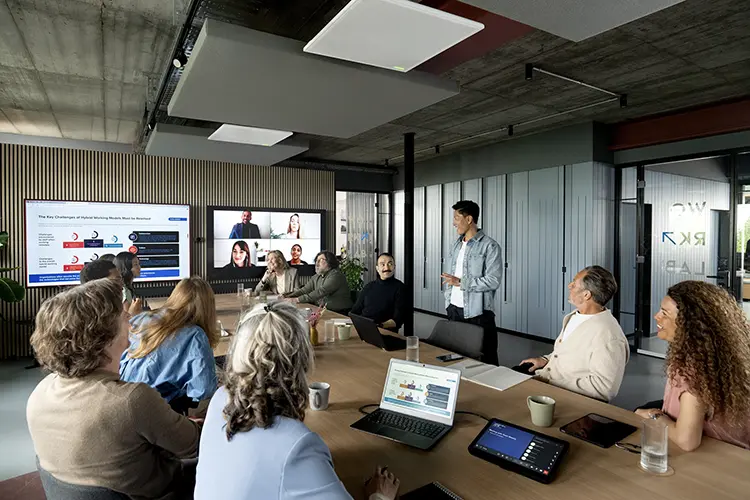
ISE 2027 (Fira de Barcelona, 2-5 February) devotes two spaces to this transformation: The Smart Workplace, designed by FORTÉ with solutions from Crestron, Legrand AV, Logitech, Microsoft, Q-SYS, Shure and Sony, which recreates a complete AI-assisted working day; and the ISE Enterprise Broadcast Studio, driven by AVIXA TV in Hall 4, a working corporate studio.
What AI does inside the room
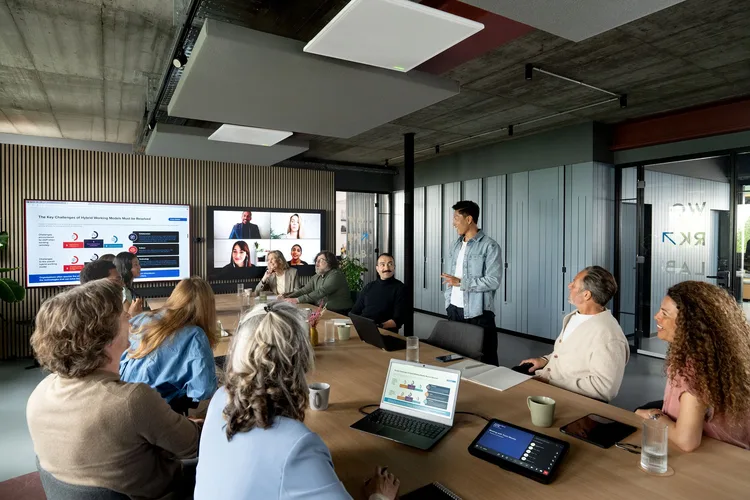
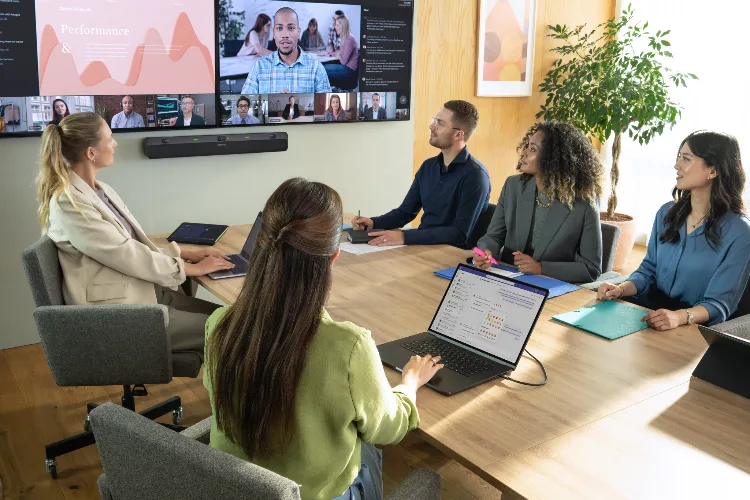
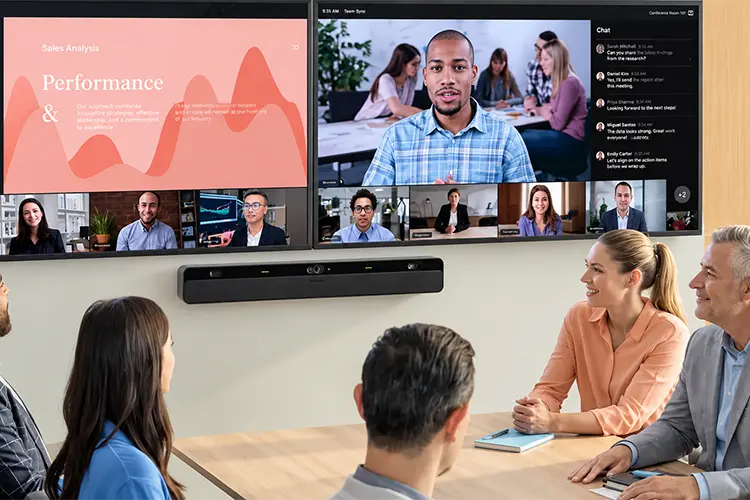
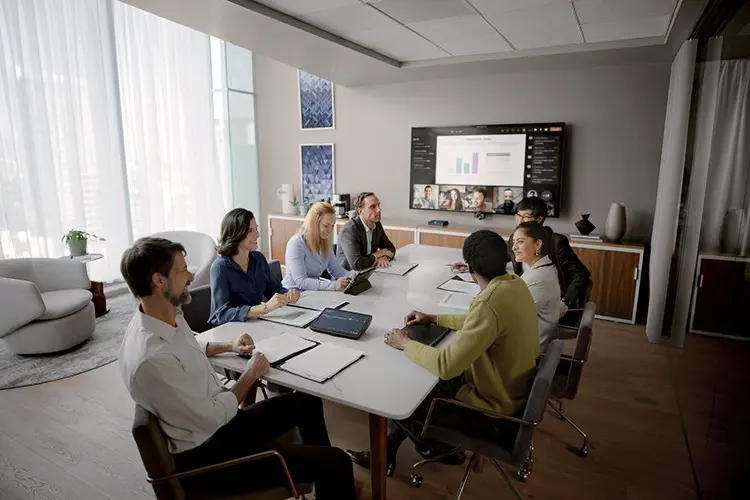
The most visible function is automatic framing. Today's cameras follow whoever is speaking, offer group, speaker or grid views and, in the latest models, detect a back-and-forth conversation and widen the shot to keep both speakers on screen instead of jumping from one to the other. Framing can also be limited to a zone, so that someone walking past the glass does not distract the camera.
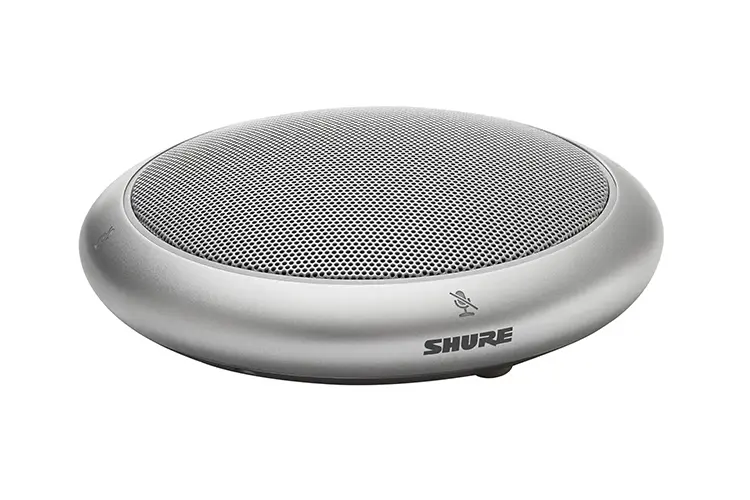
In audio, beamforming, voice isolation and AI noise suppression are already standard. And here is the technical key the integrator must explain to the client: everything AI produces afterwards (transcription, summary, speaker attribution) depends on the quality of the captured voice. Mediocre audio ruins the minutes, however good the software.
Voice capture comes first. Transcription, summaries and speaker attribution are only as good as the audio the room picks up.
Platform assistants already work on that capture: Zoom AI Companion identifies speakers and notes action items; Microsoft adds chapters and markers in Teams, and its Facilitator agent in Copilot needs reliable data from the room (who is there, who is speaking and whether the space is working).
The underlying problem: equity in the hybrid meeting
AI is not a whim: it answers a real complaint. According to IDC, around 60 % of remote participants struggle to contribute or lead as much as their colleagues in the room. Barco puts at 71 % the share of employees with problems in hybrid meetings. Technology improves what is seen and heard, but it does not change group behaviour on its own: organisations that also redesign the format of their meetings get better results.
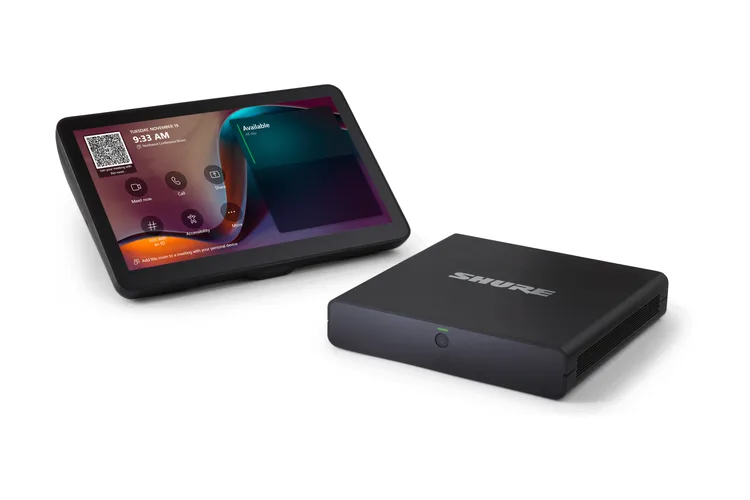
Audio is centre stage again. IDC placed Shure among the leaders of its 2026 MarketScape on AI-enabled smart room hardware, highlighting its voice capture in large and complex rooms, the talker position data used to steer other brands' cameras and Teams and Zoom running directly on its IntelliMix Room Kits. The logic is the same: without good capture, no AI works.
From the standard room to the platform
The second change is one of scale. Companies no longer configure room by room; they deploy repeatable platforms managed from the cloud. Crestron approaches it with Collab Engine, certified for Microsoft Teams Rooms, with AirMedia mode for BYOD connections and built-in Intelligent Video and Intelligent Audio, designed to cover everything from small rooms to training rooms at sites around the world. The big 2026 shows displayed the same approach with management platforms such as Crestron XiO Cloud, Extron GlobalViewer Enterprise or Q-SYS Reflect Enterprise Manager.
For the integrator, value shifts from installation to the life cycle: monitoring, updating and measuring how rooms are really used.
The company that broadcasts
The other half of the story is corporate video. At NAB 2026, more than 13,000 attendees identified themselves as corporate media professionals, almost double the 2025 figure, according to Marc A. Rémond (Strategic Pathways) at AVIXA. Leadership announcements, internal broadcasts, launches and training are pushing companies to build their own studios with PTZ cameras, quality audio and IP workflows, and AI comes in from day one to edit, subtitle and distribute.
Rémond offers two useful pieces of advice. First, clarify the ambition from the start: the client may ask for a meeting room and actually expect a television studio. Second, opt for modular sets because, in his words, broadcast quality does not require broadcast budgets.
Risks worth explaining
AI is not infallible. With clean audio and a single speaker, the best transcription engines reach around 95-98 % accuracy, but in real meetings, with overlapping speech and noise, they can fall below 80 %; non-native speakers suffer gaps of 15 to 30 %. Speaker attribution is the weak point, and in Europe recording and transcribing must comply with the GDPR. As Jenn Heinold of AVIXA put it, the best AI is an enhancement of AV, not the other way round.
Keys for the project
- Start with voice capture: microphones and acoustics determine everything the AI will do.
- Design for hybrid equity: framing, audio and screens planned for those outside the room.
- Standardise room types and manage them remotely, with usage data.
- Ask early whether the client wants a room or a studio, and plan the IP network from the outset.
- Review consent, privacy and GDPR before switching on recording and transcription.
Photos: © Sony, Crestron, Shure, Integrated Systems Europe
You may also like
Crestron transforms its workspace

InfoComm 2023 registration is open
Shure unveils IntelliMix® Room 4.0
IDC names Shure a Leader in AI meeting rooms

500 Sony BRAVIA displays connect 100 stores

Sony: the traditional office is falling behind

40 giant Sony displays for collaborative learning
Crestron Collab Engine: meetings and AV control in one
Sony equips Crestron’s centres in London and Paris
Crestron develops its first proprietary AV chipset
IntelliMix Bar Pro takes centre stage in Shure’s strategy
Crestron connects more than 200 rooms at Camp Nou

Classrooms that understand: audio and learning
Crestron touch screens simplify room management
Crestron touch screens simplify room management
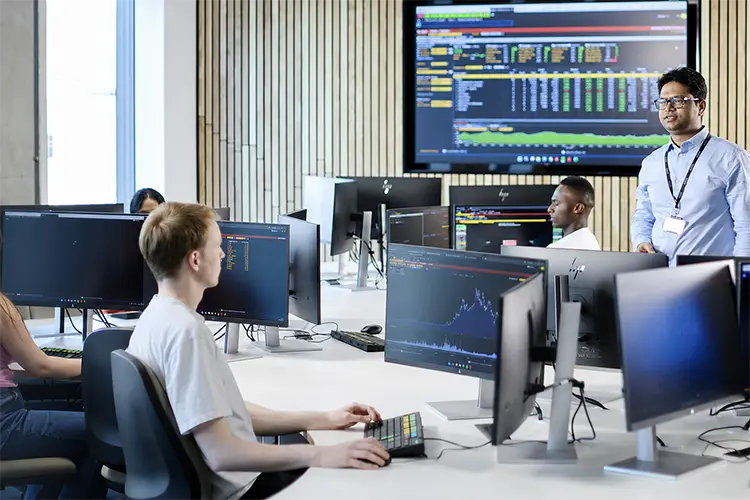
Crestron turns the classroom into Wall Street
Sony technology to inspire architects
Crestron Enhances Residential Integration
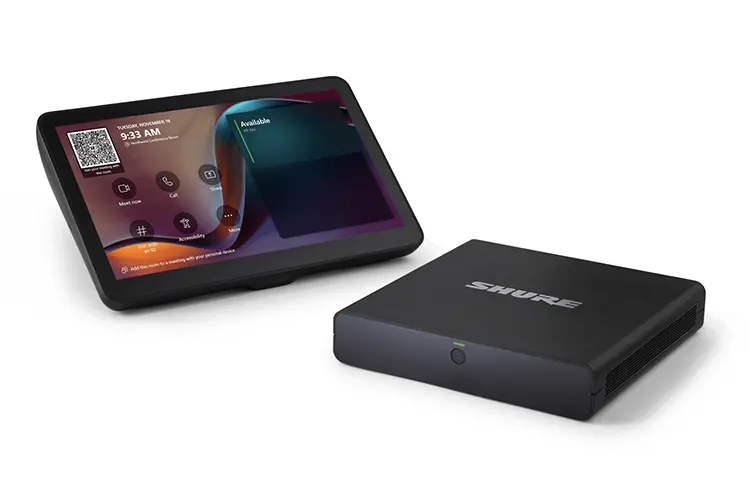
Audio, AI and Remote in a Single Platform
Ten Years of Innovation in Corporate Audio

A Camp Nou designed for frictionless operation
Simultaneous in-person and virtual classes with Shure solutions
How to find the perfect marine Keypad with Crestron
Advanced hybrid education with Shure ecosystem

Intelligent video in a single device with Crestron
Crestron home control in the mirror
Intelligent Tracking for Hybrid Meetings with Crestron
Intelligent tracking for hybrid meetings with Crestron
technology for more efficient meetings
Smart tabletop audio for corporate
AI-powered meetings: premium audio and cloud management
Crestron’s new media player for AV control
European retail technology gap: a trust challenge
Crestron Modern Workplace Certification Path
Smart plugins optimize AV project integration
Crestron and the Trends of the Monaco Yacht Show
Find the ideal multi-camera solution for your space
Hospitals: secure and flexible AV collaboration
Sony reinvents comfort in hospitals

Unmatched audio experience with Crestron
The NHS Hospital installs Sony BRAVIA displays
Technological and sustainable universities

The growing demand for outdoor audio
AmRest improves its AV infrastructure with Crestron
Flexible solutions to meet the needs of the AV market
A new era for lighting with Crestron
Superior audio and video performance in meetings
Installation agile, elegant and scalable
Elegance and comfort with Crestron in Paris
Sony and Allianz Portugal: Innovation in Lisbon
Crestron enhances audio and video transmission
Crestron drives an intelligent future of work
New generation of AV and automation solutions
Best high-impact space project with Crestron
Greater flexibility in room booking with Crestron
Superior meeting experiences with Shure

Winners of the Crestron Europe Integration Awards
Sony strengthens its BRAVIA display lineup