












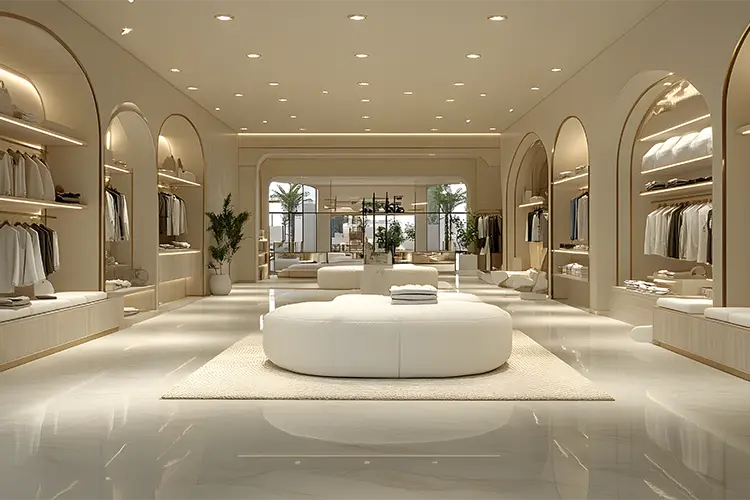
Audio is gaining importance in hospitality and retail as part of design, experience and business strategy.
Luxury stores, restaurants, private clubs and terraces are treating audio as part of the overall experience, rather than simply as background music. Several recent projects show how it can be integrated into the design, the challenges it presents and how it can add value to the business.
From background music to brand experience
In a retail store or restaurant, sound can influence how long customers stay, how they perceive the space and what they remember about the brand. This is not a new idea, but some projects are beginning to link investment in audio with business results.
Holt Renfrew in Toronto is one example. After installing a 1 SOUND system on its experiential floor, the luxury department store recorded, according to those responsible for the project, an increase in sales and event activity during the first month. It subsequently decided to extend the investment to another floor of its flagship store, once again with GAV MGMT as the integrator.
The case suggests that high-quality audio can be presented to clients in terms of business benefits as well as technical performance.
Designing around the architecture
One of the main challenges in these spaces is ensuring that technology does not compete with the interior design. At Holt Renfrew, the team modelled coverage using 1 SOUND's 3D prediction software before installation and adapted the system to the architecture and customer journey rather than relying on a standard layout. The ceiling subwoofers protrude by just five inches, around 13 cm.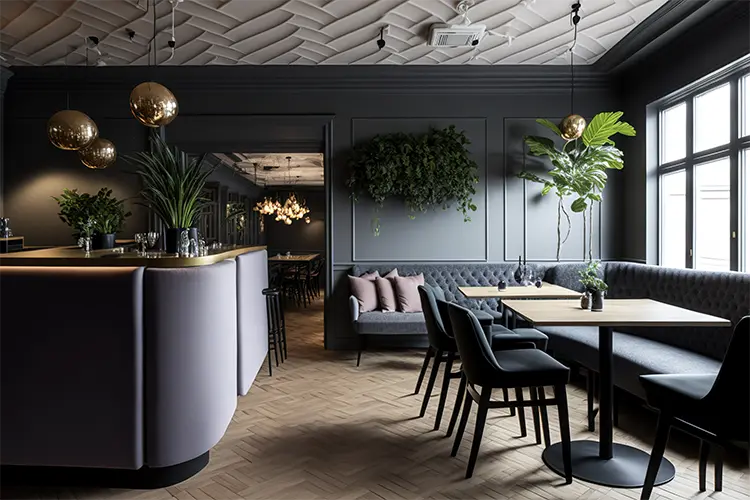 At the Born & Raised restaurant in San Diego, which accommodates between 200 and 250 guests, the subwoofers were concealed within banquette seating and custom-made furniture. The loudspeakers, meanwhile, were produced with wood finishes and gold grilles to blend into the interior design by Basile Studio. On the rooftop, marine-grade loudspeakers featuring A4 316 stainless-steel components extend the sound system outdoors.
London's Maslow’s Kensington, a private members' club combining coworking, fitness and hospitality, presented another common challenge: there was no space for conventional subwoofers. Tateside's solution was to integrate them into custom joinery and beneath a decorative plinth.
When the loudspeaker takes centre stage
Technology does not always need to be hidden. In the VIP area at Selfridges on Oxford Street, Tateside suspended two limited-edition Klipsch + Ojas kO-R1 loudspeakers from the ceiling as the centrepiece of the lounge.
We wanted to use these iconic loudspeakers as intentional design elements rather than hide them, explains Jack Cornish, the company's technical director.
Around them, a more discreet system from Martin Audio, Bowers & Wilkins and Audac provides coverage for the bar, private dining rooms, corridors, jewellery area and terrace.
The project shows that the decision to integrate or showcase equipment is also part of the design process, and that the integrator can contribute alongside the interior designer and brand team from the earliest stages of the project.
Zoning, networking and simple control
A hospitality space can change its function throughout the day: a quiet dinner may give way to drinks, an event or a DJ set. This requires dividing the system into zones while providing staff with straightforward controls that do not require specialist technical knowledge.
At Selfridges, a Dante system allows audio to be routed between different zones. This means that the signal from the lounge DJ booth can also be played on the terrace, while staff manage volume and sources from iPads and wall-mounted control panels.
At Maslow’s, instructors in the gym and yoga studio can connect their own devices via Bluetooth wall plates with Dante and adjust the volume using wall-mounted controls integrated into the Q-SYS system.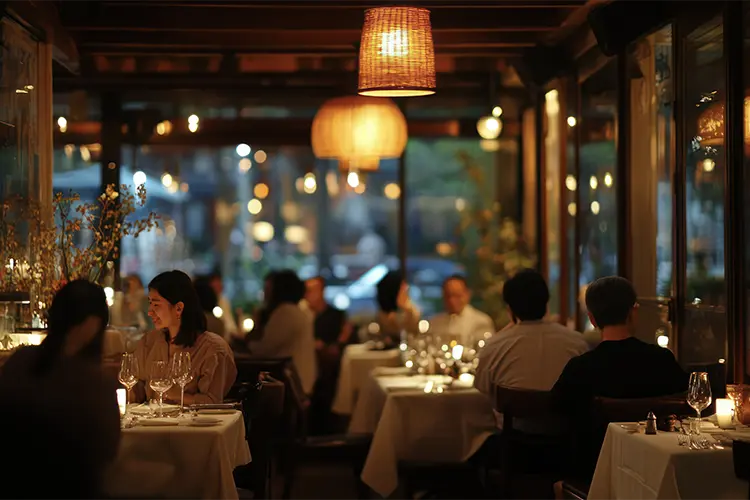 At Granada Studios in Manchester, Tateside takes this connectivity beyond audio: performances in Studio IV are captured using PTZ cameras and distributed via video over IP to displays throughout different areas of the building, including guest rooms.
The outdoor space is part of the experience too
Terraces and gardens have become important spaces for hospitality businesses, but extending the audiovisual experience outdoors brings its own set of requirements.
The deployment that Chantry Digital and UNICOL are bringing to the beer gardens of a major UK pub chain uses 86- and 98-inch displays with IP67 protection, IK10 impact resistance and 3,000 cd/m² brightness to maintain visibility in full daylight. The displays are installed on stainless-steel structures approximately 2.5 metres high.
Although video is the focus in this case, the project reflects a similar trend: treating outdoor areas as an extension of the main space rather than as secondary areas.
From audio to an integrated AV experience
The same philosophy extends to visual technology. In the lobby of Ciel Dubai Marina, a 3.6 × 6.75 m INFiLED LED display with a 1.25 mm pixel pitch follows the curvature of the wall and responds to guests' movement and touch.
The same display can be reconfigured for branded events, expanding its range of uses within the hotel. It is another example of how audiovisual technology can be integrated into architecture and perform different functions according to the needs of the space.
Key considerations for hospitality and retail projects
- Get involved early: coordinate with interior design, brand and operations teams from the design stage.
- Model before installing: study coverage and adapt the system to the architecture and customer journey.
- Decide what to integrate and what to showcase: equipment can also become part of the aesthetics of the space.
- Zone the system with different uses in mind: consider everything from day-to-day operation to events and DJ sets.
- Simplify control: provide staff with accessible interfaces, such as tablets and wall-mounted panels, alongside ongoing support.
- Treat outdoor areas as another zone: select equipment and solutions designed to withstand environmental conditions.
- Measure business indicators: analyse variables such as sales, dwell time and event activity to assess the impact of audiovisual investment.
 Instagram
 Facebook
 LinkedIn
 YouTube