












ClearLED and Mechdyne have created a 360° immersive environment featuring 31 million LED pixels for the University of Bristol.
At the University of Bristol's Bristol Digital Futures Institute (BDFI), a 31-million-pixel curved LED display, developed by ClearLED in collaboration with immersive visualisation specialist Mechdyne, allows researchers to physically step inside datasets, simulations and virtual environments.
From first responders preparing for emergencies to researchers working on safer cities and architects designing urban environments, the Reality Emulator delivers a room-scale immersive visualisation experience that goes beyond the capabilities of conventional flat-panel displays.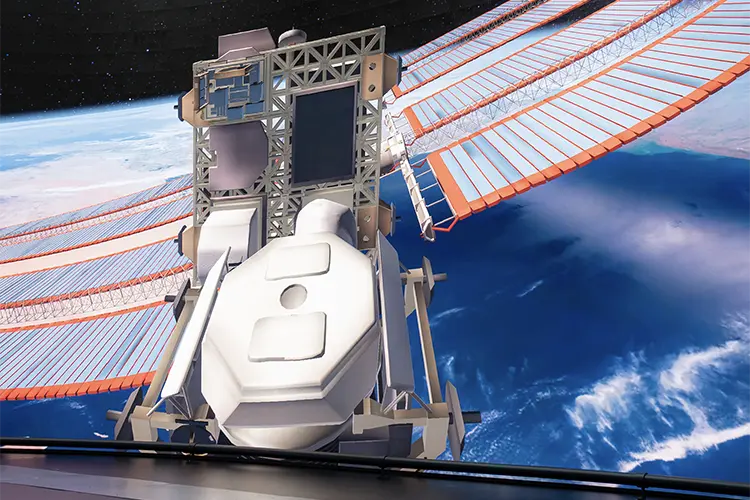
The challenge: a continuous room-scale display
Conventional LED systems are designed for installation on flat, independent surfaces. However, BDFI needed to create a continuous visual environment in which researchers could move around, collaborate and interact without visual interruptions.
The installation had to combine curved sections capable of filling users' peripheral vision with flat surfaces designed to display engineering data without introducing distortion into the models.
Mechdyne defined the overall system architecture, while ClearLED was responsible for the display technology. From the earliest stages of the project, aspects such as LED module geometry, structural engineering, image processing and immersive content integration were addressed together.
1,562 flexible LED modules for a continuous display surface
The installation uses a bespoke LED platform based on the ClearLED Ribbon Series Indoor, comprising a mosaic of 1,562 small-format modules capable of bending and adapting to the geometry of the space.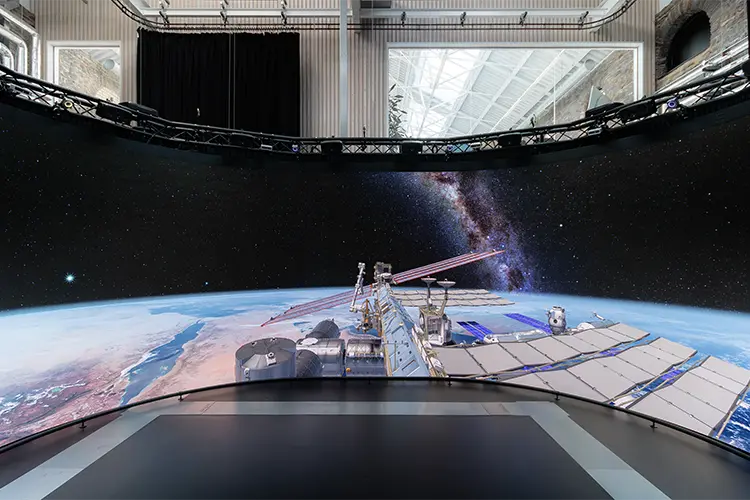 This configuration creates a continuous display surface with a smooth curvature and no visible edges or seams. The flexible design, featuring a 1.2 mm pixel pitch, was essential to achieving the room's distinctive egg-shaped geometry.
The display uses flexible LED technology in an unusual configuration, something that simply cannot be achieved with conventional direct-view LED panels. We have worked with ClearLED for several years, we trust them, and we know they deliver what they promise, explained Richard Cashmore, Sales Chief of Staff at Mechdyne Corporation.
Image quality optimised for close viewing distances
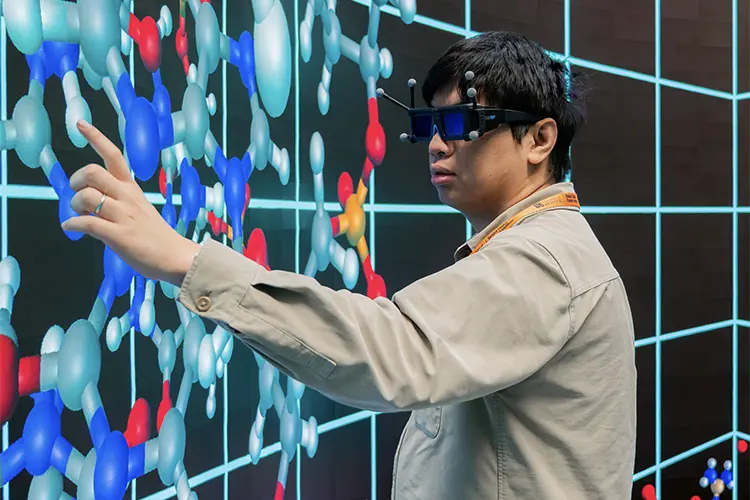
As users can stand just a few feet from the LED surface, the system incorporates specific technical features to ensure image stability and quality at close viewing distances.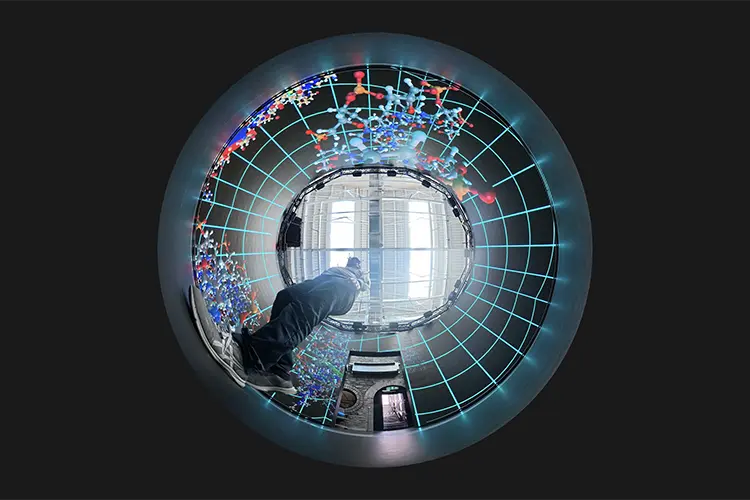 The display features a 7,680 Hz PWM refresh rate, helping to improve visual stability and reduce flicker. It also operates at 120 Hz for 3D content viewing using synchronised shutter glasses, delivering a refresh rate of 60 Hz to each eye.
These capabilities are combined with eye-tracking and motion-tracking systems, along with real-time rendering using game engines, allowing users to interact with content naturally while maintaining consistent spatial awareness.
The LED technology uses a Flip Chip architecture with GOB (Glue on Board) encapsulation and a 1.2 mm pixel pitch. Compared with conventional SMD LED technology, this solution generates less heat, improves energy efficiency and extends the colour gamut while increasing colour reproduction accuracy. The protective GOB layer also provides greater resistance to dust and water, enhancing the modules' protection and durability.
Assembly and testing in iowa before installation in Bristol
Before being shipped to the United Kingdom, the complete system was assembled and factory-tested at Mechdyne's technology centre in Iowa, United States.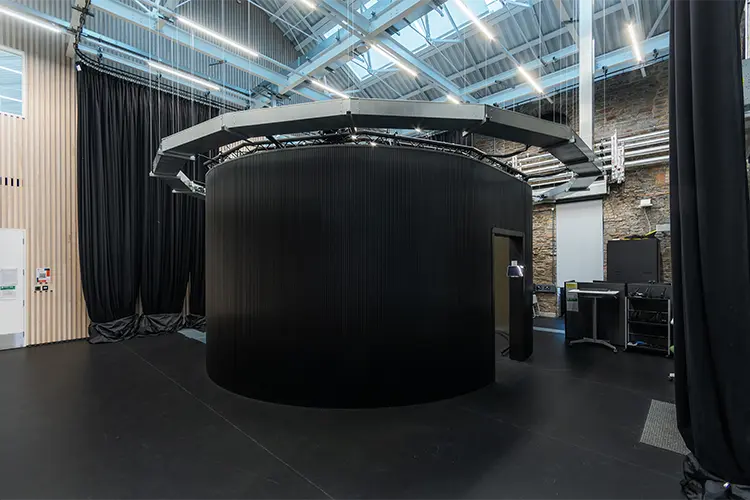 This process allowed the integration of the various components to be verified in advance, reducing installation and commissioning time at the University of Bristol.
The technical infrastructure includes a high-performance computing platform responsible for performing digital twin calculations, while a graphics processing cluster handles rendering and drives the image output to the LED display. "When you're sitting in the middle of the room, you have to feel completely immersed in the environment; the screen has to disappear from your perception", said Gus Hadaya, President and CEO of ClearLED.
An immersive environment for research, simulation and artificial intelligence
The Reality Emulator is now regularly used for a range of research projects, including those involving game-engine technologies and artificial intelligence.
Unlike experiences based on pre-programmed sequences, the system enables the development of environments that respond dynamically to users' actions and simulation conditions.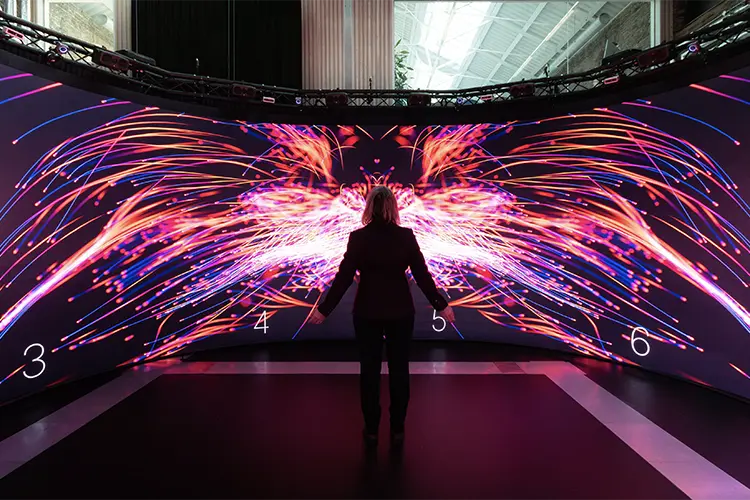
We wanted to take people into new places and situations, including potentially dangerous scenarios where it would not be possible to place human participants. The possibilities are virtually endless, explained Dr Richard Cole, Senior Lecturer in Digital Futures at the University of Bristol.
The architecture developed for this project can also be adapted to other applications, including research facilities, simulation centres, museums, commercial experience spaces, entertainment environments and public engagement centres.
"ClearLED has traditionally been known for its large-scale, customised architectural display installations, but this project also demonstrates the display quality we are capable of delivering", highlighted Jin Fan, Founder of ClearLED.
 Instagram
 Facebook
 LinkedIn
 X
 YouTube