












A new immersive experience has opened its doors at Königstein Fortress.
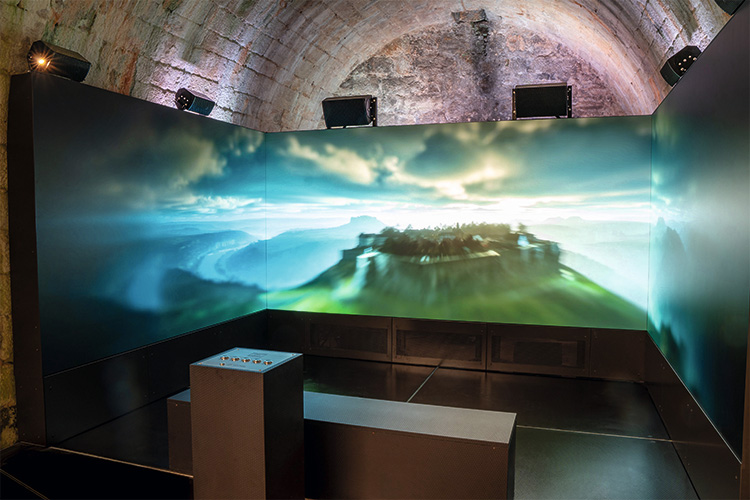
With the new interactive exhibition The Storming of Königstein—An Attack That Never Happened, visitors can experience for the first time a historical siege scenario that, although it never actually took place, vividly demonstrates why the fortress was considered impregnable for centuries.
The technical implementation was carried out by Dresden-based Whitebox GmbH. The system design was developed in collaboration with Ben Zenker (ZEN Audio Engineering) and André Neuhaus (Soundlike Großbeschallungstechnik).
The project incorporated solutions from ProAudio Technology GmbH, Hoellstern GmbH and Xcite Audio. The objective was not only to present historical content visually, but to transform it into an immediate immersive experience through the precise interaction of image, sound and haptic effects.
Our ambition was not only to explain the fortress's defensive capabilities, but to allow visitors to actually feel them. The greatest challenge was developing a technically robust solution capable of meeting the site's specific requirements while achieving the highest possible level of immersion. It is precisely the interaction of light, visuals, sound and vibration that transforms this historical setting into such a powerful experience, explains Daniel Sommer (Whitebox GmbH).
 |
 |
An integrated system design as the foundation of the production
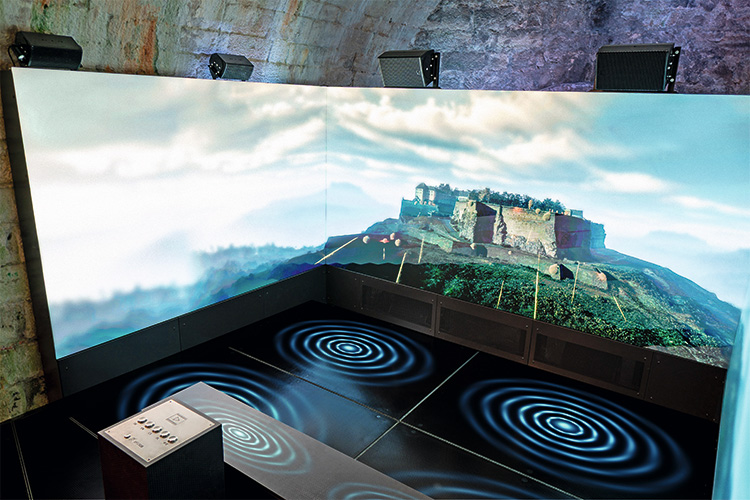
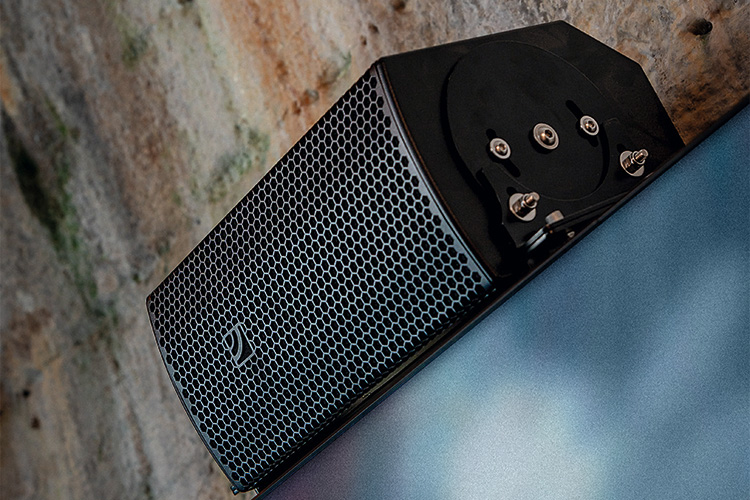
On a specially designed visitor platform, historical defence scenarios are brought to life through large-format visuals, multichannel surround sound and haptic effects. Cannons fire, gates slam shut, drawbridges rise and projectiles strike the fortress walls. Visitors do not simply watch the events unfold—they hear and feel them as well.
Ben Zenker's engineering studio was responsible for the installation's system design. Zenker worked alongside André Neuhaus (Soundlike Großbeschallungstechnik), who supported the project in the areas of audio engineering and system design. His thirty years of hands-on experience in professional sound reinforcement technology proved invaluable in overcoming the challenges posed by this historic site.
The main challenge was integrating the various technical systems into a single coherent and realistic overall experience.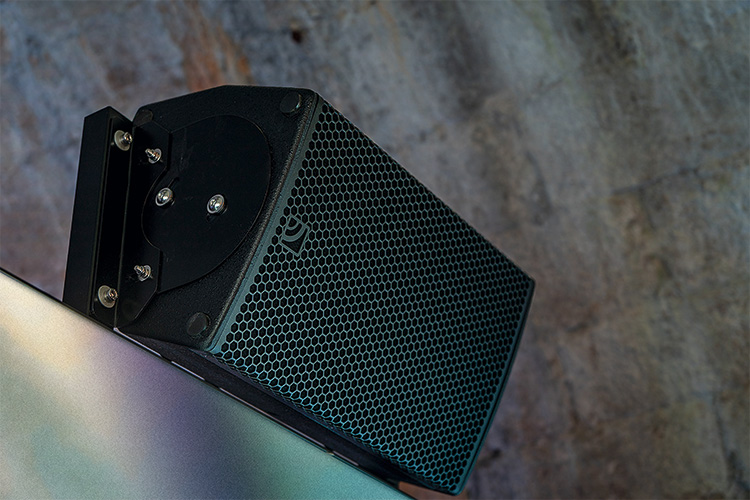 Ben Zenker explains: "In immersive applications, no single component determines the quality of the experience—it is the interaction between all the elements involved. The objective was to coordinate the audio, haptic feedback and visual content so that visitors would perceive the events intuitively and authentically. The result is a new approach to historical interpretation that allows the past to be experienced from an entirely different perspective".
High-precision audio reproduction for a demanding environment
Audio technology plays a fundamental role in the overall concept. The installation had to deliver exceptional dynamics at relatively moderate sound pressure levels while ensuring maximum speech intelligibility in an acoustically challenging historic environment.
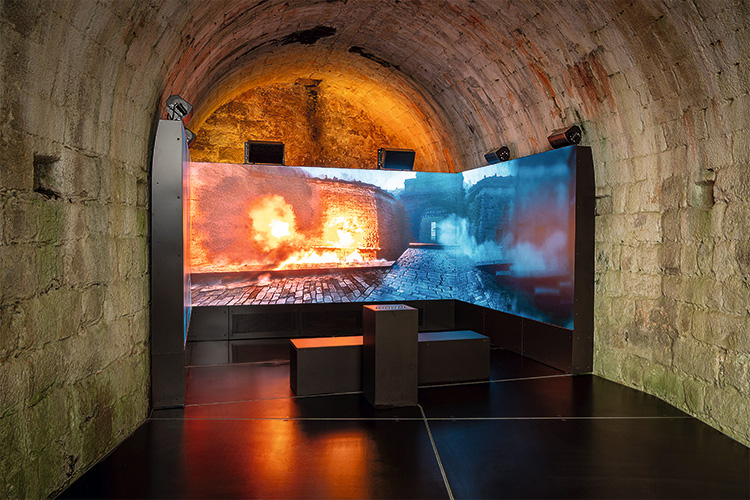
To provide sound coverage for the approximately 30 m² experience platform, a multichannel system from ProAudio Technology GmbH was selected, comprising four MT10 high-performance loudspeakers, four compact MT5.2 installation loudspeakers and one SW12 subwoofer.
The MT10 loudspeakers form the acoustic backbone of the installation. Their wide dynamic range, precise transient response and outstanding speech intelligibility make it possible to reproduce even the most complex soundscapes with exceptional detail.
 |
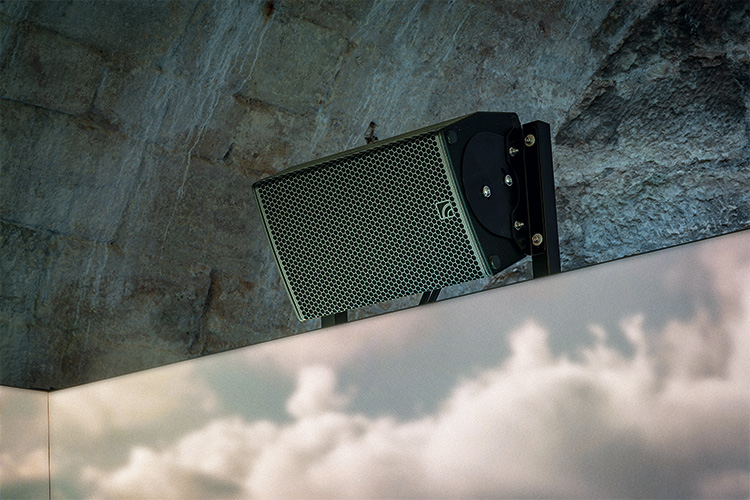 |
These are complemented by the compact MT5.2 loudspeakers, whose low-profile design enables discreet integration into the historic architecture.
High-performance amplification platform for immersive applications
Signal processing and amplification are handled by two ProAudio Technology 10.4-DSP system amplifiers (Hoellstern OEM).
In immersive applications, where sound is combined with the vibrations generated by powerful haptic transducers, high-performance amplification platforms are essential to achieve the most realistic reproduction possible. Fast transient sequences, cannon volleys and successive explosions demand substantial power reserves that remain stable under load, as well as precise control of complex speaker loads.
Immersive environments place highly specific demands on audio technology. It is not enough to reproduce individual effects at high volume. What matters is that every scene is reproduced with tonal accuracy and authentic dynamics across the entire frequency range, even when it contains extremely intense and ultra-fast signal sequences. Our amplification platforms, capable of driving loads down to 2 ohms, are specifically designed to meet these requirements, explains Udo Höllstern (ProAudio Technology GmbH and Hoellstern GmbH).
Thanks to their substantial power reserves, even the most complex sound events remain clearly defined while retaining their full impact. As a result, not only the first cannon shot, but every single action can be experienced with the same intensity and precision.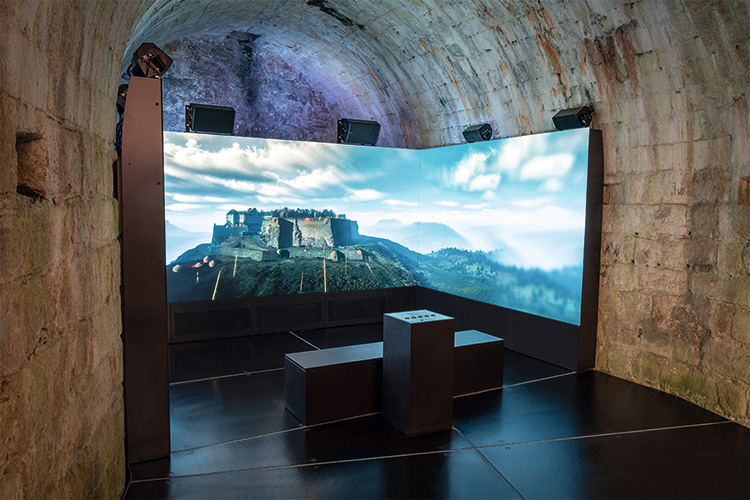
When you can feel a cannon shot beneath your feet
Beyond its acoustic dimension, the installation also incorporates a comprehensive structural sound system from Xcite Audio. Eight XBS200 structural transducers and four XBS100 units were integrated directly into the platform and seating.
As a result, cannon fire, explosions and the closing of the massive fortress gates are not only heard—they are physically felt. The entire platform becomes an active part of the experience.
Particularly noteworthy is the signal processing system developed for the haptic dimension by sound designer Felix Findeisen. Rather than simply routing low frequencies to the structural transducers, the system analyses relevant sound events and converts them into precisely differentiated physical effects. The result is a far more nuanced perception that adds an entirely new dimension to the soundscape. Commenting on the interaction between the different systems, Udo Höllstern adds:
What is truly impressive is the interaction between sound and physical perception. Visitors do not simply hear a cannon shot—they experience it. When audio, visuals and haptic elements are combined with this level of precision, the result is an immersive experience that captivates visitors and leaves a lasting impression.
Another key advantage of the structural sound system is its ability to decouple the physical sensation from the acoustic sound pressure level. Because part of the energy is transmitted directly through the platform, the desired physical impact can be achieved without increasing low-frequency sound levels within the room.
Visitors experience cannon fire, explosions and vibrations with greater intensity, while actual exposure to low-frequency sound can be kept significantly lower.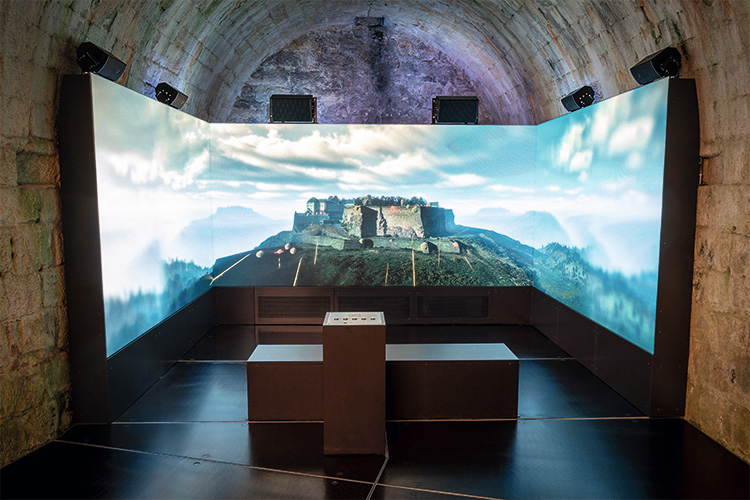 This approach opens up new possibilities for creating highly immersive experiences in historic buildings and sensitive exhibition spaces, while maintaining precise control over the acoustic environment. It also improves accessibility, offering new opportunities for people with hearing impairments to experience and better understand historical content.
A benchmark for immersive historical storytelling
The new interactive exhibition at Königstein Fortress demonstrates how state-of-the-art multimedia technology can be used to communicate historical content in an innovative way. The success of the project lies in the seamless integration of scenography, audiovisual technology, audio, haptic elements and system design.
This approach opens up new opportunities for museums, visitor centres and cultural institutions, enabling them to communicate historical content in ways that are emotional, engaging and memorable.
The installation at Königstein Fortress demonstrates that high-quality audiovisual systems are now far more than technical components—they have become an essential part of the visitor experience, bringing history to life in entirely new ways.
With this new immersive attraction, the project has created not only an outstanding visitor experience but also an excellent example of the potential offered by modern immersive experiences.
Image credits: Helge Wanta