ISS analyses the workplace revolution: five future scenarios
Written by ISP Integration editorial teamCategory: SUCCESS STORIES
Published:
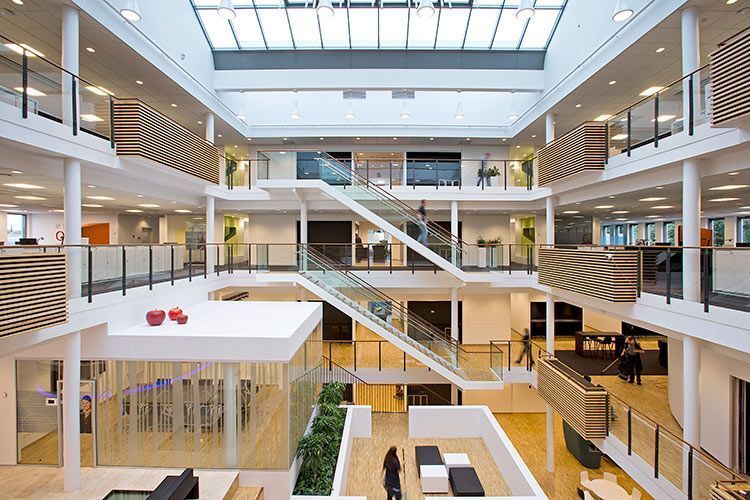
ISS identifies and analyses five future scenarios in the relationship between spaces and people.
More than a year after the outbreak of a pandemic that came to change everything, companies are still adapting to a new reality that greatly shapes the way people work, interact and socialise. As organisations reopen spaces, adjust processes and welcome their teams back to the workplace, it has become essential to rethink the new relationship between spaces and people.
The gradual, organised return to the office has become one of the great milestones for many companies, owing to the need to impose strict protocols to guarantee the safety of their teams
ISS Spain says it is essential to understand that we are facing a new form of interaction between employees and their environment. Drawing on its experience in space management, the company points to five present and future challenges for workplaces.
Remote working and the return to the office
Remote working is here to stay. Regardless of how widely it is ultimately accepted in companies’ dynamics once the health situation returns to normal, employees’ homes are already seen as a long-term challenge to be managed. In the words of Raquel Cruz, director of the Integrated Facility Services division at ISS Spain, “we need to rethink our approach to the workplace experience. It is not just about moving from in-person to virtual, but also about recognising that we will need to go a step further and adapt to a new workplace concept and, with it, a new way of working. In this respect, and regardless of where employees work, adapting spaces is just as fundamental in corporate offices as it is in employees’ homes. It is about continuing to keep people at the centre and ensuring that, despite the physical distance, there is still a bond with each company’s corporate culture.”
In this way, employee safety conditions and wellbeing remain the main objectives of any company, although they will be pursued in an environment where the concept of the workplace will extend its boundaries beyond the office itself.
Workplace Experience Manager: a key role for companies
New times and labour market demands have changed the skills required of the staff who look after employees’ wellbeing through the working environment. Companies have moved from highly technical profiles with an engineering background to others that also bring a more empathetic dimension. “With the changes that have taken place and the new ways of building relationships within the company, the target profile has shifted towards someone who masters soft skills such as empathy and assertiveness, but who is equally in control of space management,”says Raquel Cruz.
The paradigm shift in the workplace will propel a role such as the Workplace Experience Manager, who creates valuable workplace experiences for employees, towards bodies with greater decision-making capacity and impact.
“More and more companies are now deciding to bring this role onto their management committees, where they can contribute their knowledge to managing internal services.”
New spaces and management niches
The great diversity of spaces, situations and volatile conditions will make a single organisational model impossible. Increasingly, experts within the sector will work in very clearly defined niches: strategic profiles based on space management, others versed in digital working, or models dedicated to dealing directly with employees...
A degree of diversity and specialisation that will always be linked to the company’s needs. In this way, it is expected that every workplace will be able to count on a professional who understands how it works and how to make the most of its capabilities.
The digitalisation horizon
From communication with any department to the development and use of applications, workplaces and their dynamics will be built around digital and technological innovation. “Increasingly, the workplace and technology will go hand in hand. Task optimisation and connectivity between workplaces will depend on a digital system, as well as on the constant search for innovation to achieve better performance,” explains the director of Integrated Facility Services.
Another example is how globalisation and the multipolar nature of the business system will create situations in which a professional has to manage spaces located far away from them
Large companies, the spearhead of the paradigm shift
All these movements, and others we cannot yet foresee, will gradually appear in the strategies of large Spanish companies. IBEX 35 companies will be the first to apply these guidelines in their working dynamics. Knowing where the innovations in these working environments lie will make it easier to spot what is coming to the sector.
Large banking companies have proven to be the spearhead of workplace change in recent years. These companies will show how these advances, and the processes they entail, should be implemented, placing them at the forefront of this paradigm shift.
You may also like
Martin Audio TORUS powers Rotterdam's reborn Baroeg
Optimal Audio sets the sound at Unc's Pizza in Detroit

LEDVANCE cuts street lighting energy by up to 75%
Vokkero keeps the Ura Bere Bidean crew connected
Biamp Vocia: a paging system running for over ten years
31 Million Pixels Revolutionise Simulation
Genelec provides sound for a mini-golf venue in Germany
A journey through imagery, interaction and architecture
A new look for the Barcelona Metro with Soltec
Invisible Technology, Great Experiences
Fewer loudspeakers, greater clarity in the classroom
Communication in critical situations with UDE

The Value of Sound in Hospitality and Retail
Acoustics designed for sports and events

Platform for remote projector control

Real-time information for British Airways
Crestron turns the classroom into Wall Street
Church finds its voice with OPTIMUS
Integrated audio for fine dining environments
Networked audio for multifunctional spaces
Coordinates police alerts and emergencies
Sony technology to inspire architects
25 Barco projectors bring an AI museum to life
Anolis Illuminates the Natural Water Cycle
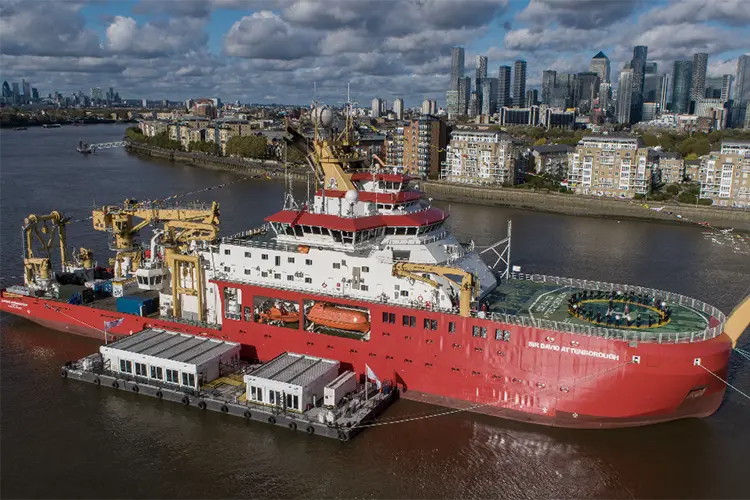
Aetria for Antarctic Exploration
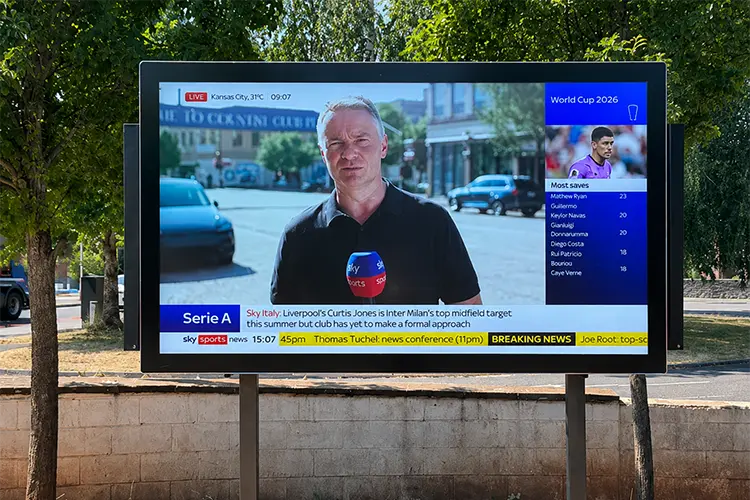
Outdoor Displays for All Weather Conditions
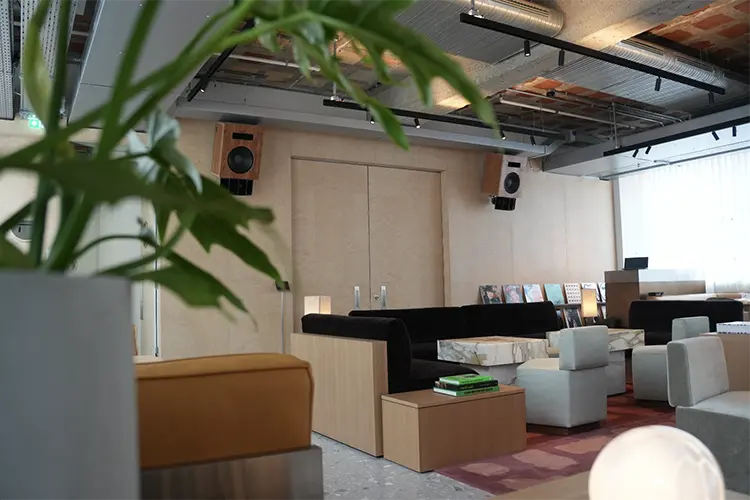
Premium audio serving retail and hospitality
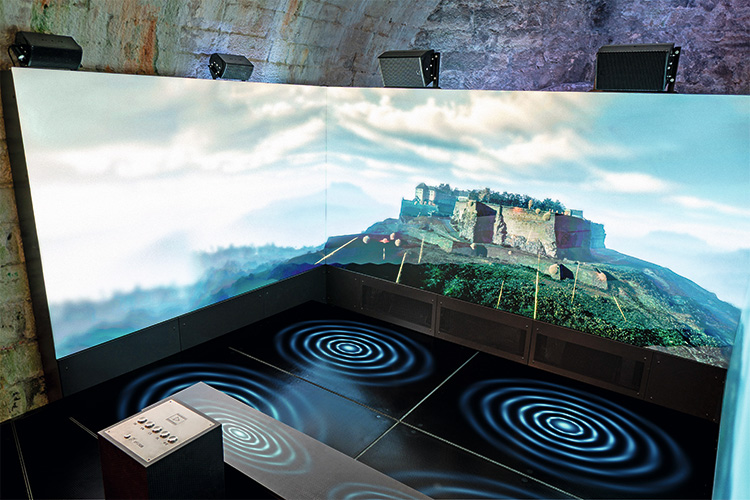
Immersive AV engineering to bring history to life
INFiLED LED at the World's Tallest Hotel

From live sound to home with L-Acoustics
Hikvision improves flood response
Premium audio drives retail performance
A digital canvas for the heart of Seattle
Atmospheres of light in the Qatari desert
Martin Audio brings sonic energy until dawn
Bilbao Brings Fans Together Through Digital Signage
A Sound Atmosphere Tailored for Retail
Universidad Europea Boosts Learning with Nureva
A Camp Nou designed for frictionless operation

HYRISS Technology in Residential Environments

HYRISS technology in residential environments
From isolated systems to smart security
ONGC’s Operational Brain Strengthens with Datapath
DATALAND, the new museum of AI arts
Frankfurt unveils the first native DooH terminal
Invisible audio to reinvent retail environments
Image, sound and space: a new interpretation
AV integration projects in Barcelona
Strategic reinforcement in the LED lighting area
Advanced hybrid education with Shure ecosystem
Multi-zone audio integration in a historic hotel in Lyon
Networked audio optimizes hotel spaces in Barcelona
Hyperclassroom in Granada with professional audio
Collaborative workplace for the future

Mariano Bula Stadium transformed with Optimus
More precise medical imaging with Barco technology
Video mapping enhances Salamanca Cathedral
Outdoor mounting for harsh environments