COWORD launches in Spain to build bridges for coliving
Written by ISP Integration editorial teamCategory: SUCCESS STORIES
Published:

The shared real estate spaces association COWORD arrives in Spain.
The association was presented at a live-streamed event broadcast by REBS from the Madrid offices of law firm Andersen, attended by officials including José María García, Director General of Housing and Refurbishment of the Community of Madrid, who expressed his support, saying: “regulation must find an open, modern and flexible solution to respond to the new demand for housing while also creating an opportunity for the economy. Congratulations on the initiative – we are by your side”.
Meanwhile, Raimundo Herráiz, Director General of Urban Planning of the Community of Madrid, said: “public-private collaboration is crucial for these coliving and coworking spaces to become a reality. We are at your disposal to put in place measures that improve the lives of Madrid’s residents and provide the legal certainty the sector needs to generate wealth, jobs and opportunities”.
COWORD was created with a clear social commitment to give a voice to this new demand for housing, driven by new ways of working and living that have accelerated since the pandemic, and to support the Spanish real estate sector in promoting and managing shared real estate spaces such as coliving or cohousing , with all the necessary legal and planning guarantees.
In the words of its president, Araceli Martín-Navarro: “it was the concerns of those involved in shared real estate spaces that led us to create COWORD, with the clear aim of defending all their interests and the social commitment to meet the real demand from those who want to live in shared spaces, as well as strong investor interest”. The association invites professionals, architects, designers, builders, developers, operators and investors to take part.
In addition to Martín-Navarro, the founding members are Irene Trujillo, Director of Operations at Dovevivo in Spain, who said that “coliving is the most innovative part of the real estate sector and we cannot forget that and carry on operating as before when demand is clearly changing; it is our duty to respond to this need. COWORD aims to be the platform that brings together all the professionals and stakeholders involved in this kind of project” and Antonio Ñudi, Partner at Andersen: “coliving must be analysed from two points of view, the contractual and the urban planning perspective; each project must be analysed individually and with a flexible approach”.
The founders explain that coliving, like other shared real estate spaces such as cohousing or cosenior, sits somewhere between traditional renting and hospitality, aimed at specific groups who share interests and concerns, such as digital nomads
It is aimed at young people who are no longer students and have just started their working lives but have not yet started a family; people temporarily relocated for work; and those who are not so young, who have reached an age at which they no longer have family responsibilities and are in the final stage of their careers, or have even retired. This is a customer who is not content simply to share a flat; they are looking for a way of living together in which a community of interests enriches their everyday life, as well as access to top-quality services at a competitive price.
The association will also work on defining what coliving is, and to this end has just published its manifesto. It explains that coliving spaces are usually located in city centres or are very well connected, with careful design and a commitment to sustainability and energy efficiency – qualities that customers demand and value highly. Demand for these spaces has also sparked investor interest in assets of this kind.
One of COWORD’s aims is to build bridges with the authorities to draw up proposals for regulations governing these types of shared real estate spaces, giving them greater legal certainty. In this regard, Sigfrido Herráez, Dean of the Madrid Association of Architects (COAM), expressed the COAM’s “support for COWORD by promoting and making legislative proposals for these shared spaces and uses to the public authorities, thereby helping to resolve current and future legal issues”.
You may also like
Martin Audio TORUS powers Rotterdam's reborn Baroeg
Optimal Audio sets the sound at Unc's Pizza in Detroit

LEDVANCE cuts street lighting energy by up to 75%
Vokkero keeps the Ura Bere Bidean crew connected
Biamp Vocia: a paging system running for over ten years

31 Million Pixels Revolutionise Simulation

Genelec provides sound for a mini-golf venue in Germany

A journey through imagery, interaction and architecture
A new look for the Barcelona Metro with Soltec
Invisible Technology, Great Experiences
Fewer loudspeakers, greater clarity in the classroom
Communication in critical situations with UDE

The Value of Sound in Hospitality and Retail
Acoustics designed for sports and events

Platform for remote projector control

Real-time information for British Airways

Crestron turns the classroom into Wall Street
Church finds its voice with OPTIMUS
Integrated audio for fine dining environments
Networked audio for multifunctional spaces
Coordinates police alerts and emergencies
Sony technology to inspire architects

25 Barco projectors bring an AI museum to life
Anolis Illuminates the Natural Water Cycle

Aetria for Antarctic Exploration
Outdoor Displays for All Weather Conditions
Premium audio serving retail and hospitality
Immersive AV engineering to bring history to life

INFiLED LED at the World's Tallest Hotel

From live sound to home with L-Acoustics
Hikvision improves flood response

Premium audio drives retail performance

A digital canvas for the heart of Seattle
Atmospheres of light in the Qatari desert
Martin Audio brings sonic energy until dawn
Bilbao Brings Fans Together Through Digital Signage
A Sound Atmosphere Tailored for Retail
Universidad Europea Boosts Learning with Nureva
A Camp Nou designed for frictionless operation

HYRISS Technology in Residential Environments

HYRISS technology in residential environments
From isolated systems to smart security
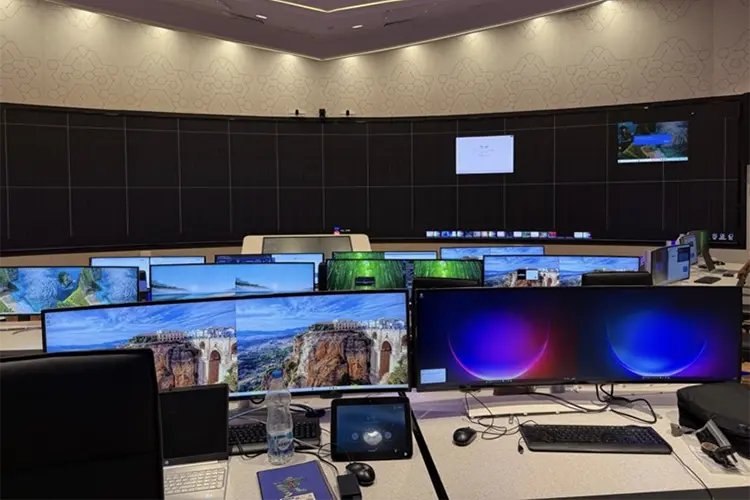
ONGC’s Operational Brain Strengthens with Datapath

DATALAND, the new museum of AI arts
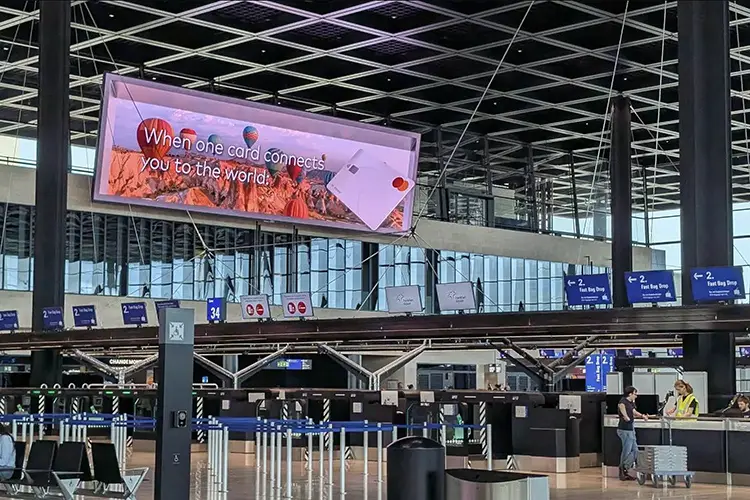
Frankfurt unveils the first native DooH terminal
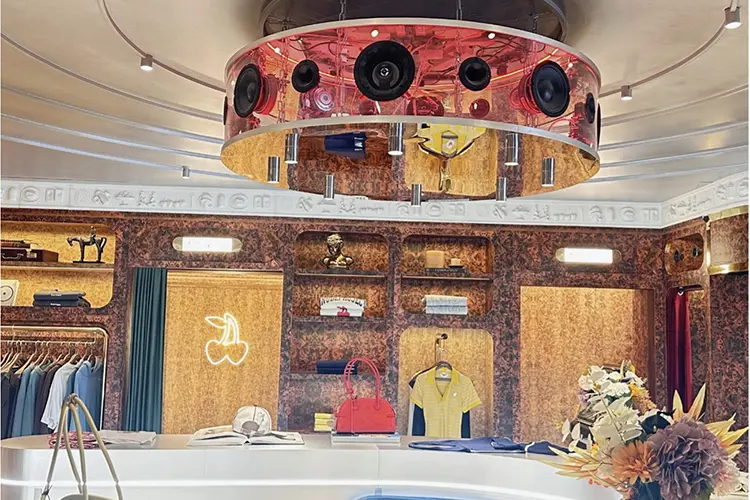
Invisible audio to reinvent retail environments
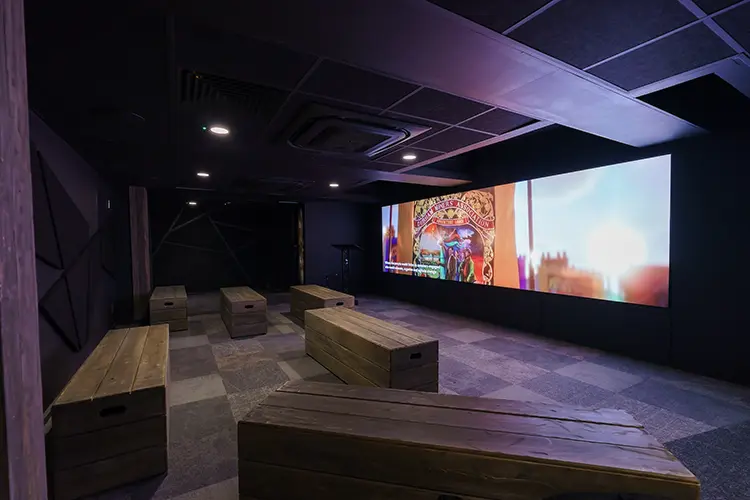
Image, sound and space: a new interpretation
AV integration projects in Barcelona

Strategic reinforcement in the LED lighting area
Advanced hybrid education with Shure ecosystem
Multi-zone audio integration in a historic hotel in Lyon
Networked audio optimizes hotel spaces in Barcelona
Hyperclassroom in Granada with professional audio
Collaborative workplace for the future

Mariano Bula Stadium transformed with Optimus
More precise medical imaging with Barco technology
Video mapping enhances Salamanca Cathedral
Outdoor mounting for harsh environments