Bose Videobar VB1 in hybrid classrooms at Universidad de Chile
Written by ISP Integration editorial teamCategory: SUCCESS STORIES
Published:
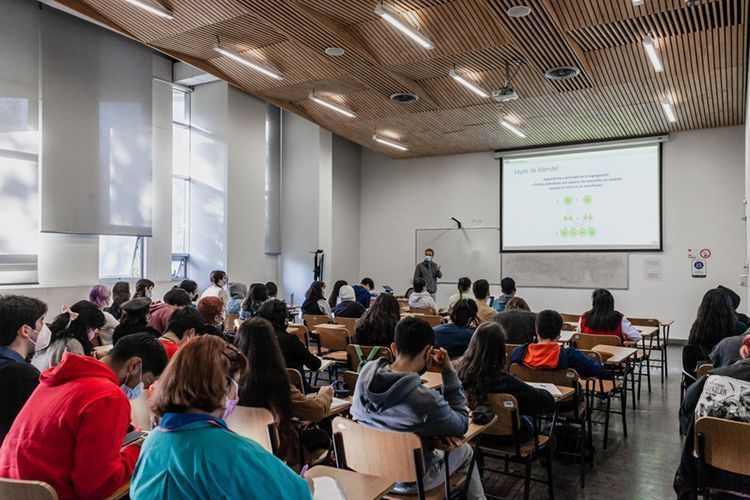
More than 100 hybrid classrooms are equipped with the all-in-one USB conferencing device Bose Videobar VB1.
Universidad de Chile (1842) is the oldest higher education institution in the Andean country and one of the most important in the Americas. Its classrooms have educated 21 presidents and two Chilean Nobel Prize-winning writers. It has 15 faculties and five interdisciplinary institutes spread across five campuses in Santiago de Chile, serving more than 43,000 students.
To ensure that teaching continues regardless of distance or any other external factor, Universidad de Chile launched an ambitious online education and hybrid classroom project in which Bose Professional technology plays a very important role.
In mid-2020, during the toughest months of the pandemic, the university decided to develop an online learning project based on the integration of hybrid classrooms. The aim was for it to be ready to offer the best teaching and learning experience once restrictions were eased and a return to the classroom was allowed, even partially. The project was entrusted to the Vice-Rectorate for IT, responsible for the university’s technology strategy, and its execution fell to the Online Education Office.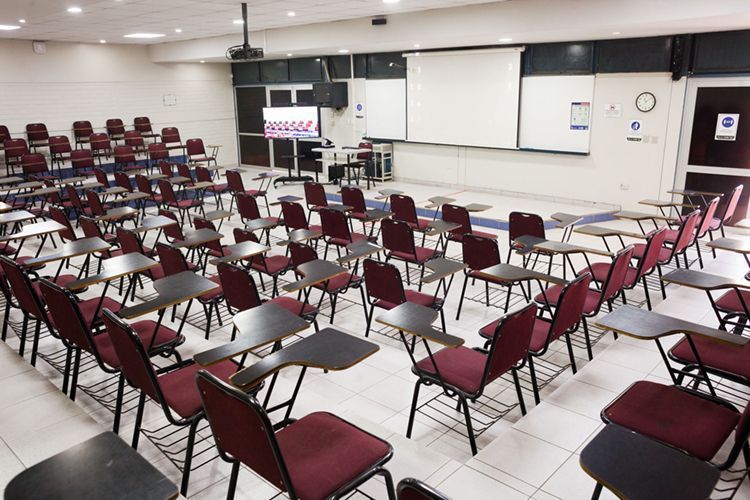 Darío Riquelme Zornow, Project Manager at the Online Education Office and project leader, explains that a standardised solution for all classrooms, auditoriums and laboratories was initially considered; however, the idea was quickly discarded once they understood that each faculty represented a different challenge. Darío Riquelme Zornow, Project Manager at the Online Education Office, Universidad de Chile
We talked to the lecturers to find out how they teach their classes. We asked them to show us how they move around the classroom and to share how they write on the board or use the projector. We also asked the students how they take part in class when they are there in person and how they do so remotely, explains Riquelme Zornow.
Chilean company Tecnomove, an audiovisual solutions specialist, won the public tender to develop the hybrid classroom solution. Tecnomove focused on designing several solution models to meet the different needs in terms of space and class dynamics. After several tests and evaluating the performance of devices from different manufacturers, it decided to divide the project into three solution models: basic, intermediate and advanced.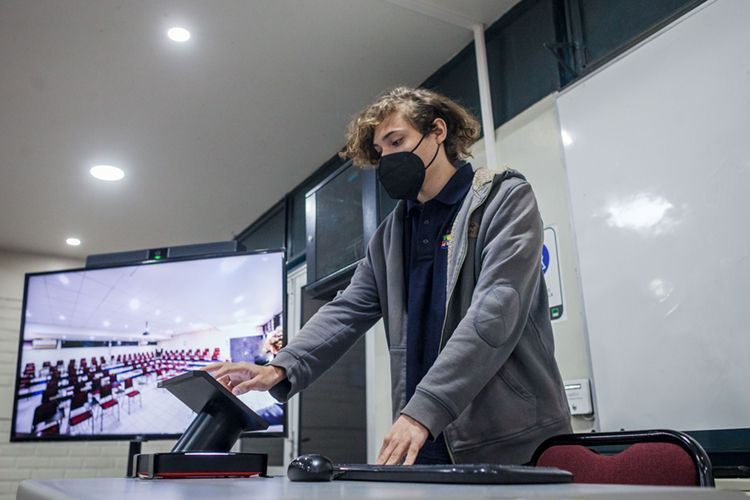
Advanced-solution hybrid classrooms
The so-called “advanced model” offers the simplest and most seamless user experience for the lecturer, as it starts up very quickly and in just a few seconds they are ready to begin their class, write on the whiteboard, show a presentation or a video and share their teaching with both the students in the classroom and those taking part remotely.
For the advanced-model hybrid classrooms, Tecnomove integrated a solution that includes the Bose Videobar VB1 all-in-one USB conferencing device, a Kaptivo camera to capture the whiteboard and a Lenovo ThinkSmart Hub from which the session is started and the other devices are controlled.
The Bose Videobar VB1 is mounted together with a flat screen on a support trolley that offers great flexibility. The Kaptivo camera sits at the front to capture the whiteboard, and the Lenovo ThinkSmart Hub is placed on the lecturer’s desk for ease of use.
This configuration meets the requirement for a clean installation, without multiple cables and connections that could become potential points of failure, as well as fast, intuitive operation.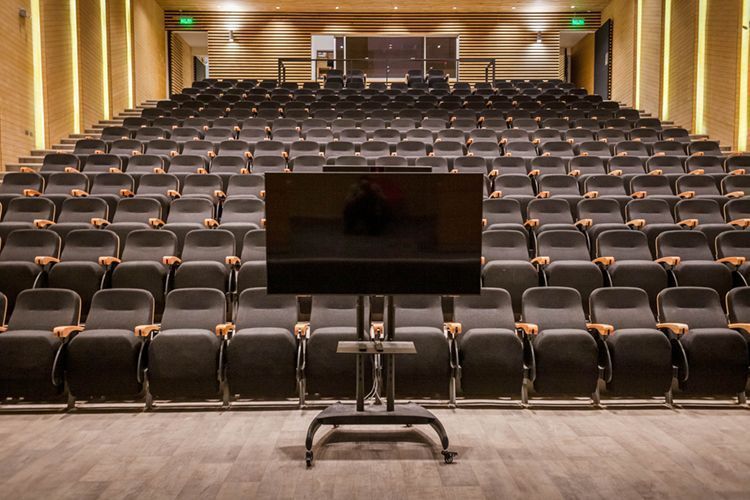 At the time of writing (August 2022), Tecnomove, with the support of distributor MMT, has installed more than 100 Bose Videobar VB1 units in various classrooms, rooms and small auditoriums across the different faculties and institutes.
The hybrid classroom concept aims to make lecturers feel comfortable teaching again, and this includes being able to move around freely while they speak. The Videobar VB1’s six beam-steering microphones and configurable pickup zones meet this need, as the lecturer’s voice is captured with great clarity even as they move from one side of the front of the classroom to the other.
The audio quality of the Bose Videobar VB1 speakers helps make remote students’ voices intelligible so that both the lecturer and the classmates in the room can hear them clearly. This intelligibility is essential when lecturers teach remotely, as without clear audio it would be impossible to hold the students’ attention.
For remote students, it is important to see the lecturer’s movements, both as they move across the front of the classroom and their arm and hand gestures. The VB1’s 4K Ultra HD camera has an auto-framing function that makes it easy to set a wide shot showing the lecturer full length or to zoom in for a medium shot.
Thanks to these features, students attending remotely have an experience much closer to what happens in the classroom and feel that they are actively taking part with their classmates and lecturers.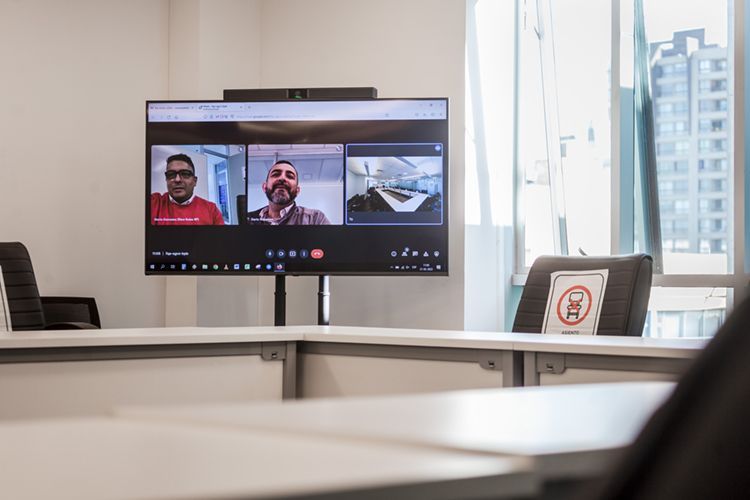
Ready to return to class from anywhere
Like the rest of the hybrid classrooms, the more than 100 classrooms equipped with the advanced solution using Bose, Lenovo and Kaptivo technologies have delivered positive results during the first months of operation.
Riquelme Zornow highlights the ease and speed with which lecturers start their classes without any complications. In addition, the audio and video quality with which classes are streamed is ideal for recording them and creating a library that students can consult on demand.
Universidad de Chile sees this project as part of its future academic strategy. For example, it is considering using the hybrid classrooms for postgraduate courses in order to broaden its reach, bring in students from other Chilean cities and host guest lecturers from other universities.
“Working with Universidad de Chile is a great privilege, because the impact of these solutions goes beyond technology; we know that in some way we are contributing to the education of young people in our country”, says Carol Noches, Sales Manager at Tecnomove.
I am very satisfied with the progress of the project and very comfortable with what we have achieved. Classes flow and the hybrid experience is very close to what lecturers and students want. I have the opportunity to visit each faculty and learn about users’ needs, so I can see that we are meeting the university’s expectations in terms of the scope of the solution, delivery time and the allocated budget, concludes Riquelme Zornow.
You may also like
EM lights Manuel Carrasco at La Cartuja
LEDVANCE cuts street lighting energy by up to 75%
Vokkero keeps the Ura Bere Bidean crew connected
Biamp Vocia: a paging system running for over ten years
31 Million Pixels Revolutionise Simulation

Genelec provides sound for a mini-golf venue in Germany
A journey through imagery, interaction and architecture
A new look for the Barcelona Metro with Soltec
Invisible Technology, Great Experiences
Fewer loudspeakers, greater clarity in the classroom
Communication in critical situations with UDE
The Value of Sound in Hospitality and Retail
Acoustics designed for sports and events
Platform for remote projector control

Real-time information for British Airways
Crestron turns the classroom into Wall Street
Church finds its voice with OPTIMUS
Integrated audio for fine dining environments
Networked audio for multifunctional spaces
Coordinates police alerts and emergencies
Sony technology to inspire architects
25 Barco projectors bring an AI museum to life
Anolis Illuminates the Natural Water Cycle

Aetria for Antarctic Exploration
Outdoor Displays for All Weather Conditions
Premium audio serving retail and hospitality
Immersive AV engineering to bring history to life
INFiLED LED at the World's Tallest Hotel
From live sound to home with L-Acoustics
Hikvision improves flood response
Premium audio drives retail performance

A digital canvas for the heart of Seattle
Atmospheres of light in the Qatari desert
Martin Audio brings sonic energy until dawn
Bilbao Brings Fans Together Through Digital Signage
A Sound Atmosphere Tailored for Retail
Universidad Europea Boosts Learning with Nureva
A Camp Nou designed for frictionless operation
HYRISS Technology in Residential Environments
HYRISS technology in residential environments
From isolated systems to smart security
ONGC’s Operational Brain Strengthens with Datapath
DATALAND, the new museum of AI arts
Frankfurt unveils the first native DooH terminal
Invisible audio to reinvent retail environments
Image, sound and space: a new interpretation
AV integration projects in Barcelona

Strategic reinforcement in the LED lighting area
Advanced hybrid education with Shure ecosystem
Multi-zone audio integration in a historic hotel in Lyon
Networked audio optimizes hotel spaces in Barcelona
Hyperclassroom in Granada with professional audio
Collaborative workplace for the future

Mariano Bula Stadium transformed with Optimus
More precise medical imaging with Barco technology
Video mapping enhances Salamanca Cathedral
Outdoor mounting for harsh environments
Uniguest drives a new digital era in stadiums