TBS Education warns of AI bias in recruitment processes
Written by Editorial TeamCategory: NEWS
Published:

Europe classes AI systems that screen job applications as high risk, and the ILO warns that biased data and a lack of transparency can carry inequalities into hiring. Ronald Clarke of TBS Education examines the risks.
Before a candidate ever speaks to someone in Human Resources, their CV may already have been analysed, ranked or compared with hundreds or thousands of other profiles by automated systems. Artificial intelligence promises to streamline increasingly complex recruitment processes, but handing part of the process to an algorithm raises an important question: what happens when a tool influences who moves on to the next stage and who is left out?
The concern has reached European regulation. The EU Artificial Intelligence Act lists certain recruitment and selection systems among its high-risk uses, such as those that analyse and filter applications or assess candidates. According to the European Commission, these tools can significantly affect career opportunities and reproduce historical patterns of discrimination if they are poorly designed or used.
The AI Act's specific obligations for these high-risk systems are expected to apply from 2 December 2027.
When bias becomes automated
Using artificial intelligence does not automatically make a process more objective. An algorithm produces results based on the goals it is given, the variables it analyses and the data it was trained on. An International Labour Organization (ILO) working paper on the use of AI in recruitment, pay, scheduling and employee evaluation warns that poorly defined objectives, incomplete or biased data and opaque systems can distort decision-making and reinforce existing inequalities.
The risk does not require a system to use variables such as sex, age or origin directly. Seemingly neutral data can act as indirect proxies for personal characteristics, so a tool designed to find the most suitable candidates may end up favouring profiles similar to those selected in the past.
AI can help us process large amounts of information, but we must not confuse efficiency with neutrality. If we train a system on historical decisions that contain certain biases, there is a risk of automating them and applying them on a much larger scale, explains Ronald Clarke, Professor of Human Resources at TBS Education.
Who really decides: the algorithm or the recruiter?
A system may not formally make the final decision and yet still shape the process by ranking profiles, assigning scores or determining which applications the hiring team sees first. The European Commission's guidelines cite as an example of a high-risk system a tool that analyses CVs, skills, experience or education to generate candidate scores and rankings.
Human oversight should therefore not be limited to pressing the final button, but should involve a real ability to understand, question and correct the system's recommendation.
Candidates living with AI
Jobseekers face a new challenge too: in some processes, the first filter may be an automated tool. This is not about 'fooling the algorithm', but about understanding that a clear CV, a precise description of skills and a good fit with the vacancy may matter even more. There is no universal formula, however, as criteria vary between companies.
According to Clarke, the challenge for young people starting their careers is twofold: they will need to use AI to find opportunities and prepare for selection processes, while also understanding that companies may be using it to assess them. In his view, AI literacy means knowing both its possibilities and its limits.
Photo: © TBS Education
You may also like

Sol Rashidi, AI pioneer, to headline ISE 2026

AI futurist Brian Solis at ISE 2025 keynote

Panasonic and HIVE: distributed architecture can cut immersive AV infrastructure by up to 80%
IDC names Shure a Leader in AI meeting rooms
AVPro Edge MXnet 10G-MSE: 4K and H.265 from one encoder

500 Sony BRAVIA displays connect 100 stores

Sony: the traditional office is falling behind

Datapath to operate under the VITEC brand in 2027

40 giant Sony displays for collaborative learning

OPTIMUS installs 19 SIP intercoms at a Mexican power plant

LEA Cloud diagnoses issues without on-site visits

Genelec equips a music school with 143 loudspeakers

AVIXA appoints Marco Pardi as new chief executive

Spark 2027 to open with Casa Batlló mapping artists
Hikvision Village: a city where it all connects
Barco recreates realistic maritime scenarios
LEDVANCE: free training in LED and smart lighting

Daktronics upgrades video and audio at Lane Stadium
Crestron Collab Engine: meetings and AV control in one

Nureva appoints Ted Shuter as VP, Products
Kramer makes SailPoint's Pune rooms divisible

Pulse brought seven minutes of AV to InfoComm

Sony miniaturises medical imaging with the IMX742
Sony equips Crestron’s centres in London and Paris
ISLE 2027 opens visitor registration in Shenzhen

Nureva brings AI to meeting room management
Hikvision applies thermography to fire prevention
Spark 2027 opens registration and grows at Montjuïc

Ghost meetings under the technological spotlight

Genelec creates a sound forest inside Finlandia Hall
Light + Building strengthens British lighting presence

Bluesound brings licensed music to shops and hotels
Hikvision renews its Madrid Excelente certification
Crestron develops its first proprietary AV chipset
Video Control and Distribution on a Single Platform
Immersive audio and smart rooms: how InfoComm went
Video control and distribution on a single platform
SeeSound equips Cuenca Hospital auditorium

Hikvision Village 2026 recreates a connected city

Curved displays, transparent LED and COB technology

InfoComm América Latina puts AI into practice

Mo Gawdat examines the impact of AI on businesses
IntelliMix Bar Pro takes centre stage in Shure’s strategy

OPTIMUS public address built for maximum demand

Sony equips Crestron's new Experience Centres

AV over IP: When the Network Becomes the System
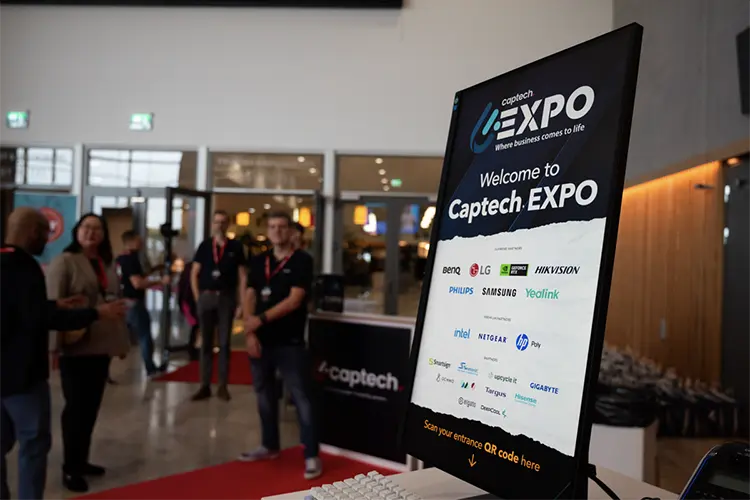
Captech EXPO Tests Technological Convergence

IFMA Spain: Technology, Spaces and People

Crestron connects more than 200 rooms at Camp Nou

Self-Service Kiosks and AI at InfoComm Latin America
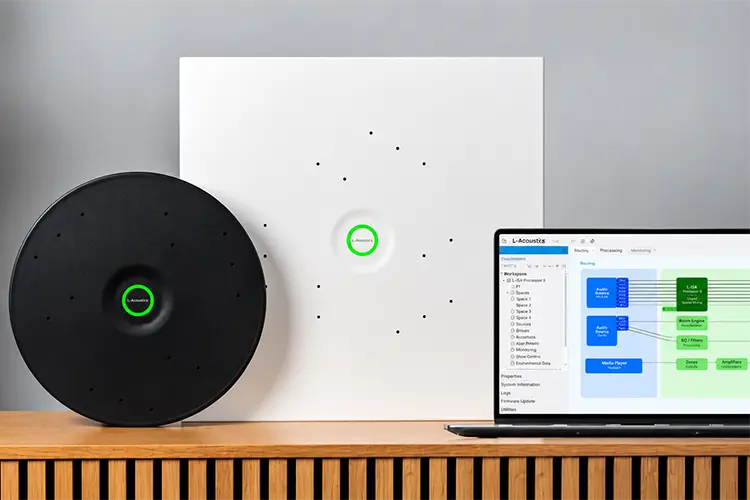
Collaboration, Wireless Audio and AV Management
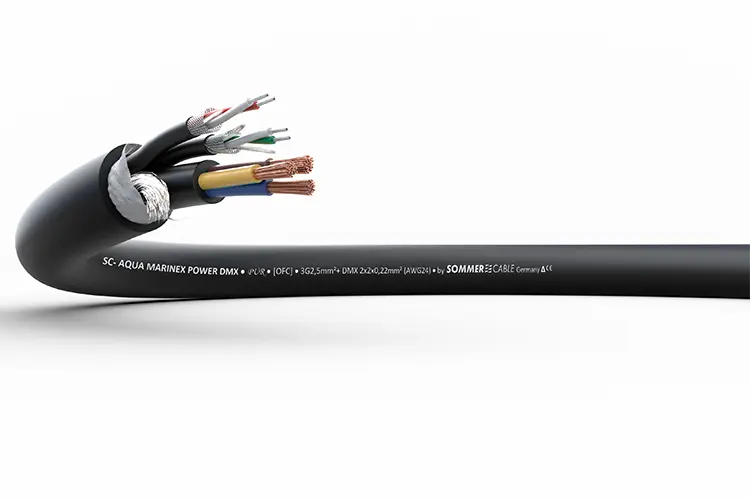
Sommer hybrid cable for underwater lighting
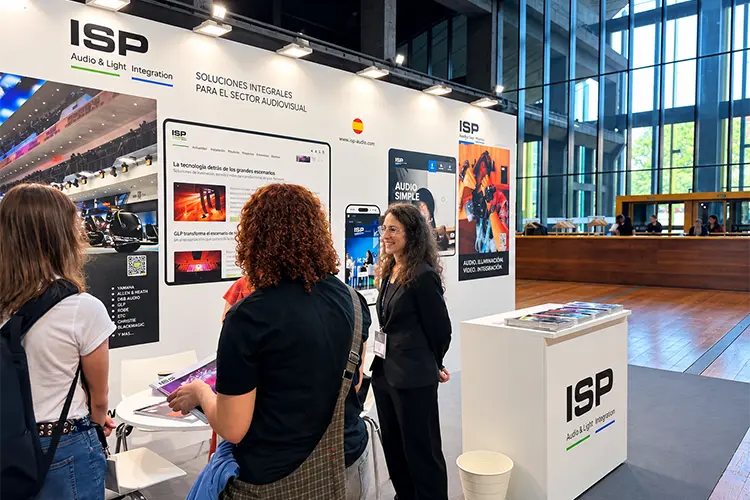
AVL SUMMIT by AFIAL: Exhibition and Technical Sessions
A Sharp plugin connects Q-SYS with NEC displays
AISpeech and effective listening in meetings
ISE 2027 expands its technological and creative universe

ISE 2027 adds Montjuïc with Spark and EdTech Congress

An agreement connects training and the AV industry