Fundación Telefónica: Joanie Lemercier, Landscapes of Light
Written by ISP Integration editorial teamCategory: SUCCESS STORIES
Published:
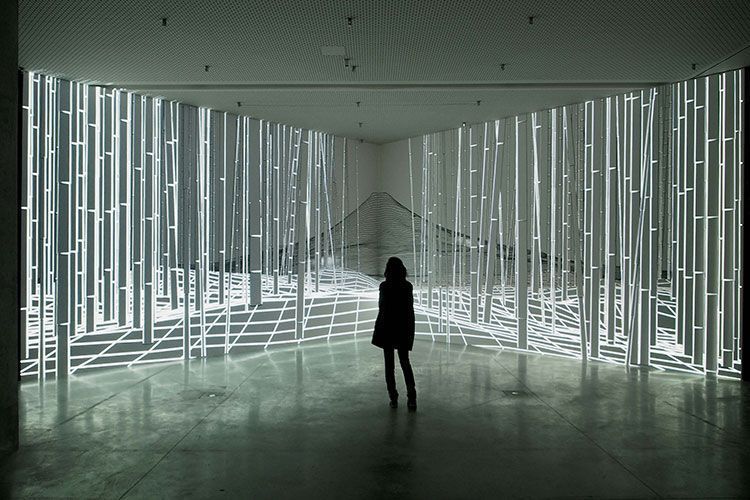
Fundación Telefónica presents ‘Joanie Lemercier. Landscapes of Light’, on show until 25 July 2021.
Espacio Fundación Telefónica presents the exhibition ‘Joanie Lemercier. Landscapes of Light’, the artist's first major solo exhibition, which immerses visitors in a journey through different landscapes, taking them from the contemplation of refined abstract lines and the fascination of majestic computer-generated mountains to the unsettling reality of overexploited nature. The exhibition can be visited free of charge, with prior booking on the website, on the 4th floor from 11 February to 25 July 2021.
A pioneer in the artistic use of video mapping and co-founder of the collective AntiVJ in 2008, Lemercier (Rennes, 1982) set up his own studio in 2009, first in New York and, since 2015, based in Brussels, to focus on creating pieces that use projected light to generate experiences that alter visual perception.
Through computer programming and the manipulation of devices, Lemercier turns projectors into a light source capable of transforming the appearance of things and making us question our conception of reality. «Light as a medium, space as a canvas» is the premise underpinning the body of work from this period.
This exhibition, curated by Juliette Bibasse, addresses the importance of nature in Lemercier's life and artistic career and offers a reflection on the representation of the natural environment through technology
Technology in his creative process
The first part of the exhibition brings together different types of landscape that reveal a paradox: the attempt to capture the spectacular beauty of nature untouched by humans, using digital tools. First of all, there are geometric views that reveal plays of space, shadow and volume that baffle the eye.
This is the case with the work Edges, which introduces key expressive elements of Lemercier's early period: grids, geometries and lines, through which the artist explores a technological landscape. In this first part, the artist also shows landscapes inspired by natural places, ancient legends or personal experiences, as well as imaginary geographies born of collaboration between human and machine.
In Montagne, cent quatorze mille polygones (Mountain, one hundred and fourteen thousand polygons), a valley surrounded by mountains created from a grid distorted by an algorithm highlights the blurred line between what we consider real and the simulation generated by mathematical functions. In his volcano series, the installations Eyjafjallajökull and Fuji reveal the immeasurable grandeur of nature compared with humankind.
The first of these pieces is inspired by the famous Icelandic volcano that caused enormous disruption to air traffic across northern and western Europe in spring 2010. In fact, it was an experience that affected him directly. At the time, Joanie Lemercier was due to begin an artist residency in New York and, on the day he was to fly there, the Icelandic volcano erupted. During the two weeks his flight was delayed, Lemercier closely followed the news about the volcano and spent hours drawing its silhouette and studying the eruption.
When he finally made it to New York, this obsession turned into inspiration, making the volcano the centrepiece of the installation conceived for the residency
Eyjafjallajökull was the first in Lemercier's volcano series. The work, a grid topography drawn directly onto two perpendicular walls, transports the viewer to the scene of the powerful explosion that led one of Iceland's largest volcanoes to produce a vast ash cloud.
The second installation dedicated to volcanoes consists of another large-scale hand-drawn landscape depicting Mount Fuji, augmented by a layer of projected light. The projection plays on the drawing to recreate an abstract version, made of light, of The Tale of the Bamboo Cutter, an ancient 10th-century Japanese legend.
From his desire to show the collaboration between human and machine in the creative process comes Paysages Possibles (Possible Landscapes). Initially, Lemercier used only a ballpoint pen on paper to make his drawings but, inspired by digital art pioneer Vera Molnar, he began using a plotter, which allows him to produce larger images from continuous lines.
With Paysages Possibles (Possible Landscapes), the plotter acts as an extension of the artist's hand, using software that gradually draws a distinctive universe of mountains. As the hours pass, the finished drawings are hung on the walls, showing the trial and error arising from the software's own glitches, which form part of the work's creative process.
Reflecting on human impact on nature
In contrast to the fascination generated by digitally «manufactured» environments, the second part of the exhibition reveals the reality of nature scarred by human overexploitation. Through colossal images captured by drone, Lemercier leaves fiction behind to confront us with the overwhelming urgency of safeguarding our environment.
One example is The Hambach Forest and the Technological Sublime , an installation in which the French artist shows the deforestation of one of Europe's oldest forests, 200 kilometres from Brussels, where the continent's largest coal mine has been established. Hambach Forest has thus become a focal point in the fight against climate change and for the preservation of biodiversity.
With this piece, Lemercier begins a new creative phase in which his artistic practice seeks to encourage reflection on sustainability and promote positive action against climate change
The exhibition concludes with Desirable Futures , a space for meditation and contemplation where the artist invites visitors to reflect on the present, to reawaken our ability to see the world and to engage with it, imagining and building new realities.
Joanie Lemercier's works have been shown at the China Museum of Digital Art in Beijing (China), Art Basel Miami (United States), Tokyo City View (Japan), the Roundhouse in London (United Kingdom) and Sónar Festival (Spain), as well as at Barneys New York and the Sundance Film Festival (United States), among other venues.
Programme of parallel activities and digital content
The exhibition is accompanied by a programme of free cultural activities for all audiences. On 23 February, as part of Madrid Design Festival, a round table on digital art and design linked to the exhibition will take place.
In addition, throughout the exhibition, users can access a range of digital content on the website to help understand and expand on the exhibition: the audio guide, audiovisual material, infographics, photo galleries of Lemercier's work and complementary educational material.
During the exhibition period, the family workshop ‘Light Illusions’ will be held (27 February; 6 and 27 March; 3 and 24 April; 8, 22 and 29 May; and 5, 12, 19 and 26 June 2021) to introduce children aged 6 to 12 to the technique of video mapping, alongside the programme around the exhibition for school groups. Guided tours for individuals (capacity 9 people) are also available from 18 February 2021, booked on the Espacio website: Tuesday to Friday at 12:00; Wednesdays and Fridays at 17:00; and Sundays at 10:30.
You may also like

Fundación Telefónica backs hybrid formats: 8.3 million beneficiaries
Fundación Telefónica Christmas programme: exhibitions and workshops

Fundación Telefónica exhibition ‘The Great Imagination’
enlightED 2021: Fundación Telefónica's hybrid education event

Museo del Prado and Samsung launch ‘Prado Inclusivo’ programme
Samsung The Frame brings the Louvre's masterpieces home
Fundación Telefónica pays tribute to architect Julio Cano Lasso
Queen Letizia visits Fundación Telefónica
Queen Letizia visits Fundación Telefónica – video
Queen Letizia meets Fundación Telefónica's board in Madrid
L-Acoustics covers 182 metres at Primavera Sound
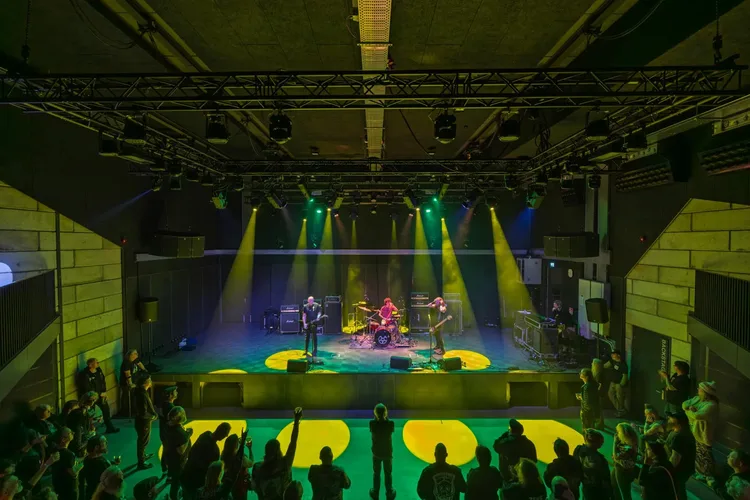
Martin Audio TORUS powers Rotterdam's reborn Baroeg
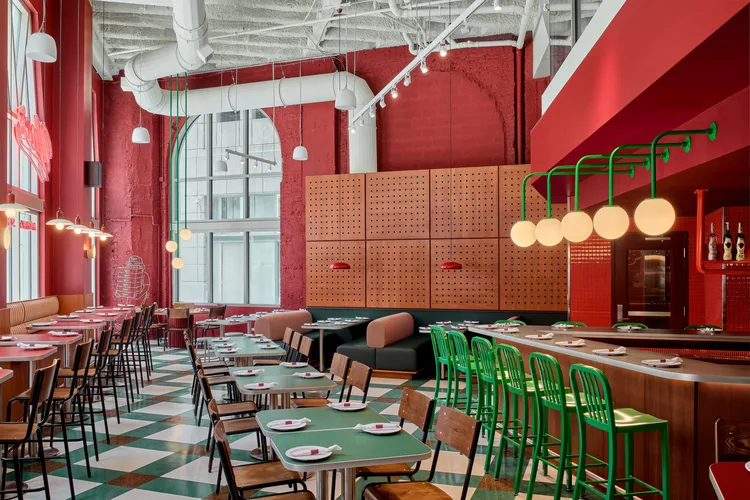
Optimal Audio sets the sound at Unc's Pizza in Detroit
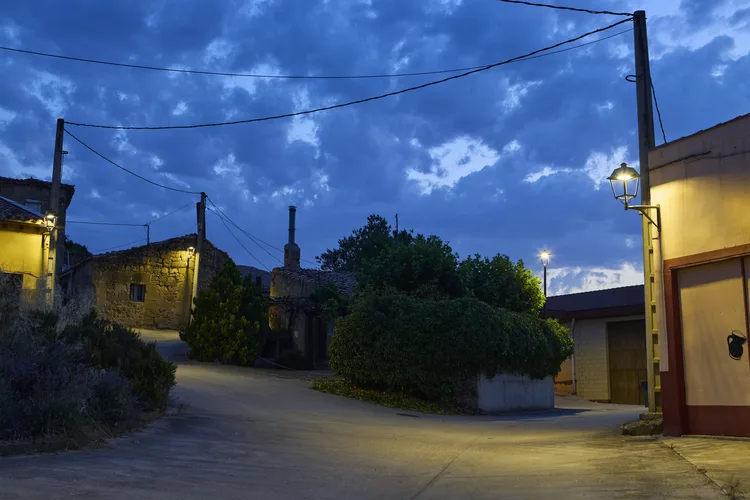
LEDVANCE cuts street lighting energy by up to 75%
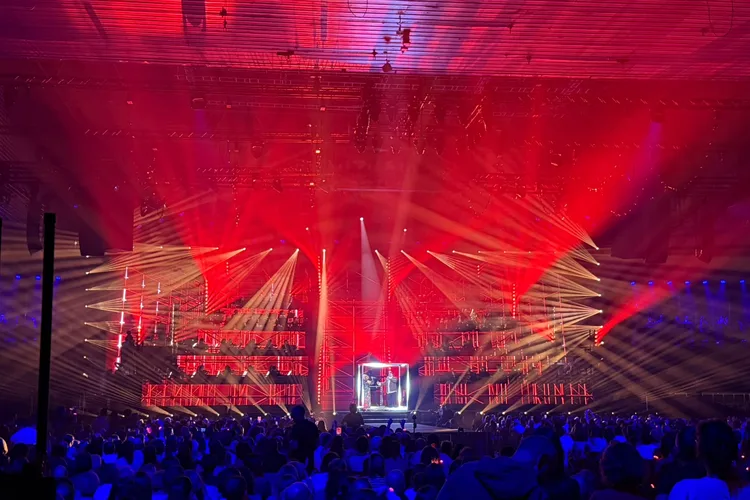
Vokkero keeps the Ura Bere Bidean crew connected
Biamp Vocia: a paging system running for over ten years

31 Million Pixels Revolutionise Simulation
Genelec provides sound for a mini-golf venue in Germany

A journey through imagery, interaction and architecture

A new look for the Barcelona Metro with Soltec

Invisible Technology, Great Experiences
Fewer loudspeakers, greater clarity in the classroom
Communication in critical situations with UDE

The Value of Sound in Hospitality and Retail
Acoustics designed for sports and events

Platform for remote projector control

Real-time information for British Airways

Crestron turns the classroom into Wall Street
Church finds its voice with OPTIMUS
Integrated audio for fine dining environments
Networked audio for multifunctional spaces

Coordinates police alerts and emergencies
Sony technology to inspire architects
25 Barco projectors bring an AI museum to life
Anolis Illuminates the Natural Water Cycle

Aetria for Antarctic Exploration

Outdoor Displays for All Weather Conditions
Premium audio serving retail and hospitality
Immersive AV engineering to bring history to life

INFiLED LED at the World's Tallest Hotel

From live sound to home with L-Acoustics
Hikvision improves flood response

Premium audio drives retail performance

A digital canvas for the heart of Seattle

Atmospheres of light in the Qatari desert
Martin Audio brings sonic energy until dawn
Bilbao Brings Fans Together Through Digital Signage

A Sound Atmosphere Tailored for Retail
Universidad Europea Boosts Learning with Nureva
A Camp Nou designed for frictionless operation

HYRISS Technology in Residential Environments

HYRISS technology in residential environments
From isolated systems to smart security
ONGC’s Operational Brain Strengthens with Datapath

DATALAND, the new museum of AI arts
Frankfurt unveils the first native DooH terminal
Invisible audio to reinvent retail environments
Image, sound and space: a new interpretation