
Smart cities vs cyberattacks: is there a winner?
Written by ISP Integration editorial teamCategory: NEWS
Published:

By 2024 there will be more than 1.3 billion internet connections in smart cities.
Smart cities are becoming a reality rather than a concept, and the integration of technology into everyday infrastructure has become the norm.
They harness the potential of Information and Communication Technologies (ICT) to drive sustainable development more efficiently and improve their citizens' quality of life. In fact, it is estimated that by 2024 there will be more than 1.3 billion internet connections in these smart cities.
Check Point® Software Technologies Ltd. (NASDAQ: CHKP), a global provider of cybersecurity solutions, warns that the complexity of these digital infrastructures is only increasing, which means that any digital service deployed by a government or company will be more vulnerable than ever to cyberattacks. This is because the use of large connected networks offers cybercriminals more endpoints than ever before and the perfect opportunity to jump from one exposed system to the next.
Smart cities face unique cybersecurity challenges. Networks are used by public and private bodies, individuals and thousands of IoT devices every day. The sheer volume of data exchanged across these networks calls for a rigorous security strategy. Some of the main challenges are:
- Keeping track of every connected device: a multitude of IoT devices controlling everything from CCTV and traffic light management to personal and corporate financial data could be connected to a network at any given time. In theory this sounds ideal for seamless communication and management, but in practice it gives cybercriminals thousands of potential entry points from which to launch an attack.
- Protecting every infrastructure operation: automation brings many benefits to all kinds of smart city operations, reducing the need for direct human control over those systems. More sensors mean more connections to monitor and manage, and these can be seen as more targets to compromise through vulnerabilities.
- Improving data protection: data lies at the heart of any smart city and is essential for carrying out day-to-day operations. However, many lack the right processes to ensure this information is handled securely. If a database is not properly controlled, it can be easy for cybercriminals to attack and compromise it, leading to the leak or theft of confidential data.
- Understanding ICT supply chain and supplier risks: this was particularly evident during the recent zero-day vulnerability found in the MOVEit file transfer software, which was subsequently exploited as part of a large-scale ransomware attack. Attackers continue to focus on the weakest links, so smart infrastructure systems are bound to be a lucrative target. To counter this, it is essential to adopt secure-by-design and secure-by-default practices.
- Having the latest technology: many cities have infrastructure and networks built on outdated technology, which makes them susceptible to cyberattacks. Ensuring systems are up to date with the latest software updates and security patches is paramount. This is fundamental to the success of any smart city, and resilient systems must be a priority.
- Raising the level of security: directly linked to outdated technology, ineffective security protocols expose smart cities to numerous malicious threats. This leaves citizens and organisations at the mercy of data breaches, identity theft and the loss of sensitive information. Protecting existing infrastructure with robust security measures could prevent a potentially disastrous breach.
The world is moving at a speed few can keep up with, and cities are no exception. Now that technology is increasingly present in every daily activity of a large city, it is essential to implement the necessary cybersecurity measures. The more devices connected to the network, the more likely it is to be vulnerable. The level of protection must be optimal from the outset so that no security breach occurs, warns Eusebio Nieva, technical director of Check Point Software for Spain and Portugal.
You may also like
AVPro Edge MXnet 10G-MSE: 4K and H.265 from one encoder

500 Sony BRAVIA displays connect 100 stores

Sony: the traditional office is falling behind

Datapath to operate under the VITEC brand in 2027

40 giant Sony displays for collaborative learning

OPTIMUS installs 19 SIP intercoms at a Mexican power plant

LEA Cloud diagnoses issues without on-site visits

Genelec equips a music school with 143 loudspeakers

AVIXA appoints Marco Pardi as new chief executive

Spark 2027 to open with Casa Batlló mapping artists

Hikvision Village: a city where it all connects
Barco recreates realistic maritime scenarios

LEDVANCE: free training in LED and smart lighting

Daktronics upgrades video and audio at Lane Stadium

Crestron Collab Engine: meetings and AV control in one

Nureva appoints Ted Shuter as VP, Products

Kramer makes SailPoint's Pune rooms divisible

Pulse brought seven minutes of AV to InfoComm

Sony miniaturises medical imaging with the IMX742
Sony equips Crestron’s centres in London and Paris

ISLE 2027 opens visitor registration in Shenzhen

Nureva brings AI to meeting room management
Hikvision applies thermography to fire prevention

Spark 2027 opens registration and grows at Montjuïc

Ghost meetings under the technological spotlight

Genelec creates a sound forest inside Finlandia Hall

Light + Building strengthens British lighting presence

Bluesound brings licensed music to shops and hotels

Hikvision renews its Madrid Excelente certification

Crestron develops its first proprietary AV chipset

Video Control and Distribution on a Single Platform

Immersive audio and smart rooms: how InfoComm went

Video control and distribution on a single platform
SeeSound equips Cuenca Hospital auditorium

Hikvision Village 2026 recreates a connected city

Curved displays, transparent LED and COB technology

InfoComm América Latina puts AI into practice

Mo Gawdat examines the impact of AI on businesses
IntelliMix Bar Pro takes centre stage in Shure’s strategy

OPTIMUS public address built for maximum demand
Sony equips Crestron's new Experience Centres

AV over IP: When the Network Becomes the System

Captech EXPO Tests Technological Convergence

IFMA Spain: Technology, Spaces and People

Crestron connects more than 200 rooms at Camp Nou

Self-Service Kiosks and AI at InfoComm Latin America

Collaboration, Wireless Audio and AV Management
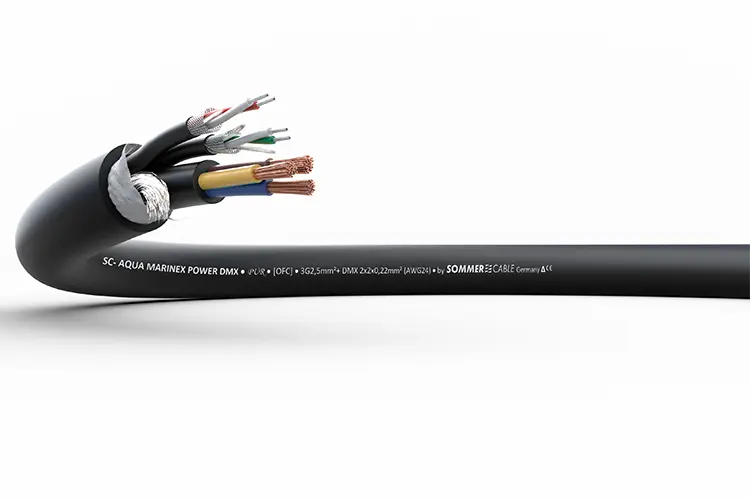
Sommer hybrid cable for underwater lighting

AVL SUMMIT by AFIAL: Exhibition and Technical Sessions

A Sharp plugin connects Q-SYS with NEC displays

AISpeech and effective listening in meetings

ISE 2027 expands its technological and creative universe

ISE 2027 adds Montjuïc with Spark and EdTech Congress

An agreement connects training and the AV industry

Classrooms that understand: audio and learning

Meetings: the cost of a meeting room that fails
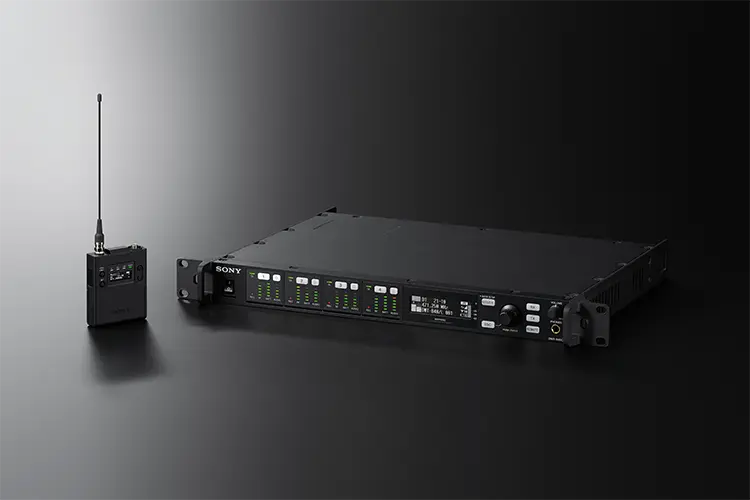
A sonic lifeline for every live production

Hikvision cameras with time-lapse monitoring