The retail sector's commitment to technology
Written by ISP Integration editorial teamCategory: NEWS
Published:
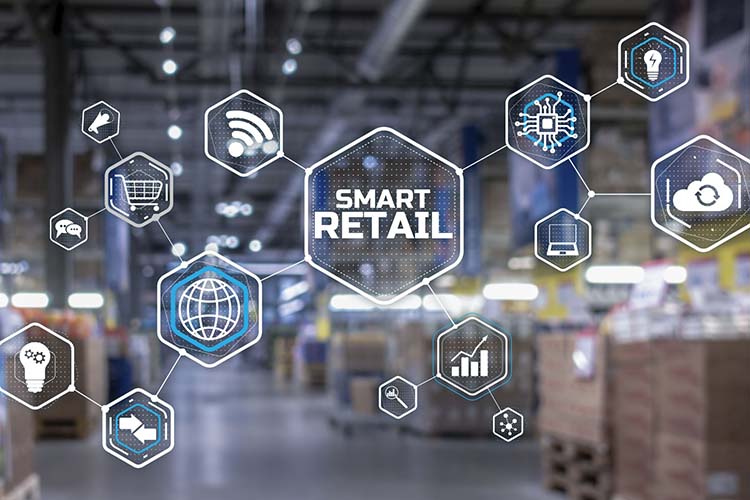
Five ways in which retailers will turn to technology to meet and exceed customer expectations.
New predictions from HPE Aruba Networking, unveiled at NRF 2023, detail how retailers will harness technology to stay ahead of changing customer demands and operational challenges over the next 12-18 months.
Owing to the uncertain macroeconomic environment and consumers' growing demand for an increasingly personalised service, customers will become ever more selective about how and where they spend their money in 2023.
As competition to retain and win new customers grows, retailers will have to offer more flexible and personalised shopping experiences to attract potential buyers, both online and in store. This will place a heavy burden on IT teams, who will have to keep up with the pace of technological change while ensuring that operations run smoothly.
To help retailers as they begin the new year, Aruba has worked with global trends agency Foresight Factory to identify five ways in which the retail experience will change during 2023 and to determine the implications this change will have for organisations' IT teams and their computer networks.
The findings of this collaboration make a compelling case for moving to a more flexible and agile network consumption model, such as Network-as-a-Service (NaaS), in order to help relieve some of the pressure on IT and network teams, enable greater scalability and deliver a networking solution that is more focused on business outcomes.
Immersive digital experiences reach in-store shoppers
As retailers struggle to draw customers back into physical spaces, they will invest more in technologies that allow them to deepen immersive in-store shopping experiences and make these experiences even more distinctive.
Technologies such as Augmented Reality and Virtual Reality, which give shoppers a better idea of how an item will fit into their lives before they even reach the point of sale, will become fully integrated into the user experience (UX) offered by retailers.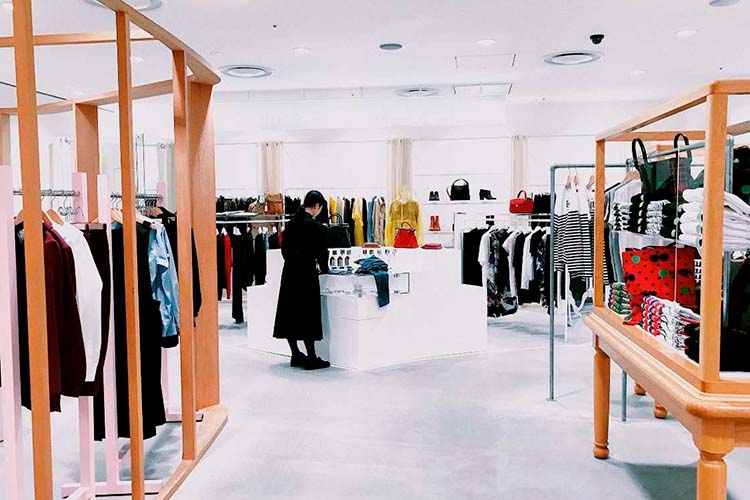
More varied and diversified delivery options
Consumer expectations regarding on-demand delivery options, with variable time slots and flexible locations, are growing rapidly.
Retailers and shopkeepers will have to adopt an increasingly hybrid approach to fulfilling orders, offering traditional delivery solutions alongside others such as dark stores, micro-fulfilment centres, grab-and-go "pop-ups" or on-demand couriers.
Improved geolocation services and even the roll-out of mobile shops will give retailers the opportunity to take the point of sale directly to the consumer's home or workplace.
Smarter stores to increase satisfaction and efficiency
With e-commerce offerings becoming increasingly sophisticated competition, physical store spaces will be redefined not only to improve customer satisfaction and personalisation, but also to make commercial operations ever more efficient.
Physical stores will be increasingly connected, implementing innovations such as smart fitting rooms and checkout-free payments, while IoT sensor capabilities deliver real-time insights to support operational savings and sustainability goals.
Smart inventory insights will secure consumer loyalty
In today's era of instant gratification, consumers expect retailers to deliver what they want, when they want it, and will not tolerate any deviation from what was promised. Accordingly, an increase in the use of automation and predictive technologies is expected, enabling more accurate inventory tracking and meeting customer demands in real time.
The use of smart robots in warehouses and distribution centres will also make operations smarter and make made-to-order retail more widespread, with a consequent reduction in waste and excess stock.
Showrooming becomes streaming
Live broadcasts from physical stores will become increasingly common, as brands seek to create the next phase of the showroom experience by letting customers slip behind the scenes. These kinds of experiences provide brand content while building a closer relationship with the customer and, in addition, allow retailers to make better use of the rest of their physical spaces.
Whether it is immersive experiences, live streaming or new delivery methods, retailers' technology needs are becoming ever more substantial and complex as their fight for business continues. And while vital, new and modern technology will depend on having the right infrastructure to support it. In the face of constant change, retail businesses need predictability and the confidence of knowing that their computer network will be able to adapt to meet ever-evolving customer demands and that their IT teams will not buckle under the burden of continuous digitalisation, says Gerri Hinkel, Director of Solutions and Vertical Marketing at HPE Aruba Networking.
"To achieve this, retailers need to rethink their approach to the network - looking at alternative consumption models such as NaaS - not only to make sure they can adapt nimbly as demands change, but also that they have a high-performance, secure, reliable and automated network that can support all this technology and harness real-time insights to enable new customer-focused and smart-store initiatives".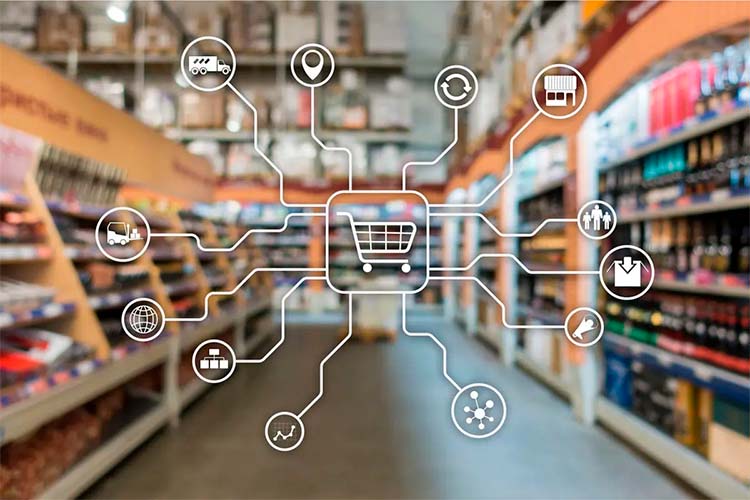
You may also like

TBS Education warns of AI bias when hiring staff
Panasonic and HIVE: 80% less AV infrastructure

IDC names Shure a Leader in AI meeting rooms
AVPro Edge MXnet 10G-MSE: 4K and H.265 from one encoder

500 Sony BRAVIA displays connect 100 stores
Sony: the traditional office is falling behind

Datapath to operate under the VITEC brand in 2027
40 giant Sony displays for collaborative learning

OPTIMUS installs 19 SIP intercoms at a Mexican power plant

LEA Cloud diagnoses issues without on-site visits

Genelec equips a music school with 143 loudspeakers

AVIXA appoints Marco Pardi as new chief executive

Spark 2027 to open with Casa Batlló mapping artists
Hikvision Village: a city where it all connects
Barco recreates realistic maritime scenarios

LEDVANCE: free training in LED and smart lighting

Daktronics upgrades video and audio at Lane Stadium
Crestron Collab Engine: meetings and AV control in one

Nureva appoints Ted Shuter as VP, Products
Kramer makes SailPoint's Pune rooms divisible

Pulse brought seven minutes of AV to InfoComm

Sony miniaturises medical imaging with the IMX742
Sony equips Crestron’s centres in London and Paris
ISLE 2027 opens visitor registration in Shenzhen

Nureva brings AI to meeting room management
Hikvision applies thermography to fire prevention
Spark 2027 opens registration and grows at Montjuïc
Ghost meetings under the technological spotlight
Genelec creates a sound forest inside Finlandia Hall
Light + Building strengthens British lighting presence
Bluesound brings licensed music to shops and hotels
Hikvision renews its Madrid Excelente certification
Crestron develops its first proprietary AV chipset
Video Control and Distribution on a Single Platform
Immersive audio and smart rooms: how InfoComm went

Video control and distribution on a single platform
SeeSound equips Cuenca Hospital auditorium

Hikvision Village 2026 recreates a connected city
Curved displays, transparent LED and COB technology
InfoComm América Latina puts AI into practice

Mo Gawdat examines the impact of AI on businesses
IntelliMix Bar Pro takes centre stage in Shure’s strategy
OPTIMUS public address built for maximum demand
Sony equips Crestron's new Experience Centres

AV over IP: When the Network Becomes the System
Captech EXPO Tests Technological Convergence

IFMA Spain: Technology, Spaces and People
Crestron connects more than 200 rooms at Camp Nou
Self-Service Kiosks and AI at InfoComm Latin America
Collaboration, Wireless Audio and AV Management
Sommer hybrid cable for underwater lighting

AVL SUMMIT by AFIAL: Exhibition and Technical Sessions
A Sharp plugin connects Q-SYS with NEC displays
AISpeech and effective listening in meetings

ISE 2027 expands its technological and creative universe

ISE 2027 adds Montjuïc with Spark and EdTech Congress

An agreement connects training and the AV industry

Classrooms that understand: audio and learning