Interactive and interconnected experiences
Written by ISP Integration editorial teamCategory: NEWS
Published:
Before any reflection, it is worth clarifying that the audiovisual industry was already undergoing radical change before the pandemic.
When it arrived, with technological development in full acceleration and growing demand for more interactive and interconnected experiences, companies faced enormous doubts and risks about the options for creating great audiovisual experiences and events. In this context, people tried to quickly interpret the signals offered by user behaviour and habits, but doing so in an unprecedented, never-before-seen landscape was not easy.
The standstill became total, with dramatic consequences for employment and investment in the sector: events had to be small and intimate or were cancelled to avoid the risk of infection, and confidence in new channels such as virtual events and streaming grew very slowly. The undiminished need to communicate more and better allowed those who could not or did not want to attend an event in person to do so online. A transformation had begun in the way we enjoy ourselves, work and educate.
The end of the pandemic has meant that most companies are operating again (or at least trying to) and, by analysing the past and the present, we can begin to think about what kind of events we want. We now know a great deal, but it is always too early to make accurate forecasts. For the moment, we can see that audiovisual events are more important than ever.
Audiovisuals and technology have become essential in our daily lives because they help us connect with others in a particularly emotional and immediate way. As digital media become more popular than ever, technology in this industry has allowed us to watch films, play games or work in any situation, anywhere and with any person or group of people around the world.
The sector continues to develop and create new, increasingly advanced products with more features and benefits for users, resulting in audiovisual systems that, although more complex and complete, are easier to use thanks to the design of their user interfaces.
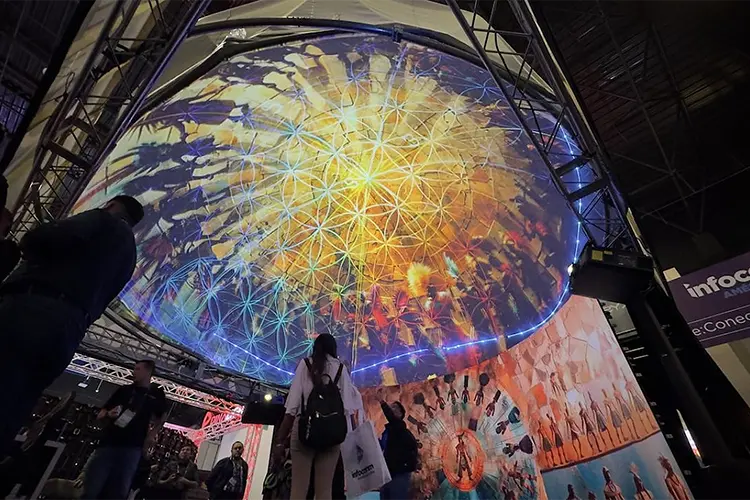
Without a doubt, LED screens are the stars of the event and are consolidating their position as the display system most widely adopted by professionals. Their precise construction, which is increasingly lightweight, flexible and adaptable to curves and spherical or organic geometries, offers infinite possibilities to designers and artists. In the field of AV integration, we can build immersive LED domes offering interactive 8K content with 3D spatial sound and lighting effects. Film sets and TV studios can no longer do without LED backdrops, which are pushing traditional video walls aside; the advances in robotic cameras, real-time 3D rendering and virtual, augmented and extended reality applications are demonstrated every day by productions in the film and television industry. Their use in concerts, conferences and, in general, any application for showing content to large audiences is now so widespread that no professional can do without LED screens in their stage designs.
Video projection has not lagged behind in its R&D projects, both in the generation of the main light source and in optics, lenses, mechanics and control. Today's projectors can exceed 50,000 lumens and deliver native 8K resolution at considerable distances and on very large screens.
The multiple projection and focus adjustment options and the use of new 3D authoring and creation software have led to the emergence of a new technique, mapping, now recognised as a trend in its own right, increasingly popular and accepted by creators of striking visual experiences. It ranges from projection onto large architectural or monumental surfaces as part of an audiovisual event for crowds, to projection onto small objects interacting with the user (micro-mapping), such as overhead projections onto restaurant tables, product presentations or artworks, and art installations in museums and exhibitions.
The conversion of analogue information into ones and zeros is more than a trend; it is a new dimension of human knowledge. With digital transformation we are advancing in other areas of audiovisuals, and we are now seeing the benefits of wireless audio and video distribution. The reason is simple: they increase communication flexibility and efficiency while reducing the hardware needed to make it happen. And with less hardware and infrastructure, we see great opportunities for companies in the future as this technology improves. No current communications protocol would exist or be possible without digital transformation.
However, for digitalisation to keep developing, we need better "chips" and components that store and transmit more information, faster. We need to store energy efficiently in order to move towards the longed-for absence of cables, to total "wireless", with the autonomy and safety that live events deserve. And the development of ever smaller, lighter and more powerful batteries will make the process easier.
In installations, the path of the trends leads us to autonomous, network-connected and, above all, cable-free devices. Although the nightmare of kilometres of cabling is not about to end, in many areas of audiovisuals, especially video, audio, microphone or lighting transmission, we already resort to "no cables" as a matter of course.
There are many more trends affecting the world of audiovisuals and events, always interconnected, combined and often converging in brilliant innovations: some, such as interactives, which hold great promise for the future, and digital signage, implemented in shopping centres and brand stores. "Gaming" and the broadcasting of major "e-games" competitions, such as "eSports", fill stadiums and are streamed live on streaming platforms. Artificial intelligence, with all its potential to transform the audiovisual industry, will promote the automation of guidance and access processes in museums, "showrooms" or trade shows, and today it already enables the robotic creation of content for digital signage networks, which is self-generated and automatically renewed based on people-recognition algorithms or other data.
If young people are the future, we must pay close attention to the habits of the younger generations. We believe that companies wishing to attract their attention should use events as an opportunity for us to get closer to them and for them to get closer to each other: events where they can meet face to face rather than simply posting adverts. And audiovisual content on big screens is an excellent way to do this!
Many surprises await us in the future. Everything will come, but what matters now is to observe and understand what is happening in our industry so that we stay on high alert for trends and our work is aligned with our clients' preferences.
You may also like

TBS Education warns of AI bias when hiring staff
Panasonic and HIVE: 80% less AV infrastructure
IDC names Shure a Leader in AI meeting rooms
AVPro Edge MXnet 10G-MSE: 4K and H.265 from one encoder
500 Sony BRAVIA displays connect 100 stores
Sony: the traditional office is falling behind
Datapath to operate under the VITEC brand in 2027
40 giant Sony displays for collaborative learning
OPTIMUS installs 19 SIP intercoms at a Mexican power plant
LEA Cloud diagnoses issues without on-site visits
Genelec equips a music school with 143 loudspeakers

AVIXA appoints Marco Pardi as new chief executive
Spark 2027 to open with Casa Batlló mapping artists
Hikvision Village: a city where it all connects
Barco recreates realistic maritime scenarios
LEDVANCE: free training in LED and smart lighting
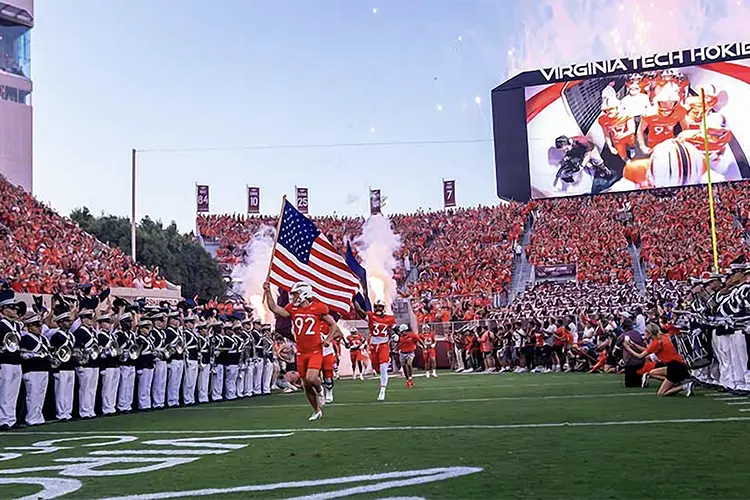
Daktronics upgrades video and audio at Lane Stadium
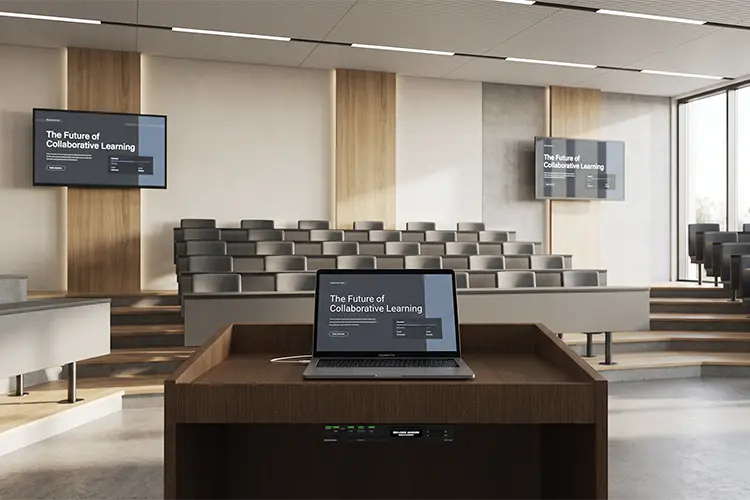
Crestron Collab Engine: meetings and AV control in one

Nureva appoints Ted Shuter as VP, Products
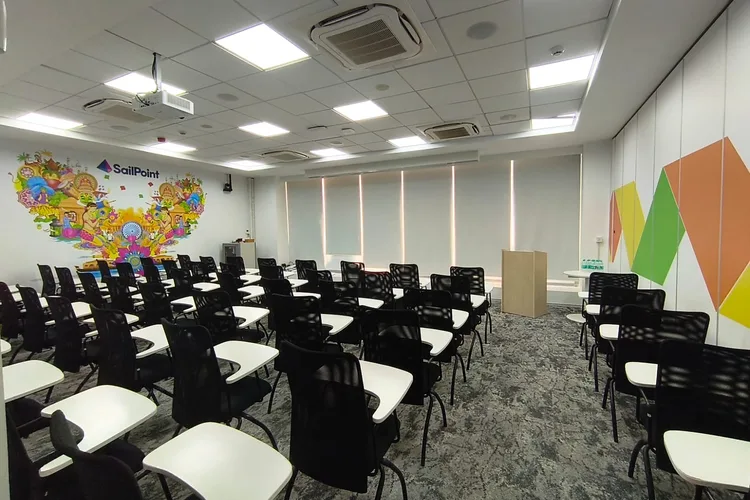
Kramer makes SailPoint's Pune rooms divisible
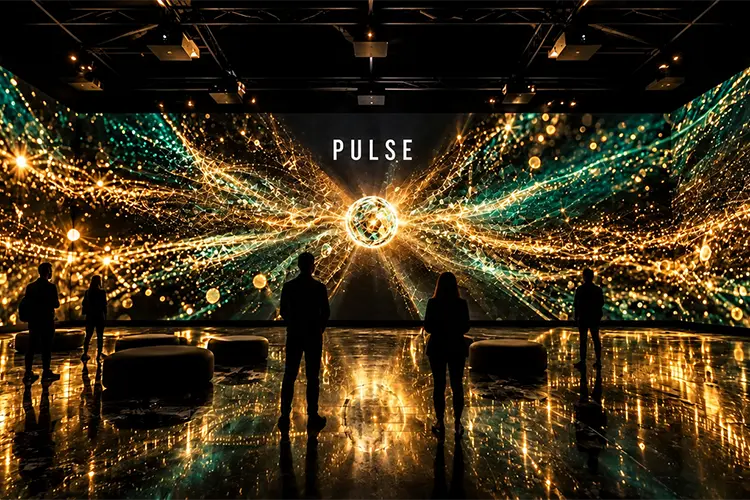
Pulse brought seven minutes of AV to InfoComm
Sony miniaturises medical imaging with the IMX742
Sony equips Crestron’s centres in London and Paris
ISLE 2027 opens visitor registration in Shenzhen

Nureva brings AI to meeting room management
Hikvision applies thermography to fire prevention
Spark 2027 opens registration and grows at Montjuïc
Ghost meetings under the technological spotlight
Genelec creates a sound forest inside Finlandia Hall
Light + Building strengthens British lighting presence
Bluesound brings licensed music to shops and hotels
Hikvision renews its Madrid Excelente certification
Crestron develops its first proprietary AV chipset
Video Control and Distribution on a Single Platform
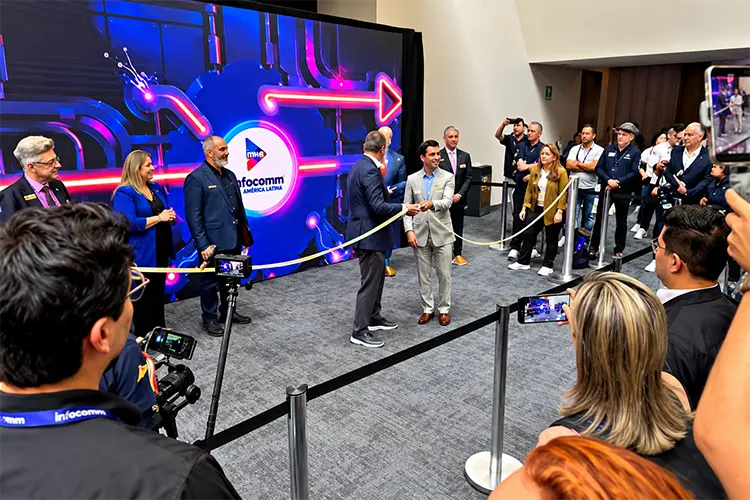
Immersive audio and smart rooms: how InfoComm went
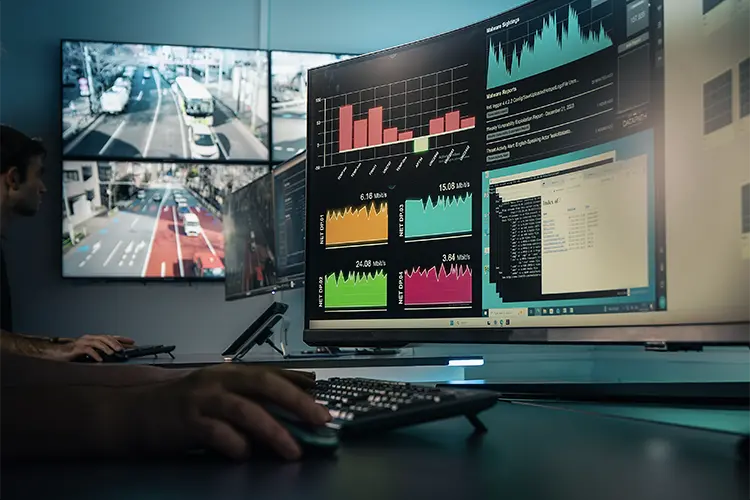
Video control and distribution on a single platform
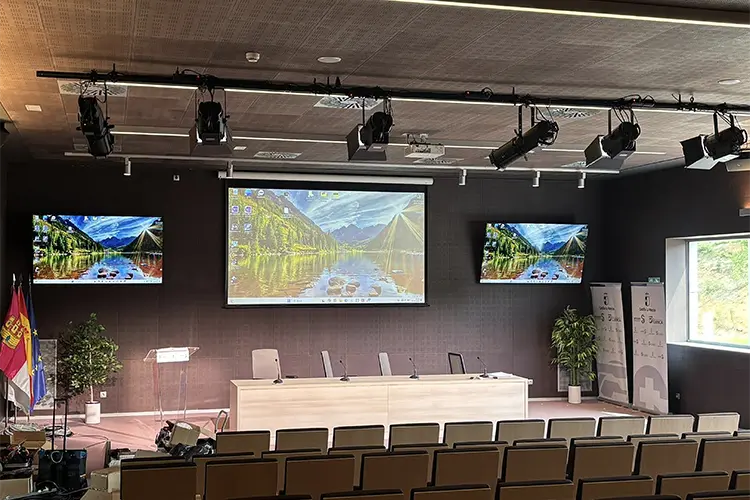
SeeSound equips Cuenca Hospital auditorium

Hikvision Village 2026 recreates a connected city
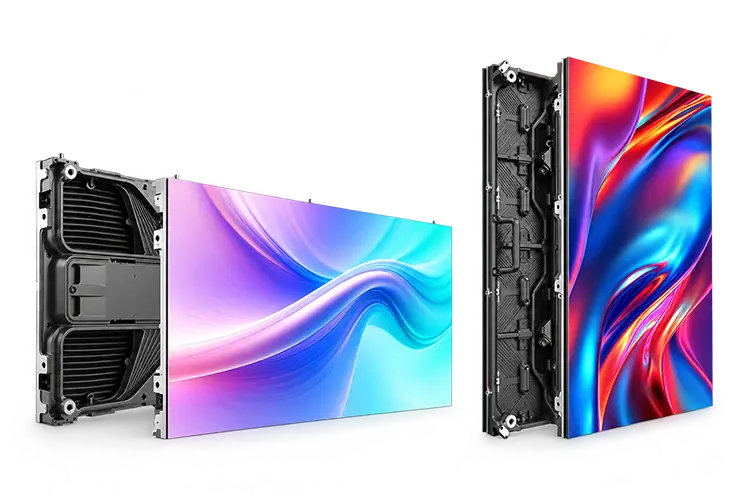
Curved displays, transparent LED and COB technology
InfoComm América Latina puts AI into practice

Mo Gawdat examines the impact of AI on businesses
IntelliMix Bar Pro takes centre stage in Shure’s strategy
OPTIMUS public address built for maximum demand
Sony equips Crestron's new Experience Centres

AV over IP: When the Network Becomes the System
Captech EXPO Tests Technological Convergence

IFMA Spain: Technology, Spaces and People
Crestron connects more than 200 rooms at Camp Nou
Self-Service Kiosks and AI at InfoComm Latin America
Collaboration, Wireless Audio and AV Management
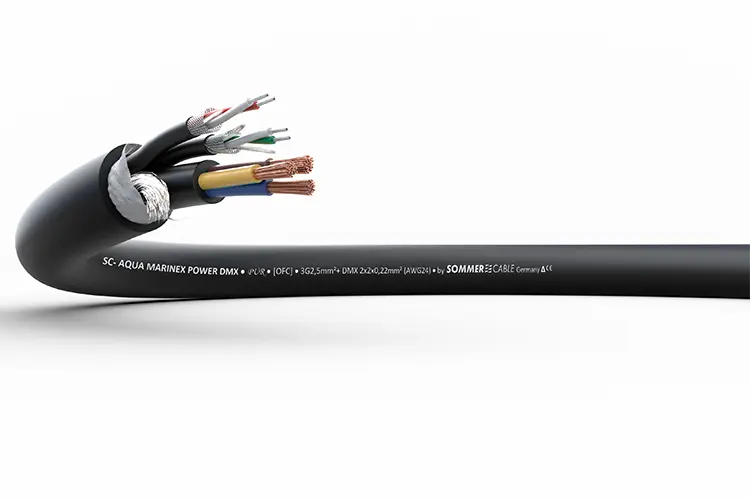
Sommer hybrid cable for underwater lighting
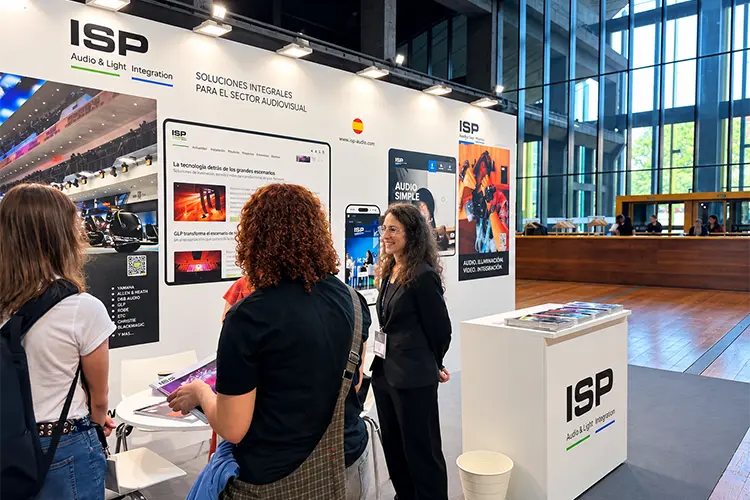
AVL SUMMIT by AFIAL: Exhibition and Technical Sessions
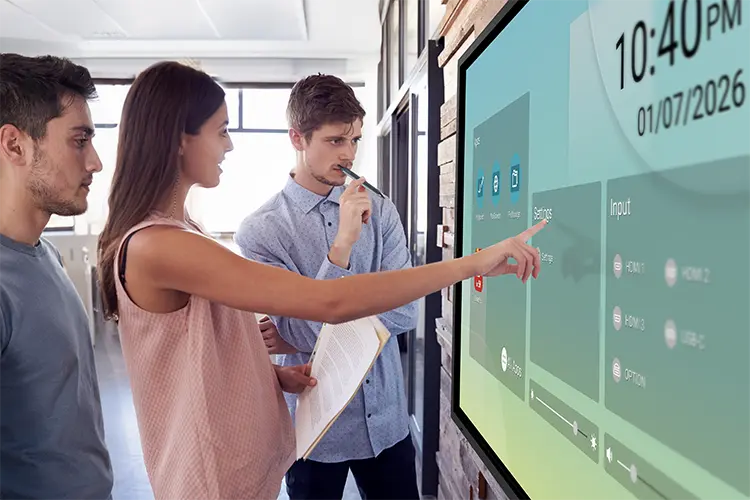
A Sharp plugin connects Q-SYS with NEC displays
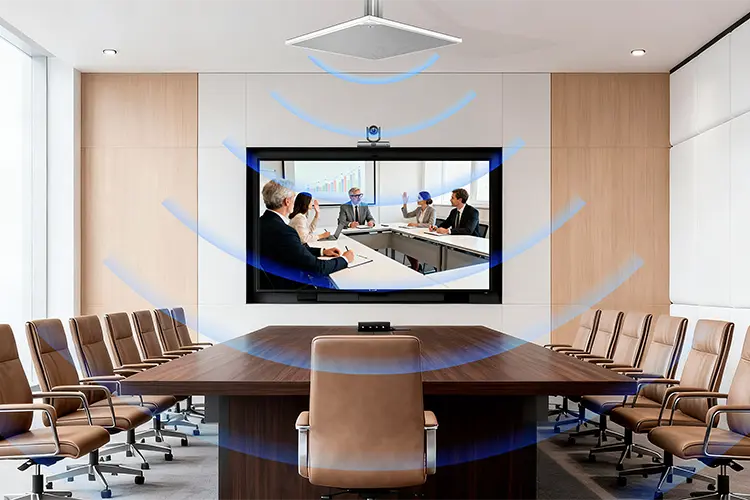
AISpeech and effective listening in meetings
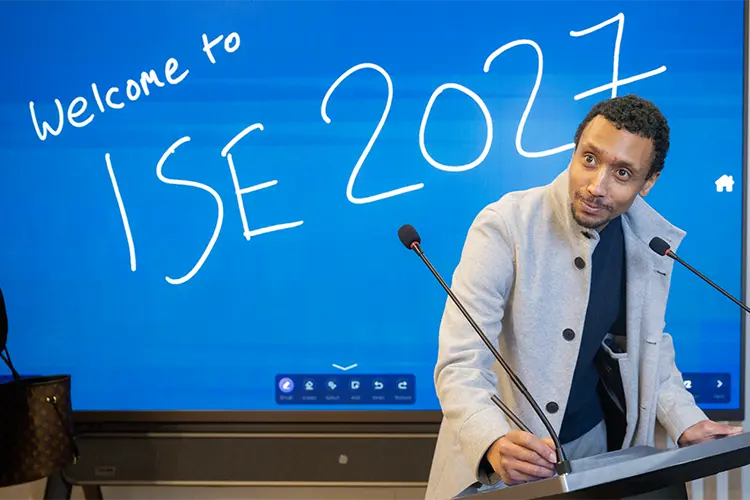
ISE 2027 expands its technological and creative universe
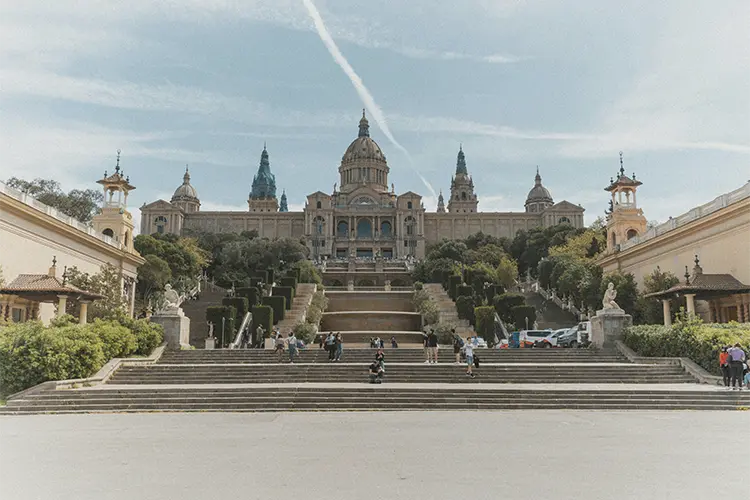
ISE 2027 adds Montjuïc with Spark and EdTech Congress
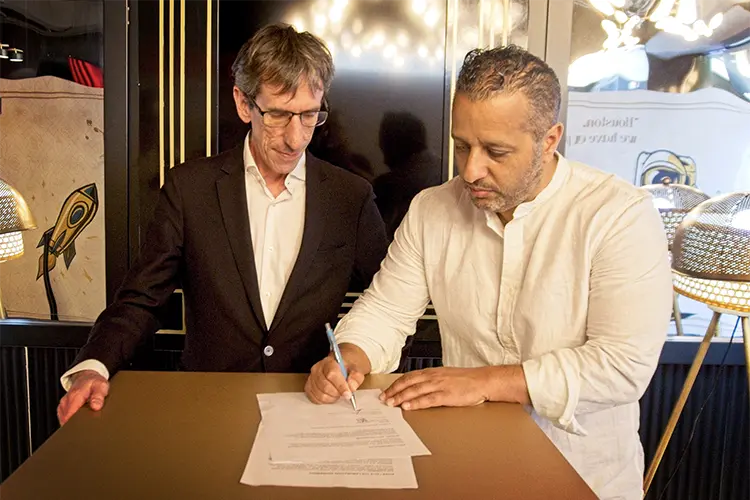
An agreement connects training and the AV industry

Classrooms that understand: audio and learning