Marc Vidal interview: digital economy, automation and contactless
Written by ISP Integration editorial teamCategory: NEWS
Published:
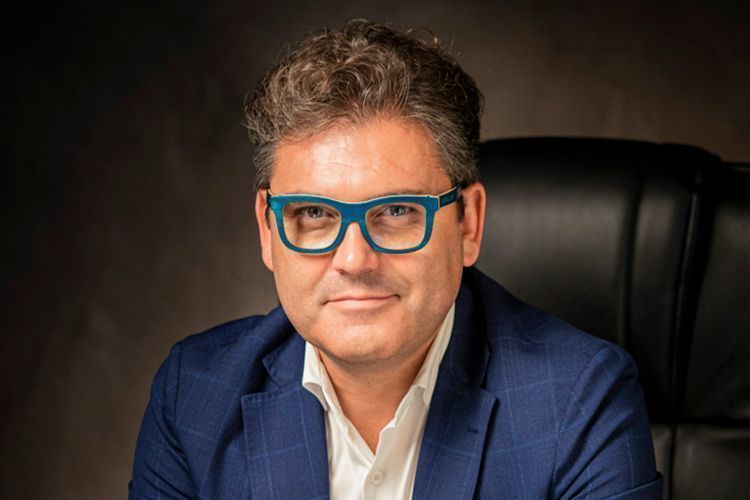
We talk about technological drivers, automation, low-touch and the contactless economy.
Dear Marc, considering your relevance in the field of the Digital Economy in Spain, as well as your interest in increasing knowledge about growing sales through technological understanding, we would like to take advantage of Integrated Systems Europe being held in Barcelona for a digital conversation about your fascinating work. Of great interest, among others, to the systems integration sectors.
Thanking you in advance for your time and courtesy, we would like to delve into some of your educational proposals and economic-technological approaches.
What are your thoughts on digital transformation and how should this process be planned?
"To begin with, it is essential to understand that Digital Transformation is essentially contact with technology. There has never been a technological revolution without technology, but it is nevertheless true that the culture of the company or organisation must adapt to the whole process. It does not always have to do so beforehand, but it must always do so. If we do it in a disconnected way, we will have technologically very advanced companies or organisations with little capacity to take advantage of the benefits or, on the other hand, we could have companies with a very well-oiled organisational culture but no technological understanding. The ideal is to do both at the same time. That is how we do it at my company: we manage change by applying technology from the very first moment, and our clients are doing rather well".
"Now, what is interesting is the debate that arises when we talk about how to structure a Digital Transformation strategy. In my view, the concept of digital takes on a relevant role as long as we understand that the key lies in the transformation it brings about, and not the other way round. If this interview were taking place at the end of the 19th century, we would be talking about ‘industrial transformation’; if it were in the mid-1960s, we would be talking about ‘electronic transformation’. The concept of ‘transformation’ remains, but it takes on its relevance by being anchored to a technology. That is why I stress the importance of understanding the historical moment we are living in".
"It is urgent to do so. The pandemic has been an accelerator that definitively marks the entry into the 21st century, but bear in mind that 78% of Spanish companies (micro-businesses and the self-employed) still do not even have a website"
In your opinion, what are the technological drivers of the new normal?
"We are living through a social and economic transformation like never before. Step by step, we are moving towards a world in which it will not be necessary to work the way we do now. Digital transformation is the prelude to a robotised, automated universe. Curiously, what we are experiencing now could well be the trigger for a better world. A complex but interesting market, where small companies born with a good idea become projects capable of integrating the elements that will lead us to the Fifth Industrial Revolution".
"We know that for every 10 people who gain access to the Internet, one job is created and one person is lifted out of poverty. The greatest risk is starting this ‘new technological normal’ without a plan. If companies and governments do not understand that, before embarking on intense and far-reaching innovation, before focusing on technological advances, on the ‘Age of Machines’, they must first invest in the people who will have to understand those changes, the mistake could be enormous".
"The much-talked-about new normal is nothing more than the new social and behavioural ‘reality’. Whether or not it becomes a space for growth or, on the contrary, ends up turning into a quagmire depends on what we do right now. The new normal is not about living temporarily shut away in a kind of protective bubble; it is about understanding that the future is approaching much faster than expected. Many will see problems in this, it is true, but remember that I have two pieces of news about that, one bad and one good: the bad news is that the problems will never end. The good news is that neither will the solutions".
Two terms that contain a great deal. What can you tell us about the low-touch and contactlesseconomy?
"The new economy, the one that is coming, the low-contact economy, will remain for some time. Perhaps forever in some respects. To a large extent it is here to stay. It will give way to an economy made up of new habits and norms based on reduced interaction and less inefficient movement. We now know that we are vulnerable, and that is going to change the concept of consumption and of respect for the environment. Companies that cannot demonstrate their environmental credentials will sell less. This situation is going to change everything. So I ask you… Aren't you going to change your business? Aren't you going to change the way you work? Moreover, the ‘contactless’ economy is nothing more than a new economic behaviour based on a series of new convictions and elements that will have less to do with health alerts and more to do with a perception of inefficiency".
In your talks and fascinating courses, you often address your point of view on the foundations of automation. Could you give us a brief outline of your thinking on this?
"Very soon, we are going to have to rethink the relationship between work and being able to feed ourselves or make a living. If all this is not foreseen, we will be crushed with taxes to balance needs with contributions. If tactics drive this type of decision, we will enter a dramatic spiral. The future of automation and job losses is now; it is not something we can ignore thinking it will come later. Literally, the smartest people in the world believe that an unprecedented wave of job destruction is coming with the development of artificial intelligence, robotics, software and automation. William Gibson said that ‘the future is already here, it's just not very evenly distributed’".
"We have an urgent obligation to distribute it better. Our children, not even our grandchildren, depend more than ever on the decisions made now. Let us bear in mind that while we are fighting a health crisis and an economic one, the world has automated much faster than ever before. Everywhere, above, below, in front and behind, automation is advancing exponentially. Not having foreseen this could blow up in our faces. I work with governments and large companies, and also SMEs, and I try to explain to all of them that this cannot be avoided, that it is coming and that it can be an advantage for those who understand it".
Technology is the how, we are the why. What is this statement based on?
"Technology will be the tool, not the reason. Humans will be the ‘why’ and robots will be the ‘how’. It has always been this way. At the end of the 18th century, steam engines were the ‘how’ and the people who began working with them were the ‘why’. What is coming is an obligatory coexistence between unprecedented advances and our traditional way of life, between ‘chatbots’ capable of simulating our language and human customers, between digital receptionists and customers who need services, between robots that replace people in repetitive jobs and human beings who demand fast, efficient and cheap services".
"The hybridisation between humans and machines will be less romantic and cinematic than books and films show us. We will have to learn to deal with a chatbot, but that is all it will be: ‘dealing’. We will find ourselves at unknown frontiers, but that is all they will be: frontiers. We will debate the role of human beings in many types of jobs, and it will be good to do so because, as has always happened, it is up to us to conquer spaces that technology is going to hand us, not eliminate".
So you think that “citizens can be technologically more human”. Why? How? Is your latest book “La era de la Humanidad” focused on these aspects?
"That's right. We are entering a scenario in which technology will no longer be a tool, but will become part of our identity. Today, a company can decide whether or not to have a robot, but in the future that choice will be impossible. That is why we must ask ourselves what skills human beings will need to develop to coexist in this new scenario. We must ask ourselves how many of the things I do now, however computerised, will be done by software in five years' time, because if I don't do them that way, I won't be competitive".
"Being more creative by using a supporting algorithm is a good example of what I mean. Imagine you have to design an illustration and replicate it in thousands of different options. A designer would take months or years to do it. Variations on a designer's creative model executed by an algorithm would take only minutes. However, it will still be human work. Or rather, technologically human. There will surely be blurred boundaries".
It has been a pleasure to have the expertise of Marc Vidal, one of the most influential figures in the Digital Economy in Spain. We take this opportunity to thank him for his time and invite readers of ISP Integración magazine to follow his fascinating bibliography and method on Digital Transformation and Industry 4.0.
You may also like
HK Audio promotes Isabelle Wear to Head of Sales EMEA
ISE 2027: a working TV studio, AI at work and 1,500 drones
Genelec bolsters its Western Europe team
SOLTEC unveils its RET-G retractable monitors
Neutrik brings TRUE1 and DR Series to JTSE 2026
TBS Education warns of AI bias when hiring staff
Panasonic and HIVE: 80% less AV infrastructure
IDC names Shure a Leader in AI meeting rooms
AVPro Edge MXnet 10G-MSE: 4K and H.265 from one encoder

500 Sony BRAVIA displays connect 100 stores

Sony: the traditional office is falling behind
Datapath to operate under the VITEC brand in 2027

40 giant Sony displays for collaborative learning
OPTIMUS installs 19 SIP intercoms at a Mexican power plant
LEA Cloud diagnoses issues without on-site visits
Genelec equips a music school with 143 loudspeakers
AVIXA appoints Marco Pardi as new chief executive
Spark 2027 to open with Casa Batlló mapping artists
Hikvision Village: a city where it all connects
Barco recreates realistic maritime scenarios
LEDVANCE: free training in LED and smart lighting

Daktronics upgrades video and audio at Lane Stadium
Crestron Collab Engine: meetings and AV control in one
Nureva appoints Ted Shuter as VP, Products
Kramer makes SailPoint's Pune rooms divisible
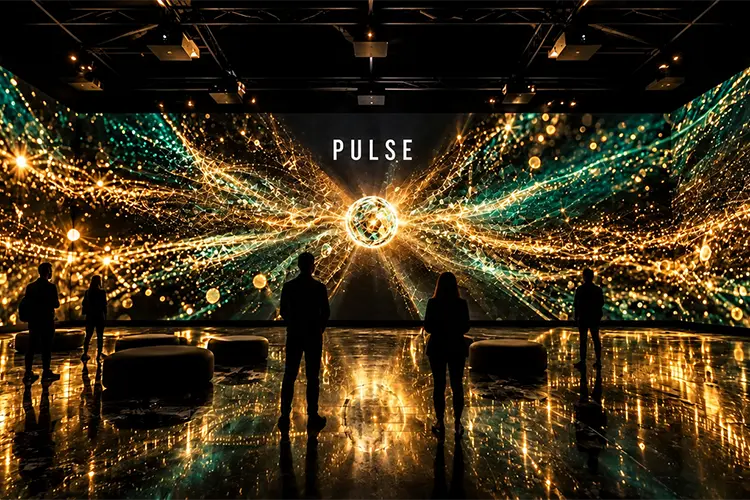
Pulse brought seven minutes of AV to InfoComm

Sony miniaturises medical imaging with the IMX742
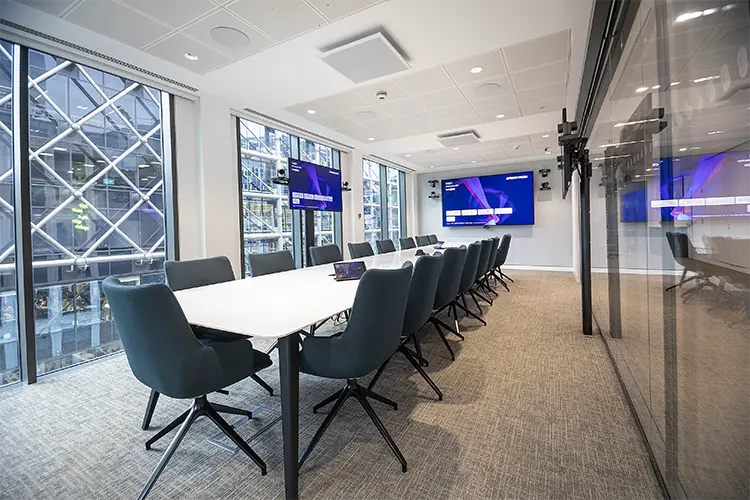
Sony equips Crestron’s centres in London and Paris
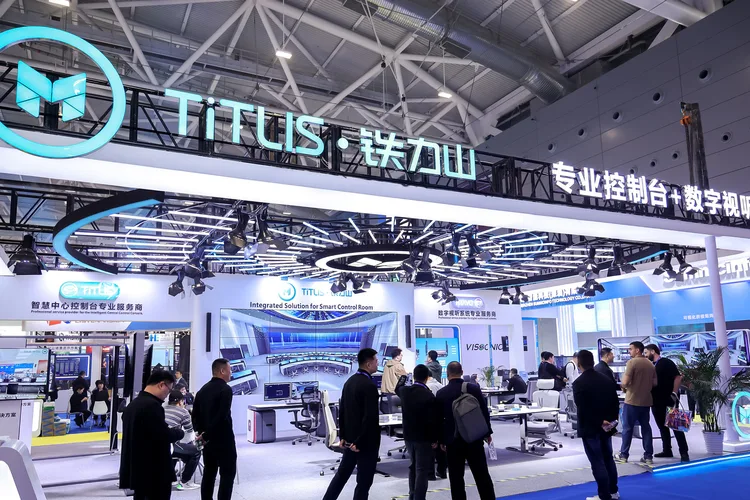
ISLE 2027 opens visitor registration in Shenzhen

Nureva brings AI to meeting room management
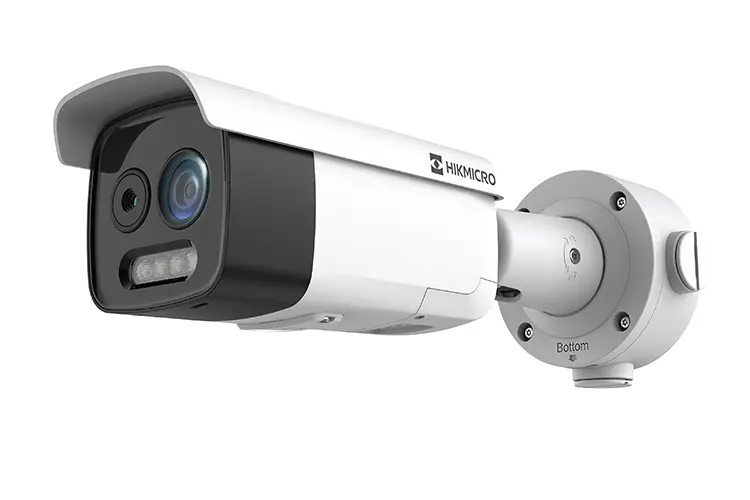
Hikvision applies thermography to fire prevention
Spark 2027 opens registration and grows at Montjuïc
Ghost meetings under the technological spotlight
Genelec creates a sound forest inside Finlandia Hall
Light + Building strengthens British lighting presence
Bluesound brings licensed music to shops and hotels
Hikvision renews its Madrid Excelente certification
Crestron develops its first proprietary AV chipset
Video Control and Distribution on a Single Platform
Immersive audio and smart rooms: how InfoComm went
Video control and distribution on a single platform
SeeSound equips Cuenca Hospital auditorium

Hikvision Village 2026 recreates a connected city
Curved displays, transparent LED and COB technology
InfoComm América Latina puts AI into practice
Mo Gawdat examines the impact of AI on businesses
IntelliMix Bar Pro takes centre stage in Shure’s strategy
OPTIMUS public address built for maximum demand

Sony equips Crestron's new Experience Centres
AV over IP: When the Network Becomes the System
Captech EXPO Tests Technological Convergence

IFMA Spain: Technology, Spaces and People
Crestron connects more than 200 rooms at Camp Nou
Self-Service Kiosks and AI at InfoComm Latin America
Collaboration, Wireless Audio and AV Management
Sommer hybrid cable for underwater lighting
AVL SUMMIT by AFIAL: Exhibition and Technical Sessions
A Sharp plugin connects Q-SYS with NEC displays