Retail Design Institute: interview with Dr María Callís Bañeres
Written by ISP Integration editorial teamCategory: NEWS
Published:
We interview María Callís Bañeres, consultant, lecturer, retail professional and president of the Retail Design Institute.
With a rich, multidisciplinary academic background, Dr María Callís Bañeres has built her professional career around the design, creation, development and updating of retail concepts. As a lecturer, she has worked with a number of international institutions and educational centres, where she has shared her extensive experience.
As a retail sector specialist, her work also focuses on supporting business owners through every phase of their project: from ideation and technology deployment through to final implementation. To do so, she works alongside a team of professionals from a range of sectors.
• Tell us a little about the activity of the association you lead, the Retail Design Institute. Which sectors does it cover? How does it benefit its members?
The Retail Design Institute is a non-profit association founded to promote the advancement and collaborative practice of creating retail environments. From this perspective, it includes all the professionals involved in this fascinating field; it was initially aimed at retail designers in all their specialities – brand designers, planner designers, architects, engineers, digital designers, visual merchandisers and so on. But two years ago Spain pushed for retail strategy specialists to be included too.
RDI’s raison d’être is to convey the message that working on the creation of retail environments requires proper training; you have to be a specialised professional. That is why RDI works closely with educational institutions. With this in mind, here in Spain we recently launched a competition for retail designers in collaboration with Apotheka, called farmaingenio , aimed at both students and professionals and open internationally.
Through initiatives like this, RDI seeks to bring the retail designer closer to the retail community, so that together we can share achievements in store design; that is also why awards are organised for the best-designed store of the year.
This is one of the benefits of being an RDI member, as to take part in the competition you have to join under one of our membership categories. But there are many other advantages, such as access to the events we organise or taking part in workshops and seminars on new trends; or, of particular importance, being part of a community of professionals that lets you build international and national teams and ensure the success of projects. Belonging to this community also gives you the opportunity to share experiences and access knowledge, so you are constantly learning – something essential in retail.
When a member needs something, the Institute is there to support them; we have a space for members looking for new challenges. In the US, where the Institute already has a long track record, we are rated as one of the six best placement services in the industry. Spain is set to follow the same path.
But I would like to point out that the philosophy of the Retail Design Institute is the philosophy of John F. Kennedy: “Ask not what your country can do for you, ask what you can do for your country”, and that philosophy is what has made the Retail Design Institute what it is today: a truly global institution, building powerful collaborative relationships that deliver results of real interest.
• Drawing on your considerable experience as a lecturer specialising in retail, could you share some of the key lessons you teach professionals at retail chains?
There are many aspects I could highlight, but to pick out three, I would mention the following:
- Retail is a communication discipline that manages communication between the brand and its communities (customers, shoppers, users, employees, suppliers) when it uses a phygital space (physical and/or digital) as its communication channel. It therefore spans any sector and space, from a shop to a workplace or a school.
This means that an industry that does not integrate this communication discipline into its vision of its business model will not be aligned with its customer, just as a company that failed to integrate marketing in the 1960s was out of the game. - This discipline leads 21st-century communication because it was the first, from the end of the 20th century, that had to deal with and integrate technology; it is the language par excellence of the 21st century. It is a highly complex discipline facing major challenges, and so it has unimaginable room to grow, which will surely make it one of the levers of change in the era we are living through.
That is why retail is interdisciplinary; anyone who cannot work in a team has no place in this field.
But it must also take its share of responsibility, bearing in mind the huge impact it has on society, and it must embrace an ethical vision that guides it towards respecting human dignity and pursuing the common good. - Finally, retail is a discipline that must strike a balance between creativity and profitability; a designer who does not understand business needs will fail, but so will a business owner who does not know how to manage design.
That is why strategy and design must go hand in hand; this is what led me to push for retail strategists to be included in the Retail Design Institute community. Designers need to be trained in strategy and business owners in design. And there is a great deal to say on that subject.
• What is the key to harnessing the full potential of physical and digital?
Without a doubt, understanding the phygital concept: we need to approach the creation of retail spaces from the perspective of the Customer Journey rather than from the channel-based view that omnichannel has given us. Omnichannel was key in helping brands understand that the experience must be the same in every space where the brand lands.
The phygital vision raises the bar and finally puts the customer, not the channel, at the centre of the experience
This is achieved through the Customer Journey view, which forces us to understand our business model, our product range, our services, how and in what way we use technology, and our collaborations beyond the boundaries of the company’s own activity.
The Customer Journey, for example, gives us a view of the experience which recognises that technology should not straitjacket the company by pushing it into complex processes, but should always be integrated from the standpoint of the comfort and needs of the customer, and from the company’s viability and prior preparation.
• Why is technology so important in the retail sector?
As I said earlier, it matters because retail manages communication between the brand and the customer in phygital spaces; our customer is analogue and digital – not only digital, but analogue too. Retail has been studying this new existential plane for years; technology must necessarily be integrated into this complex level that merges the real with the virtual and vice versa, and brands and customers are gradually learning to move in this new plane.
The Ikea store in Japan, which created a reality-show experience in its physical store based on CGI technology, is an excellent example
• Drawing on your experience and expertise, what advice would you give someone who is starting out in the sector and looking for ways to catch their customers’ attention?
First, understand the nature of the person: get to know their reality and the way they relate to others in the digital sphere.
From there, work on the business model with a long-term strategic perspective; have a vision of the project’s future; and then bring it down to earth with an action plan aligned with that vision. This will allow us to integrate four key ingredients into the project:
- Trends, which always keep the business owner’s vision on the future and on forecasting; and continuous knowledge, which lets us keep pace with our customer and never get ahead of them (the main cause of failure in technology roll-outs);
- Not forgetting the vital ingredient of any project: personal motivation before trends – the entrepreneur’s motivation, always aimed at improving the common good and expressed in the vision statement;
- This forces us to commit to continuous learning and make it a habit; keeping up to date with what is being done globally– other brands, suppliers, what is being taught in academia – and knowing and understanding constant technological development.
- And the last one: making sure the value proposition is anchored, on the one hand, in a personal passion that gives you the strength needed to overcome the constant difficulties you will face; and, on the other, in a passion that gives you the inspiration you need to always stay up to date.
If you have these ingredients, your project will undoubtedly be connected with your customer and you will put the customer at the centre of your strategy; and that is the guarantee of success for any value proposition.
• How might the customer profile of the pre-pandemic era differ from that of the post-pandemic era?
After a global socio-economic impact of this magnitude, it is risky to talk about the future. My knowledge of human nature leads me to think I can state three things:
- First: there will be (and the latest statistics already show this) a dangerously greater addiction to technology across all age groups; we are therefore facing a more digitalised, more elusive customer. This is good for nobody – not for those affected, not for brands, not even for the industry itself.
- Second: a sadly impoverished and isolated consumer who will struggle with their limited resources alongside an addiction to impulse buying.
- Third: If we really do overcome this pandemic from a health perspective, we will meet that same pre-pandemic customer again: consumerist, aware of the value of sustainability but with little strength to actually adopt sustainable behaviour. This will remain the case until we change our economic model and abandon this one, skewed towards an economy of volume and zero value. They will continue to buy impulsively, driven even more – if that is possible – by a pricing strategy more aggressive than the one we have seen over the last decade. At what cost, I constantly ask myself, can we keep buying more and more for less?
Alongside this customer, we will also discover a community – small, but strong in its conviction that the economic model must change – and perhaps there will start to be enough of us who believe we must move away from a pathological consumerist economic model towards a sustainable model that restores value: an economy of value – the value of the person, the value of what they produce, the value of the worker.
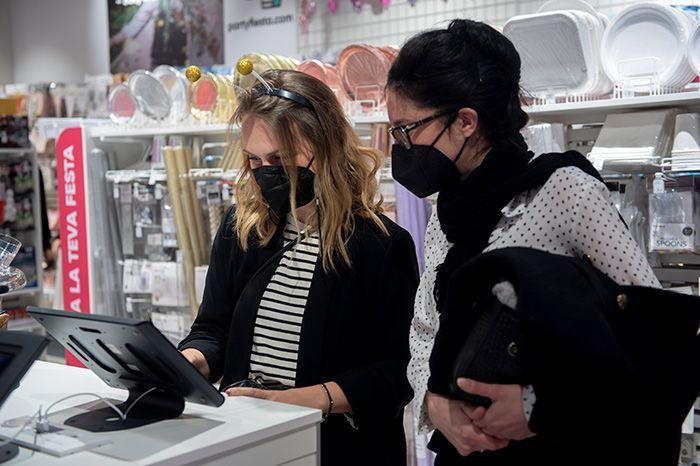
• How do you think Spain will embrace the new wave of digital signage in the retail sector?
Given that digitalisation has so far championed our futuristic vision of society, I think first of all we all take it for granted that it will continue to lead this vision of future societies. From this perspective, businesses will no doubt keep being amazed, because this industry still has a vision focused more on innovation than on the customer; it will keep overwhelming and saturating, and will therefore become harder to manage.
What I do think, however, is that this industry has been anchored for too many years in this way of understanding its world, so focused on its innovative potential, and it urgently needs to adopt a strong customer focus. By that I mean, on the one hand, the end customer: the citizen, the teacher, the student, the tourist, the worker
And, on the other, the retailer, who needs to be trained in this industry and needs to be able to integrate it using a method that does not impose cultural stress or demand efforts that drag on for too long.
Finally, the retailer wants to find in the industry everything they need to create a shopping experience; the industry must come together, organise itself, integrate other technologies and adopt the holistic vision that drives business owners to bring technology into their companies.
• The latest edition of ISE recently took place in Barcelona, where you had the opportunity to take part as a speaker. Tell us, what are your impressions and thoughts now that one of the world’s most important AV trade shows has come to Spain?
I think that, because of the pandemic, we have not seen even a tenth of what this show really is. I congratulate ISE for committing to hold it, with a new format that is both in-person and digital – a format that is here to stay, and one that has taught it a great deal about new ways of understanding and organising trade shows.
This experience will mean that ISE 2022, the next edition, held in normal circumstances, will have an even greater global impact than it has had so far. I believe that keeping the in-person format – precisely for a digital industry and in a Covid context – says a lot about the importance of knowing how to manage digitalisation integrated with the analogue world , and says a lot about the innovative potential of this industry. ISE’s vision of the future has been made clear; it is a show we all trust we will once again welcome to Barcelona in all the splendour we have come to expect, in the years ahead.
• How do you see the new post-pandemic reality at national and international level? Will new opportunities arise in Spain?
The pandemic has been a tsunami for many companies that have had to close because they did not have the lung capacity to survive so many months without the oxygen of customers; but at the same time we have all seen, in our cities and in digital spaces, the emergence of new operators and the evolution of global operators with surprising new ways of reaching customers.
Every disaster, by shifting paradigms, is a great opportunity for visionaries. But I also believe the most important changes are yet to come, because this pandemic is not over yet. Spain, whose economy relies too heavily on tourism, is suffering more than other countries, and this undoubtedly slows down the recovery needed to see the creative fruits of the many high-quality business owners we have in this country, who have used this economic pause to reinvent themselves.
• And finally, could you tell us about a standout success story in the retail sector, in Spain or abroad?
There are success stories at every level: small neighbourhood businesses that have made the most of shopping centre closures and have surprised everyone with the way they reach their customers by integrating a basic level of technology – above all, technologies based on building a closer relationship with the customer and better management of shopping time, with well-prepared, pre-booked store visits.
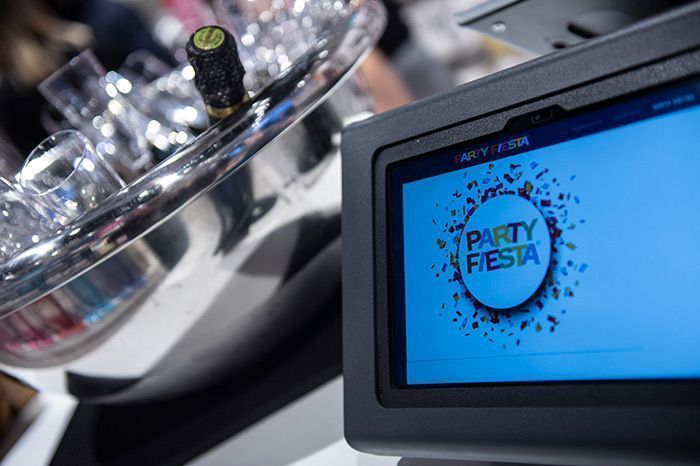
As a recent success story from a Spanish company, I would highlight Partyfiesta. At Partyfiesta, from the outset of planning the new store concept we were working on, it was clear how important it was to make good use of technology to put the customer at the centre of the strategy. For this reason, on the one hand, we invested in a CRM capable of managing personalised customer service. On the other, the entire product and service offering was restructured from the Customer Journey perspective; this was key to implementing it both in store and online, creating a shopping process that was enjoyable as well as orderly and efficient.
The third major ingredient we worked on was integrating technology in store to enhance the customer’s shopping experience; on the one hand, it allowed us to reduce the product range by 20% while enhancing the experience; technology also allowed us to increase the information customers need to make decisions, while letting them visualise how products would look once set up. To manage the technology properly, the Party Guru concept was created, so that technology was at the customer’s service, greatly simplifying their interaction.
Finally, technology was integrated at the point of sale, especially in the shop window, making it Instagrammable, with the aim of linking the brand’s communication on social media with its communication at the point of sale, from a phygitalperspective. All these measures have major cultural and structural implications for a company, which is why they will be rolled out in a controlled way through a properly planned process.
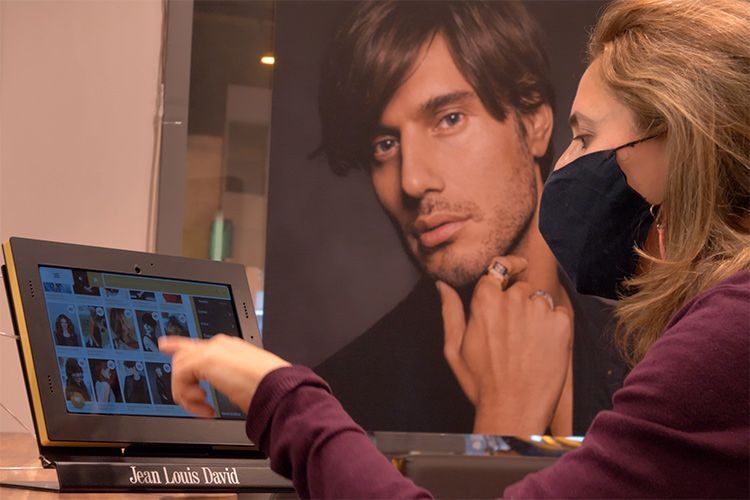
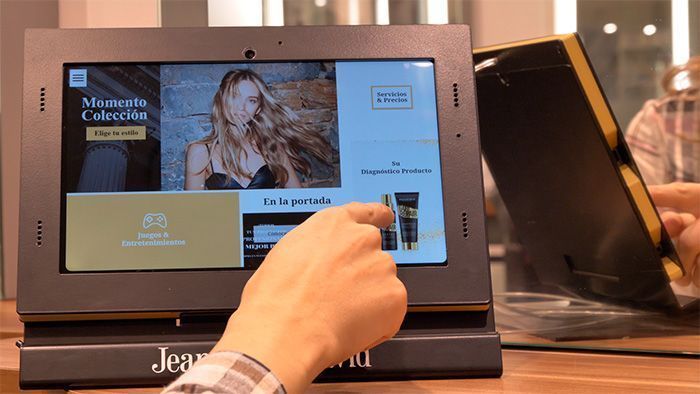
I also think it is well worth highlighting the example of a Spanish company, in this case a supplier: Waapiti, a company specialising in digital signage and the digital transformation of spaces, part of TMM-Group, a business group dedicated to sensory marketing. Waapiti recently implemented an innovative interactive experience for the salons of the Jean Louis Davidbrand. Using tablets, the installation aimed to integrate interactive digital entertainment into the customer experience so customers could interact with the brand and its products to help them decide, as the design software, powered by artificial intelligence, lets users try out different cut and styling options to clear up any doubts before taking a seat and having their hair cut.
The ISP Integration team would like to thank Dr María Callís Bañeres for sharing her extensive experience and candid opinions with us and our readers.
You may also like
ISE 2027: a working TV studio, AI at work and 1,500 drones
Genelec bolsters its Western Europe team
SOLTEC unveils its RET-G retractable monitors
Neutrik brings TRUE1 and DR Series to JTSE 2026

TBS Education warns of AI bias when hiring staff
Panasonic and HIVE: 80% less AV infrastructure
IDC names Shure a Leader in AI meeting rooms
AVPro Edge MXnet 10G-MSE: 4K and H.265 from one encoder

500 Sony BRAVIA displays connect 100 stores

Sony: the traditional office is falling behind
Datapath to operate under the VITEC brand in 2027

40 giant Sony displays for collaborative learning

OPTIMUS installs 19 SIP intercoms at a Mexican power plant
LEA Cloud diagnoses issues without on-site visits
Genelec equips a music school with 143 loudspeakers

AVIXA appoints Marco Pardi as new chief executive
Spark 2027 to open with Casa Batlló mapping artists
Hikvision Village: a city where it all connects
Barco recreates realistic maritime scenarios
LEDVANCE: free training in LED and smart lighting

Daktronics upgrades video and audio at Lane Stadium
Crestron Collab Engine: meetings and AV control in one
Nureva appoints Ted Shuter as VP, Products
Kramer makes SailPoint's Pune rooms divisible
Pulse brought seven minutes of AV to InfoComm

Sony miniaturises medical imaging with the IMX742
Sony equips Crestron’s centres in London and Paris
ISLE 2027 opens visitor registration in Shenzhen

Nureva brings AI to meeting room management
Hikvision applies thermography to fire prevention
Spark 2027 opens registration and grows at Montjuïc
Ghost meetings under the technological spotlight
Genelec creates a sound forest inside Finlandia Hall
Light + Building strengthens British lighting presence
Bluesound brings licensed music to shops and hotels
Hikvision renews its Madrid Excelente certification
Crestron develops its first proprietary AV chipset
Video Control and Distribution on a Single Platform
Immersive audio and smart rooms: how InfoComm went
Video control and distribution on a single platform
SeeSound equips Cuenca Hospital auditorium

Hikvision Village 2026 recreates a connected city

Curved displays, transparent LED and COB technology
InfoComm América Latina puts AI into practice
Mo Gawdat examines the impact of AI on businesses
IntelliMix Bar Pro takes centre stage in Shure’s strategy
OPTIMUS public address built for maximum demand

Sony equips Crestron's new Experience Centres

AV over IP: When the Network Becomes the System
Captech EXPO Tests Technological Convergence

IFMA Spain: Technology, Spaces and People
Crestron connects more than 200 rooms at Camp Nou
Self-Service Kiosks and AI at InfoComm Latin America
Collaboration, Wireless Audio and AV Management
Sommer hybrid cable for underwater lighting
AVL SUMMIT by AFIAL: Exhibition and Technical Sessions
A Sharp plugin connects Q-SYS with NEC displays
AISpeech and effective listening in meetings