Camilo José Cela University Global Education Forum
Written by ISP Integration editorial teamCategory: NEWS
Published:

Digitalisation will transform the education system over the coming years.
Camilo José Cela University has held the second day of its Global Education Forum, a series of sessions in which experts, lecturers, students and society itself have debated the digital transformation needed to achieve the goals of the university of the future. The third edition of the GEF featured a series of micro-events built around four fundamental pillars: entrepreneurship, wellbeing, social impact and digitalisation.
Throughout the morning, a programme of talks on digitalisation took place, featuring experts of the calibre of Jeff Maggioncalda, CEO of Cousera, and Stephen Heppell, director of the Felipe Segovia Chair of Learning Innovation at Camilo José Cela University
Among the main conclusions, both speakers highlighted the power of technology to deliver educational knowledge anytime and anywhere, but they also pointed to the gap between the training teachers currently have and the skills needed to adapt to the new educational model.
In recent years, and above all after the last eighteen months of the COVID-19 pandemic, technology has become indispensable. In fact, thanks to it, education did not come to a halt during the first months of lockdown.
Although many universities already had technology strategies in place, the pandemic accelerated their implementation, making the mass use of learning platforms essential, along with the need to stay connected through videoconferencing, new tools for sharing content, the journey of digital transformation in education and a new working framework to which students and teachers have had to adapt in a very short and hurried period of time.

Digitalisation and the platformisation of education
We are facing a fundamental change in the education system: from a centralised and regulated design to a new, much more organic conception, whose growth is based on analysing data on what is happening in real time. In this new learning context, the key idea is that state systems must take charge of designing the digital space, thereby expanding the learning possibilities of all students. The use of Artificial Intelligence will be key to achieving greater personalisation of learning pathways and to improving teaching practices and methodologies.
In this context, Belén Gancedo, Director of Education at Microsoft Spain, noted that “there are four key ingredients in the journey of digital transformation in education: the institution's culture and change management, teacher training, innovation and technology. What matters is not the technology itself, but that it is the main means of reaching the potential that people can have or acquire”
The future of higher education will probably require a hybrid model that alternates face-to-face and virtual teaching, which will make it imperative to increase the digital skills of both students and teachers.
In addition, a thorough redesign of platforms and systems is needed. Teacher training must be strengthened with new skills adapted to today's needs, and key elements such as privacy and security in the online environment in which students and teachers operate must be taken into account.
Public and private institutions must be allies and work hand in hand to transform education.
This collaboration for the digitalisation of the sector must be driven forward. Teaching must evolve according to society's requirements and prepare society for the challenges of the future.
The student at the centre: new learning experiences
Students are increasingly diverse. A complete integration of technology and pedagogy is therefore needed to enable learning experiences that are more inclusive, personalised and suited to students' needs.
New technologies make it possible to personalise content and adapt to each student's pace, so traditional learning will disappear to make way for a more interactive education in which students are active participants throughout the learning process. The role of teachers will also change: they will become their students' new mentors, not merely facilitators of knowledge.
You may also like

HK Audio promotes Isabelle Wear to Head of Sales EMEA

ISE 2027: a working TV studio, AI at work and 1,500 drones

Genelec bolsters its Western Europe team

SOLTEC unveils its RET-G retractable monitors

Neutrik brings TRUE1 and DR Series to JTSE 2026

TBS Education warns of AI bias when hiring staff

Panasonic and HIVE: 80% less AV infrastructure

IDC names Shure a Leader in AI meeting rooms
AVPro Edge MXnet 10G-MSE: 4K and H.265 from one encoder

500 Sony BRAVIA displays connect 100 stores

Sony: the traditional office is falling behind

Datapath to operate under the VITEC brand in 2027
40 giant Sony displays for collaborative learning

OPTIMUS installs 19 SIP intercoms at a Mexican power plant

LEA Cloud diagnoses issues without on-site visits

Genelec equips a music school with 143 loudspeakers

AVIXA appoints Marco Pardi as new chief executive

Spark 2027 to open with Casa Batlló mapping artists
Hikvision Village: a city where it all connects
Barco recreates realistic maritime scenarios

LEDVANCE: free training in LED and smart lighting

Daktronics upgrades video and audio at Lane Stadium
Crestron Collab Engine: meetings and AV control in one

Nureva appoints Ted Shuter as VP, Products
Kramer makes SailPoint's Pune rooms divisible

Pulse brought seven minutes of AV to InfoComm

Sony miniaturises medical imaging with the IMX742
Sony equips Crestron’s centres in London and Paris
ISLE 2027 opens visitor registration in Shenzhen

Nureva brings AI to meeting room management
Hikvision applies thermography to fire prevention
Spark 2027 opens registration and grows at Montjuïc
Ghost meetings under the technological spotlight

Genelec creates a sound forest inside Finlandia Hall
Light + Building strengthens British lighting presence

Bluesound brings licensed music to shops and hotels
Hikvision renews its Madrid Excelente certification

Crestron develops its first proprietary AV chipset
Video Control and Distribution on a Single Platform
Immersive audio and smart rooms: how InfoComm went

Video control and distribution on a single platform
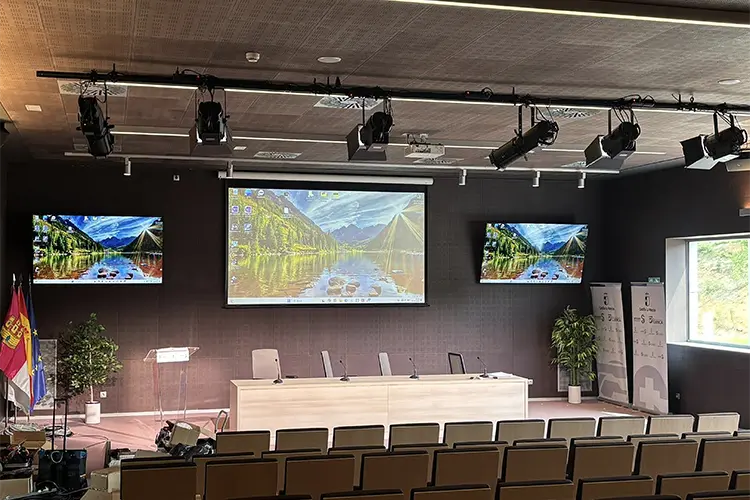
SeeSound equips Cuenca Hospital auditorium

Hikvision Village 2026 recreates a connected city
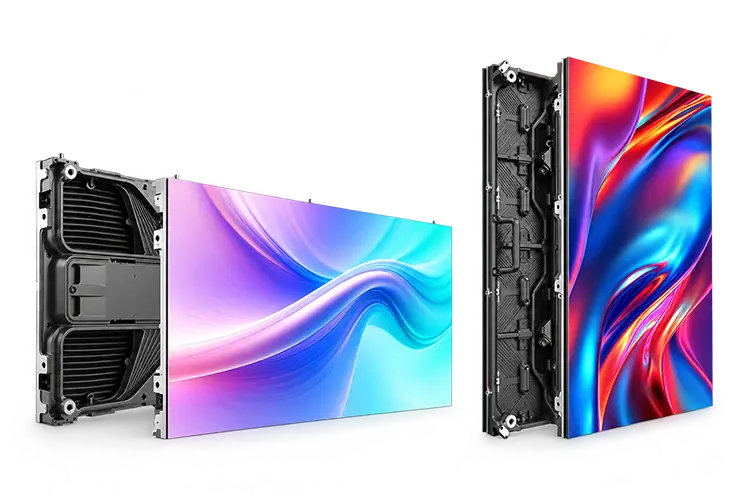
Curved displays, transparent LED and COB technology
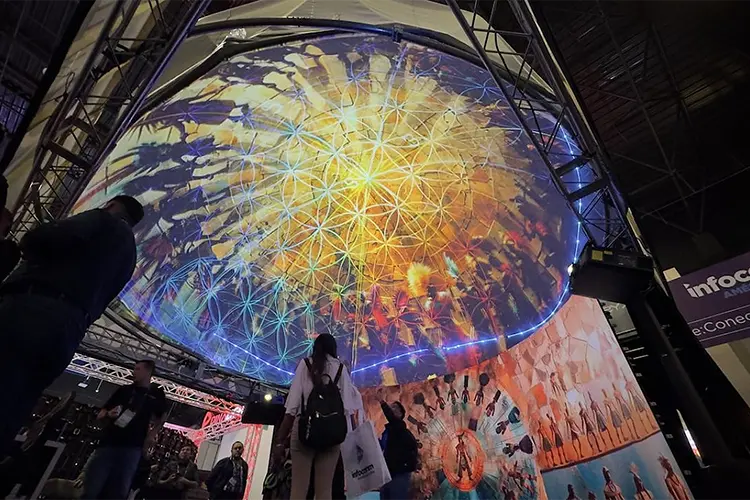
InfoComm América Latina puts AI into practice

Mo Gawdat examines the impact of AI on businesses
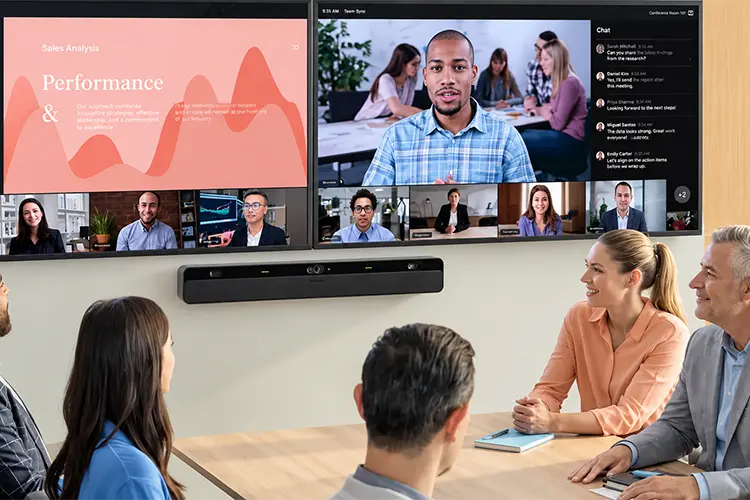
IntelliMix Bar Pro takes centre stage in Shure’s strategy

OPTIMUS public address built for maximum demand
Sony equips Crestron's new Experience Centres

AV over IP: When the Network Becomes the System
Captech EXPO Tests Technological Convergence

IFMA Spain: Technology, Spaces and People

Crestron connects more than 200 rooms at Camp Nou

Self-Service Kiosks and AI at InfoComm Latin America
Collaboration, Wireless Audio and AV Management
Sommer hybrid cable for underwater lighting

AVL SUMMIT by AFIAL: Exhibition and Technical Sessions
A Sharp plugin connects Q-SYS with NEC displays