
Kit Digital: how Spanish SMEs get Red.es digitalisation grants
Written by ISP Integration editorial teamCategory: NEWS
Published:

The digitalisation of the economy is undoubtedly one of the main technological changes of our time.
The incorporation of digital systems into business is driving intense innovation in areas such as operations and people management, industrial processes, commercial relations, inter-company cooperation and marketing. In addition, data management and processing capabilities, as well as artificial intelligence technologies, are transforming every economic sector, fostering the emergence of innovative start-ups and, above all, generating new opportunities linked to scale of operations and internationalisation.
Spain has major advantages in this new technological revolution, thanks to its solid connectivity network and digital infrastructure, the progress made in digitalising public administrations and the existence of a diversified business fabric, with large anchor companies that are advanced in digitalisation and leaders in sectors of the future, as well as a vibrant ecosystem of innovative start-ups.
However, all reports point to the low level of digitalisation and digital skills of small businesses, micro-businesses and the self-employed as two of the main obstacles to fully harnessing the economic potential of new technologies.
Indeed, Spain shows an incipient degree of adoption of digital solutions in the productive fabric of small businesses, micro-businesses and the self-employed, which is characterised by its small size and therefore has fewer opportunities to increase productivity and create quality jobs
The digitalisation of small businesses, micro-businesses and the self-employed is therefore one of the main levers for modernising the Spanish economy and for potential growth in the medium term, as it makes it possible to improve the productivity of all production factors, increase the size of these businesses, internationalise and roll out networking both within the same branch of activity and across different economic sectors.
To achieve a macroeconomic impact, a material increase in the degree of digitalisation of businesses throughout the country is needed through investment in digital systems and services, improved digital training for business owners and employees, and the promotion of inter-company collaboration networks structured, for example, through technology parks, clusters or Innovative Business Associations.
To this end, the Recovery, Transformation and Resilience Plan includes major reforms and investments in several of its components aimed at boosting entrepreneurship, business growth, digitalisation, the adoption of artificial intelligence and the improvement of digital skills, with particular attention to small businesses, micro-businesses and the self-employed. Specifically, components 13 (SME boost), 15 (digital connectivity, cybersecurity boost and 5G), 16 (National Artificial Intelligence Strategy), 19 (national digital skills plan) and 25 (Spain, Europe's audiovisual hub) are particularly geared towards supporting SME investment in digital solutions (for the economy as a whole and also for specific sectors such as retail, tourism and audiovisual), training for business owners and a programme of «digitalisation agents» for the adoption of new technologies in businesses, the incorporation of artificial intelligence into industrial value chains, the promotion of R&D, entrepreneurship and business growth, as well as the promotion of cooperation networks.
Specifically, as regards the digitalisation of small businesses, micro-businesses and the self-employed, the Recovery Plan envisages allocating public investment of €3,067 million in the 2021-2023 period to deploy a set of digital solutions already available on the market (the «Kit Digital») across the productive fabric of small businesses, micro-businesses and the self-employed in the Spanish economy.
This order establishing the regulatory bases sets out the framework applicable to grants for the adoption of the «Kit Digital» by small businesses, micro-businesses and the self-employed throughout Spain, funded through the Recovery and Resilience Facility, in line with Regulation (EU) No 2021/241 of the European Parliament and of the Council of 12 February 2021.
On 23 July 2020, the Government presented the «Digital Spain 2025 Agenda» with 10 strategic pillars to drive the country's digital transformation process, in line with the European Union's digital strategy, respecting individual and collective rights and the values of the Spanish legal system, through public-private collaboration and with the participation of all the country's economic and social stakeholders. As part of that agenda, on 27 January 2021 it adopted the «SME Digitalisation Plan 2021-2025».
In line with that Agenda, the Recovery, Transformation and Resilience Plan includes the Kit Digital programme as one of the centrepieces for the digitalisation of small businesses, micro-businesses and the self-employed throughout Spain, together with the other reforms and investments planned in different components to achieve a material economic impact.
Thus, alongside component 13, specifically dedicated to boosting SMEs, complementary actions are being developed in other components of the Recovery Plan to promote entrepreneurship, business creation and talent attraction, digitalisation, sustainability and business competitiveness
In particular, it should be noted that these investments are complemented by those planned in component 15, with connectivity vouchers to support the SME digitalisation process; component 19 for the digital training of workers and business owners, as well as the training programme for change agents, responsible for driving process modernisation, or the support programme for Innovative Business Clusters, to promote digitalisation projects across the value chain of different sectors and industrial clusters in order to modernise them and include SMEs in the value chain, which is included in component 13 itself.
On 13 July 2021, the ECOFIN Council approved Spain's Recovery, Transformation and Resilience Plan through Council Implementing Decision (2021/0156), which sets out the roadmap for modernising the Spanish economy, restoring economic growth and creating jobs, for a solid, inclusive and resilient economic reconstruction after the COVID crisis, and for responding to the challenges of the next decade. This Recovery, Transformation and Resilience Plan is structured around the four key structural transformations of our time: the green transition, the digital transformation, gender equality and social and territorial cohesion.
The Recovery Plan is the instrument for deploying the Next Generation EU recovery funds and represents the most significant stimulus in Spain's recent economic history. The Plan details the investments and reforms, grouped into 30 components, for the 2021-2023 period, mobilising around €70,000 million in transfers from the Recovery and Resilience Facility, in order to drive the recovery and achieve the greatest economic and social impact.
Investment 3 of component 13 of the «Recovery, Transformation and Resilience Plan» (SME boost), in line with the «SME Digitalisation Plan 2021-2025», aims to digitalise small and medium-sized enterprises, micro-businesses and the self-employed, incorporating reforms and investments designed to make it easier to create businesses, help them grow and restructure, improve the business climate and continue driving the important processes of productivity growth through digitalisation, innovation and internationalisation. The actions or projects under this investment include the so-called «Digital Toolkit Programme» (in Spanish, «Kit Digital») with a budget of €3,067 million, which aims to encourage the digitalisation of small businesses, micro-businesses and the self-employed.
The same Plan includes the development of the Acelera pyme programme, through a dynamic platform with valuable content, digital transformation best practices, etc., and self-assessment tools, so that it becomes a digital meeting point for SMEs. In addition to providing valuable information for SMEs in their digital transformation processes, this platform will offer them a diagnostic test, give access to the grant processing platform and publish information on the registered digitalisation agents.
The purpose of the Kit Digital Programme is to award grants to small businesses, micro-businesses and the self-employed for the adoption of digitalisation solutions available on the market
Beneficiaries will receive a grant based on their size, measured by their number of employees. For the purposes of these regulatory bases, the right to payment arising from the award decision is called the «digital voucher». This «digital voucher» may not be paid out until the Digitalisation Agent, on behalf of the beneficiary and with the beneficiary bearing ultimate responsibility, submits the corresponding statement of accounts proving that the activity for which the grant was awarded has been carried out, and the awarding body considers the grant to be justified.
Three types of stakeholders will take part in managing the programme: (1) the beneficiary companies, which will receive the grant to adopt the digital solutions; (2) the digitalisation agents, which will provide the corresponding services or install the corresponding digital solutions; and (3) the collaborating entities, which will assist in managing the grants in the name and on behalf of the awarding body.
The beneficiary must use the grant awarded, whose right to payment is called the «digital voucher», to contract one or more of the digitalisation solutions available in the Programme's Catalogue of Digitalisation Solutions on the Acelera pyme platform, by entering into Digitalisation Solution Provision Agreements with the Registered Digitalisation Agents.
To this end, the Programme's Catalogue of Digitalisation Solutions will provide mechanisms for processing applications from entities wishing to act as Registered Digitalisation Agents, and for them to publish the details of their digitalisation solutions transparently so that beneficiaries can access them
Once the Digitalisation Solution Provision Agreement has been signed – setting out, among other things, the features/functionalities to be implemented, the implementation or development period, delivery, the obligations between both parties and towards the Programme, and the amount of the «digital voucher» applicable by assignment – the Registered Digitalisation Agent will proceed to provide the chosen digitalisation solution.
The beneficiary will pay for the service by assigning to the Registered Digitalisation Agent the portion of the «digital voucher» associated with the signed Digitalisation Solution Provision Agreement, and by paying the corresponding portion of the non-subsidised costs.
During the provision of the digital solution, the Registered Digitalisation Agent, on behalf of the beneficiary, must submit proof of the actions carried out, consisting of the required documentation and any other evidence admissible in law, where applicable. Once this has been checked and verified, the Registered Digitalisation Agent will receive payment of the amount of the «digital voucher» corresponding to the grant associated with the signed Digitalisation Solution Provision Agreement.
In line with the Programme's objective, digitalisation solutions are planned in the areas of websites and internet presence, e-commerce, social media management, digitalisation of customer relations, business intelligence and analytics, process automation, implementation of e-invoicing, virtual office services and tools, secure communications and cybersecurity.
The order establishes three segments of beneficiaries by number of employees: (1) Segment I, small businesses with between 10 and fewer than 50 employees; (2) Segment II, small businesses or micro-businesses with between 3 and fewer than 10 employees; (3) Segment III, small businesses or micro-businesses with between 0 and fewer than 3 employees. The self-employed are considered to be included in all segments, depending on the number of workers they employ.
The amount of the grants awarded through the corresponding decisions duly notified to beneficiaries, whose right to payment is called the «digital voucher», will be €12,000 for Segment I, €6,000 for Segment II and €2,000 for Segment III. This «digital voucher» will be assigned to the corresponding digitalisation agent as payment for the services provided.
Grants for the adoption of digitalisation solutions may be used to replace solutions already adopted by the beneficiary, provided that they represent a functional improvement. The AceleraPyme.es website, managed by the public business entity Red.es, will include the Kit Digital Catalogue of Digitalisation Solutions, from which the company receiving the grant and holder of the «digital voucher» can consult and select one or more, as well as a self-assessment system for the company's level of digitalisation. The solutions offered must enable beneficiaries to advance their level of digital maturity and improve their competitiveness through digitalisation.
In order to guarantee the effective provision of services, it is established that, as a general rule, digitalisation agents must meet the following requirements: cumulative turnover of at least €100,000 in the two years prior to submitting the application to register, or €50,000 in the previous year, in projects similar to those to be carried out for beneficiaries in any of the categories of digitalisation solutions in Annex IV; for self-employed persons with no employees, cumulative turnover must be at least €70,000 in the two years prior to submitting the application to register, or €35,000 in the previous year, in projects similar to those to be carried out for beneficiaries in any of the categories of digitalisation solutions in Annex IV; be up to date with their tax and Social Security obligations; and not be in difficulty (with the appropriate clarifications to cover the extraordinary situations caused by the pandemic). Their obligations also include committing to create in Spain the employment needed to provide the services, and keeping their tax domicile and the centre where the subsidised activities are carried out in the European Union.
The particular nature of our business fabric, made up of small businesses, micro-businesses and the self-employed, requires digitalisers who know the Spanish market, with its varied circumstances across the different regions and sectors of Spain, as well as the various cultural aspects that affect how businesses operate, and who have an excellent command of the language in which the service will be provided to the company.
In particular, the specific employment created to provide these services must also guarantee the quality of the service provided through qualities such as knowledge of and adaptation to the particularities of that market
For their part, beneficiary companies must meet the following requirements: be a small business, micro-business or self-employed person in accordance with the definitions in Annex I to Regulation (EU) No 651/2014; not be considered an undertaking in difficulty under Article 2.18 of that regulation; be up to date with their tax and Social Security obligations; not be subject to any of the other prohibitions laid down in the General Grants Act; be registered in the Census of Business Owners, Professionals and Withholders of the State Tax Administration Agency or in the equivalent census of the Regional (Foral) Tax Administration; not be subject to an outstanding recovery order following a previous European Commission decision; not exceed the de minimis aid ceiling; and have an assessment of their Digital Maturity Level using the diagnostic test available on the Acelera pyme platform.
The relationship between the company receiving the grant and the digitalisation agents under these regulatory bases will be formalised through a Digitalisation Solution Provision Agreement, which will set out the functionalities to be implemented, the implementation period, the obligations between both parties regarding the grant awarded, and the amount of the «digital voucher» applicable. Each call for applications will establish the model Digitalisation Solution Provision Agreement.
The digitalisation agent will receive payment of the «digital voucher» assigned by the beneficiary once it has submitted proof of the grant at the end of the two phases of providing the solution: (1) a first payment on account after proof of the first phase, which corresponds to the implementation of the solution and (2) a final payment once the second phase of providing the committed digitalisation solution has been justified.
The grants will be managed by the public business entity Red.es, attached to the Ministry of Economic Affairs and Digital Transformation. However, the Official Chamber of Commerce, Industry, Services and Navigation of Spain is expected to act in the name and on behalf of the awarding body, as a collaborating entity, in monitoring and controlling the grants awarded, in accordance with the terms of the corresponding Agreement.
In addition to the use of direct communication channels with small businesses, micro-businesses and the self-employed, the grants awarded will be publicised through their publication in the National Grants Database, in accordance with Royal Decree 130/2019 of 8 March, which regulates the National Grants Database and the publicity of grants and other public aid.
The application period will be at least three months from the publication of the corresponding call for applications, or until the call's budget is exhausted. The maximum period for both parties to sign Digitalisation Solution Provision Agreements will be six months from notification of the grant award decision.
In order to speed up the processing and awarding of grants, companies will submit responsible declarations on the required points
In particular, the collaborating entity will check the supporting documentation provided by the digitalisation agent on behalf of the beneficiary. Verification of the grant may include, where appropriate, a request for rectification. Failure to comply with the beneficiary's requirements and obligations will, following the appropriate reimbursement procedure, give rise to the obligation to repay the grants received and the corresponding late-payment interest, or to the loss of the right to receive payments not yet made.
You may also like

ISE 2027: a working TV studio, AI at work and 1,500 drones

Genelec bolsters its Western Europe team

SOLTEC unveils its RET-G retractable monitors
Neutrik brings TRUE1 and DR Series to JTSE 2026

TBS Education warns of AI bias when hiring staff

Panasonic and HIVE: 80% less AV infrastructure

IDC names Shure a Leader in AI meeting rooms
AVPro Edge MXnet 10G-MSE: 4K and H.265 from one encoder

500 Sony BRAVIA displays connect 100 stores

Sony: the traditional office is falling behind

Datapath to operate under the VITEC brand in 2027

40 giant Sony displays for collaborative learning

OPTIMUS installs 19 SIP intercoms at a Mexican power plant

LEA Cloud diagnoses issues without on-site visits

Genelec equips a music school with 143 loudspeakers

AVIXA appoints Marco Pardi as new chief executive

Spark 2027 to open with Casa Batlló mapping artists

Hikvision Village: a city where it all connects
Barco recreates realistic maritime scenarios

LEDVANCE: free training in LED and smart lighting

Daktronics upgrades video and audio at Lane Stadium

Crestron Collab Engine: meetings and AV control in one

Nureva appoints Ted Shuter as VP, Products

Kramer makes SailPoint's Pune rooms divisible

Pulse brought seven minutes of AV to InfoComm

Sony miniaturises medical imaging with the IMX742

Sony equips Crestron’s centres in London and Paris

ISLE 2027 opens visitor registration in Shenzhen

Nureva brings AI to meeting room management
Hikvision applies thermography to fire prevention

Spark 2027 opens registration and grows at Montjuïc

Ghost meetings under the technological spotlight

Genelec creates a sound forest inside Finlandia Hall

Light + Building strengthens British lighting presence

Bluesound brings licensed music to shops and hotels
Hikvision renews its Madrid Excelente certification
Crestron develops its first proprietary AV chipset
Video Control and Distribution on a Single Platform

Immersive audio and smart rooms: how InfoComm went

Video control and distribution on a single platform
SeeSound equips Cuenca Hospital auditorium

Hikvision Village 2026 recreates a connected city

Curved displays, transparent LED and COB technology

InfoComm América Latina puts AI into practice

Mo Gawdat examines the impact of AI on businesses

IntelliMix Bar Pro takes centre stage in Shure’s strategy

OPTIMUS public address built for maximum demand

Sony equips Crestron's new Experience Centres

AV over IP: When the Network Becomes the System
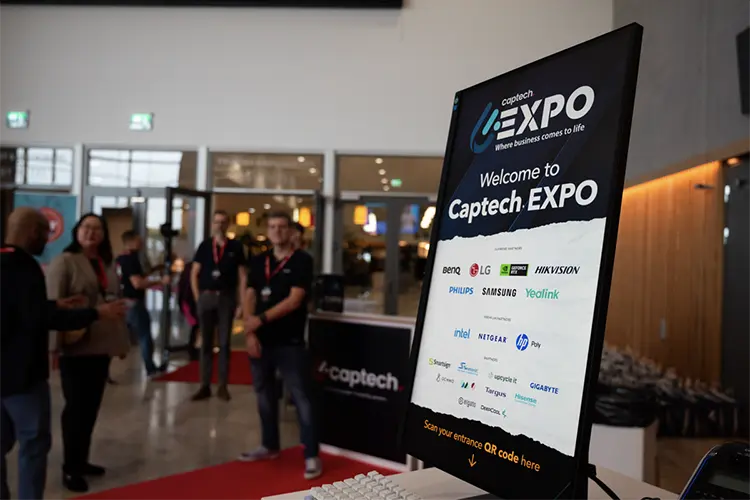
Captech EXPO Tests Technological Convergence

IFMA Spain: Technology, Spaces and People

Crestron connects more than 200 rooms at Camp Nou

Self-Service Kiosks and AI at InfoComm Latin America
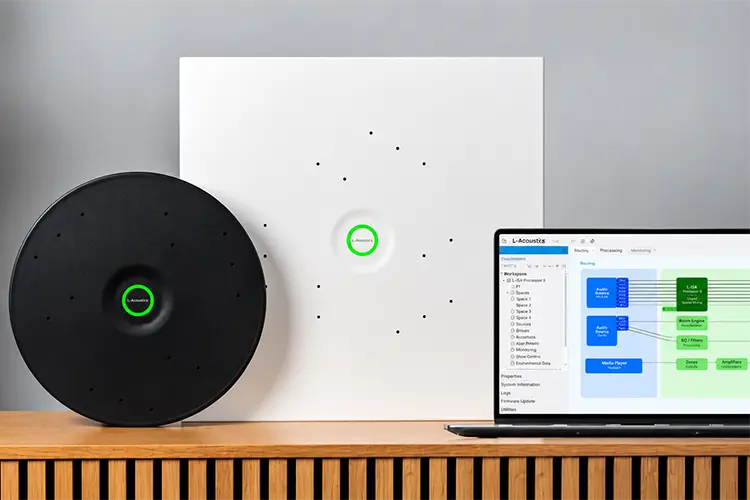
Collaboration, Wireless Audio and AV Management
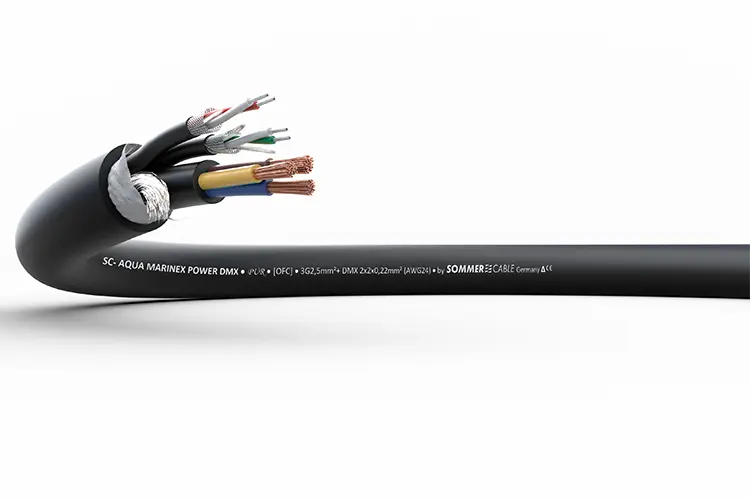
Sommer hybrid cable for underwater lighting

AVL SUMMIT by AFIAL: Exhibition and Technical Sessions

A Sharp plugin connects Q-SYS with NEC displays

AISpeech and effective listening in meetings