
Empantallados and GAD3 study: screens’ impact on family life
Written by ISP Integration editorial teamCategory: NEWS
Published:
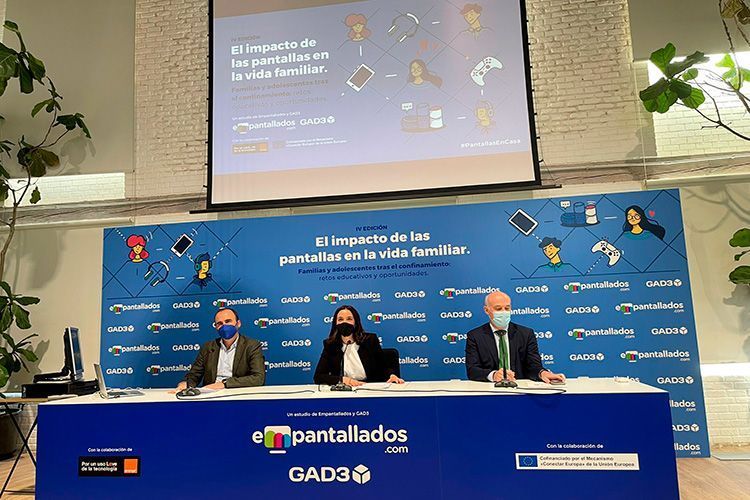
A drastic change in the relationship between parents and teenagers and technology.
84% of teenagers in Spain say they use their mobile phones to avoid getting bored. This is one of the main conclusions of the fourth edition of the study “The impact of screens on family life. Families and teenagers after lockdown”, carried out by empantallados.com and GAD3, with the support of ‘Por un uso Love de la Tecnología’ and the European Commission.
The research, conducted at the end of 2021, is based on a survey of a representative sample of parents with teenage children and of teenagers aged 14 to 17, as well as focus groups with teenagers and parents. It analyses the changes in parents’ and children’s digital habits after lockdown and the main challenges that adolescence poses in the digital environment.
The presentation featured Narciso Michavila, chairman of GAD3, and Pía García Simón of Empantallados, who discussed the study’s main figures, as well as Daniel Morales, Director of Corporate Social Responsibility at Orange. Three experts then spoke about the role of families in the new context, the educational challenge of emotional health and new professions: Charo Sádaba, European researcher on minors and technology and Dean of the Faculty of Communication at the University of Navarra; Silvia Álava, psychologist; and Rodrigo Miranda, Managing Director of ISDI, the first digital-native business school.
The study’s five key findings
Families’ new normal is increasingly technological. The start of the pandemic brought about a drastic change in the relationship between parents and teenagers and technology. Screen time soared in Spanish homes and remained at very high levels after lockdown. Two out of three teenagers (68%) use their mobile phones more than in the “old normal”, only four points more than their parents (64%). And remote working and online classes have “revived” the computer: more than half of parents (51%) and children (54%) admit to using it more than before.
This increase in screen time led families to rethink the rules on screen use at home, and after lockdown there has been no return to the previous situation. Half of parents (51%) admit that digital rules have become more relaxed, something only one in three teenagers (34%) perceives.
Parents’ growing trust in their children as they get older, and the inertia of the pandemic, explain this
Screens, a refuge for teenagers. 84% of teenagers say they use their mobile phones a lot to avoid getting bored, and admit to using screens more when they are home alone. Young people use screens a great deal, but they already did so before the pandemic. Lockdown has accentuated an existing reality: 56% of parents believe their children are more “hooked” on screens than before COVID-19.
What lies behind this excessive use? Screens offer an instant remedy for boredom. Parents complain that this is a generation less able to cope with frustration. Encouraging screen use with a “purpose” (such as developing a talent), or promoting other activities (volunteering, sport, trips to the countryside…), may be part of the solution. Deep down, many teenagers prefer face-to-face experiences: only 36% would rather stay at home playing a video game than go out, and almost 60% prefer in-person classes.

The main educational challenge: emotional health and digital wellbeing. 65% of parents think that screens and social media are a threat to teenagers’ self-esteem. Technology is the gateway to intense emotional experiences. 43% of teenagers believe screens take them on an emotional rollercoaster. What is more, 55% think screens help them to be happier, and 48% that they help them escape their daily reality.
Video games help 59% of teenagers feel better; social media, 52%. Other figures, though relating to smaller groups, invite reflection on the impact screens have on teenagers’ emotional health: without a mobile phone for two days, 16% of teenagers say they would not be able to stand themselves, and 12% would not feel like doing anything.
As for the most frequent concerns about the digital environment, contact with strangers is what worries parents most, while cyberbullying is teenagers’ main concern
Access to inappropriate content, harm to mental health (anxiety, depression…) and dependence on or addiction to social media are other causes for concern.
More than 20% of teenagers admit they have been insulted on WhatsApp or social media. As for inappropriate content or risky practices, in the last month 20% openly admit to having watched pornography, 7% to having placed a bet on a betting website and 5% to having sent naked images of themselves to someone else. In the first two cases the percentage is higher among boys, and in the third among girls.
Parents remain children’s main role models. The arrival of technology in the home has highlighted the importance of parents’ educational role. 78% of teenagers admit that, even if they think differently, they follow their parents’ advice. When it comes to choosing what to study, one of the most important decisions for a teenager, 60% say they listen most to their parents, followed by friends and tutors. Influencers do not seem to play a significant role in this decision (only 6% say they would listen to them).
Series and films can be an opportunity to spark family conversations: three out of four parents believe that watching series and films with their children makes it easier to raise important topics with them. This contrasts with the fact that most teenagers usually watch series alone (56%), while parents usually watch them with their partner (61%).
The family is also a space for learning together about new technological realities. In the last year, 48% of teenagers have helped their parents with screen-related things they knew more about (videoconferencing, social media…), and 43% of parents have helped their children with subjects they had a better command of, such as Office programs. Even so, more than 30% of parents say they feel lost when it comes to teaching their child to use screens in a healthy way.
The family is also a mirror reflecting the strengths and weaknesses of each generation’s use of screens
71% of parents say their children are less able to judge the quality of news and are therefore more vulnerable to hoaxes and fake news. In the last year, two out of ten teenagers (21%) have forwarded a fake news story believing it to be true, a figure that falls to 13% among parents.
At the same time, 65% think their children handle digital information overload better. This is illustrated by the avalanche of messages they receive on WhatsApp and social media: 45% of parents feel overwhelmed by the flood of notifications, compared with 35% of teenagers.
Towards an increasingly digital future. With lockdown, society took a great leap forward in digital skills; screens were the only window onto work, social relationships and so on. Two years on, 67% of teenagers stress that screens make it easier for them to look for new information, 58% that technology helps them communicate more with others, and 53% that it helps them to be more curious and develop new interests.
Technology also makes it easier for them to develop new skills characteristic of the digital age, such as lifelong learning or new ways of working in teams. 75% of teenagers have recently looked for a video tutorial to learn how to do something new. And in the last year, 60% have done some work collaboratively.
Parents know that their children’s future is 100% digital. 94% say screens will be very important for their children’s professional future, and 92% know that the internet is changing the job market very quickly.
You may also like
ISE 2027: a working TV studio, AI at work and 1,500 drones

Genelec bolsters its Western Europe team

SOLTEC unveils its RET-G retractable monitors
Neutrik brings TRUE1 and DR Series to JTSE 2026

TBS Education warns of AI bias when hiring staff

Panasonic and HIVE: 80% less AV infrastructure

IDC names Shure a Leader in AI meeting rooms

AVPro Edge MXnet 10G-MSE: 4K and H.265 from one encoder

500 Sony BRAVIA displays connect 100 stores

Sony: the traditional office is falling behind

Datapath to operate under the VITEC brand in 2027
40 giant Sony displays for collaborative learning

OPTIMUS installs 19 SIP intercoms at a Mexican power plant

LEA Cloud diagnoses issues without on-site visits

Genelec equips a music school with 143 loudspeakers

AVIXA appoints Marco Pardi as new chief executive

Spark 2027 to open with Casa Batlló mapping artists
Hikvision Village: a city where it all connects
Barco recreates realistic maritime scenarios

LEDVANCE: free training in LED and smart lighting

Daktronics upgrades video and audio at Lane Stadium
Crestron Collab Engine: meetings and AV control in one

Nureva appoints Ted Shuter as VP, Products
Kramer makes SailPoint's Pune rooms divisible

Pulse brought seven minutes of AV to InfoComm

Sony miniaturises medical imaging with the IMX742
Sony equips Crestron’s centres in London and Paris

ISLE 2027 opens visitor registration in Shenzhen

Nureva brings AI to meeting room management
Hikvision applies thermography to fire prevention
Spark 2027 opens registration and grows at Montjuïc
Ghost meetings under the technological spotlight

Genelec creates a sound forest inside Finlandia Hall
Light + Building strengthens British lighting presence

Bluesound brings licensed music to shops and hotels
Hikvision renews its Madrid Excelente certification

Crestron develops its first proprietary AV chipset
Video Control and Distribution on a Single Platform
Immersive audio and smart rooms: how InfoComm went
Video control and distribution on a single platform
SeeSound equips Cuenca Hospital auditorium

Hikvision Village 2026 recreates a connected city

Curved displays, transparent LED and COB technology

InfoComm América Latina puts AI into practice

Mo Gawdat examines the impact of AI on businesses
IntelliMix Bar Pro takes centre stage in Shure’s strategy

OPTIMUS public address built for maximum demand
Sony equips Crestron's new Experience Centres

AV over IP: When the Network Becomes the System
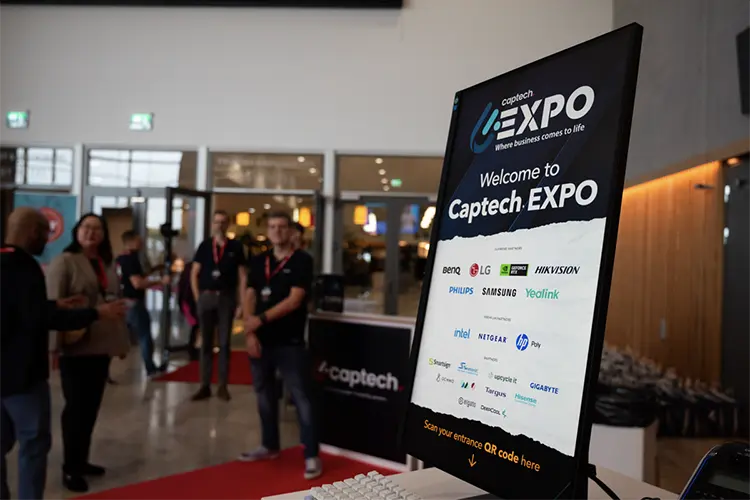
Captech EXPO Tests Technological Convergence

IFMA Spain: Technology, Spaces and People

Crestron connects more than 200 rooms at Camp Nou
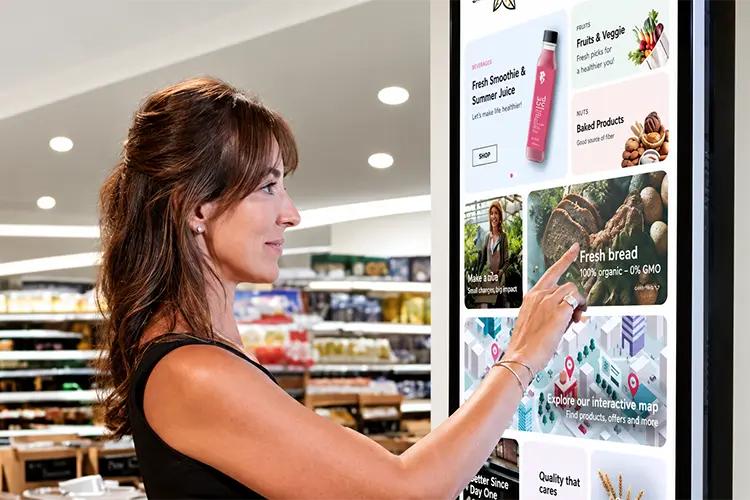
Self-Service Kiosks and AI at InfoComm Latin America
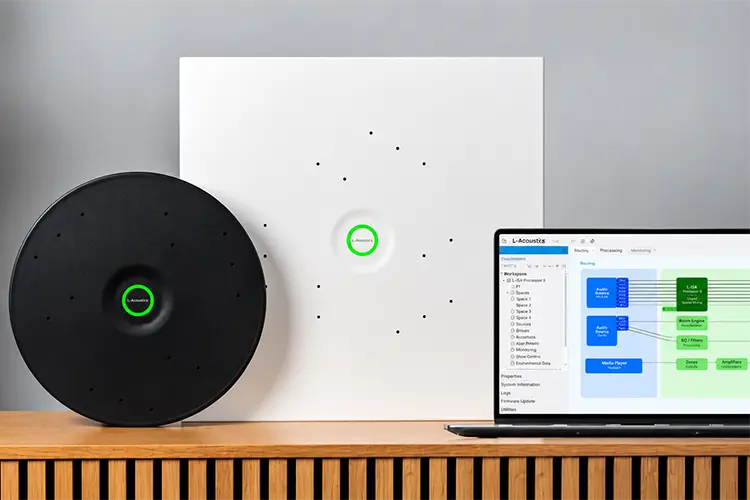
Collaboration, Wireless Audio and AV Management
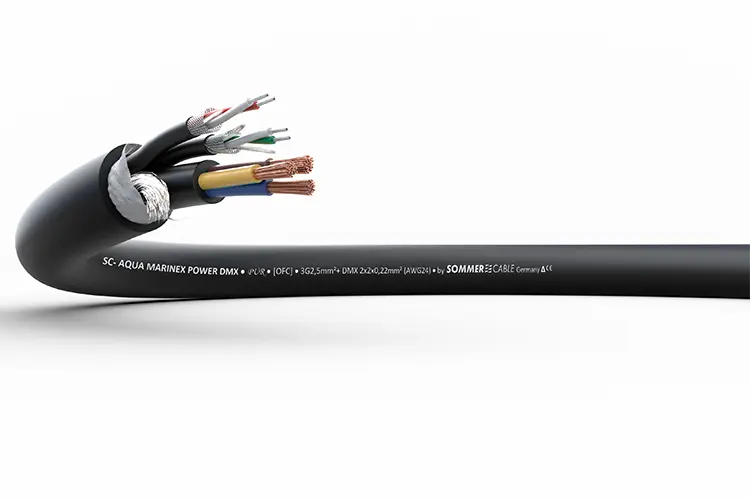
Sommer hybrid cable for underwater lighting

AVL SUMMIT by AFIAL: Exhibition and Technical Sessions
A Sharp plugin connects Q-SYS with NEC displays
AISpeech and effective listening in meetings