AEIT Madrid: biomedical engineering and healthcare tech in Spain
Written by ISP Integration editorial teamCategory: NEWS
Published:
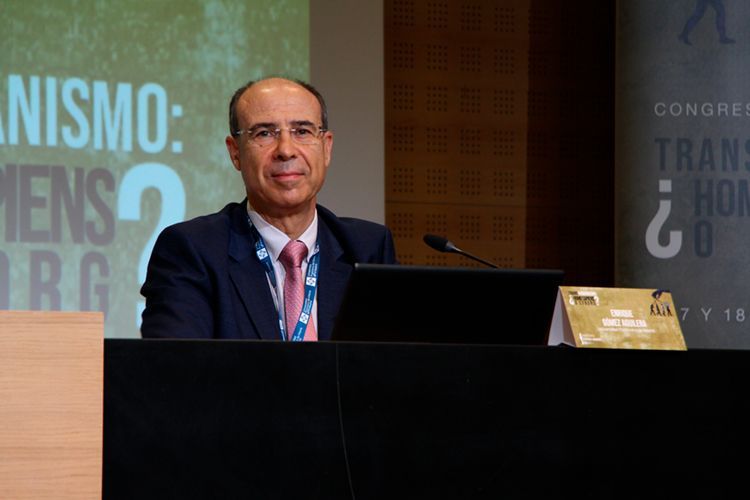
The Spanish Association of Telecommunication Engineers, AEITMadrid, held the sixth edition of Un Café Con… (A coffee with…) on 25 March
These are relaxed get-togethers in which concerns, points of view and topical issues are discussed with various leading professionals from the telecommunications sector. The talks, moderated by Víctor Valle, Secretary of AEITMadrid, aim to bring current topics of interest closer to members and to the whole ICT sector.
On this occasion, Un café con… featured telecommunication engineer Enrique J. Gómez Aguilera, who gave a historical overview of Biomedical Engineering in Spain and reviewed the challenges and opportunities facing the discipline and the strategies that need to be put in place.
Professor Gómez Aguilera highlighted the current level reached in the training of biomedical engineers in Spain:
In recent years, the development of biomedical engineering has been exponential and fantastic. Since 2009, there have been specialised degrees in this discipline, with highly committed students who want to dedicate themselves to this interdisciplinary world and to this interface between technology and human beings. It is an increasingly sought-after professional profile with a wide range of training and skills.
He also described the strong historical link between this discipline and telecommunication engineering, which has enabled more than 3,000 engineering students to train in the field of bioengineering: “We find many colleagues working in practically every healthcare engineering company and in hospitals.”
Another key topic of the meeting was the pandemic and the role of biomedical engineering in this health crisis; in his opinion,
The pandemic has shown us the reality. It has revealed weakness and dependence on foreign markets, and it is essential that we have a healthcare technology infrastructure. There is a limitation in technology transfer in terms of time and quality, and all of this requires investment in technologies made in Spain and commitment from public institutions.
Despite this, Enrique Gómez believes that biomedical engineering has played a magnificent role in this crisis, with technologies such as medical imaging proving fundamental for diagnosing COVID-19 and its associated complications, and mechanical ventilators helping to save many lives. Not forgetting telemedicine: “one of the most important technologies during the pandemic.”
Telemedicine must be a medical act in which conditions exist that allow healthcare professionals and patients to have adequate quality of communication and access to data, and all of this will be possible thanks to 5G.
For the telecommunication engineer: “the problem is not digitising information, but using the tools we have to change the healthcare system and care processes.”
The digital maturity of the healthcare system currently stands at 31%, but 5G is expected to provide a major boost and telemedicine to change radically: “5G enables the emergence of other scenarios such as smart hospitals, emergency services and operating theatres, all within a unique environment and opportunity: the recovery and resilience funds.”
For Enrique Gómez, Spain has a sector with potential for greater internationalisation, but he concludes that:
It needs more muscle. Spain has special characteristics: we are a country that attracts tourism, and the combination of health and tourism is increasingly common. We must offer quality tourism and health tourism, and here biomedical engineering and healthcare technology can play a key role in becoming European leaders.
You may also like
ISE 2027: a working TV studio, AI at work and 1,500 drones
Genelec bolsters its Western Europe team
SOLTEC unveils its RET-G retractable monitors
Neutrik brings TRUE1 and DR Series to JTSE 2026

TBS Education warns of AI bias when hiring staff

Panasonic and HIVE: 80% less AV infrastructure

IDC names Shure a Leader in AI meeting rooms
AVPro Edge MXnet 10G-MSE: 4K and H.265 from one encoder

500 Sony BRAVIA displays connect 100 stores
Sony: the traditional office is falling behind
Datapath to operate under the VITEC brand in 2027
40 giant Sony displays for collaborative learning

OPTIMUS installs 19 SIP intercoms at a Mexican power plant

LEA Cloud diagnoses issues without on-site visits
Genelec equips a music school with 143 loudspeakers
AVIXA appoints Marco Pardi as new chief executive

Spark 2027 to open with Casa Batlló mapping artists
Hikvision Village: a city where it all connects
Barco recreates realistic maritime scenarios
LEDVANCE: free training in LED and smart lighting

Daktronics upgrades video and audio at Lane Stadium
Crestron Collab Engine: meetings and AV control in one
Nureva appoints Ted Shuter as VP, Products
Kramer makes SailPoint's Pune rooms divisible

Pulse brought seven minutes of AV to InfoComm
Sony miniaturises medical imaging with the IMX742
Sony equips Crestron’s centres in London and Paris
ISLE 2027 opens visitor registration in Shenzhen

Nureva brings AI to meeting room management
Hikvision applies thermography to fire prevention
Spark 2027 opens registration and grows at Montjuïc
Ghost meetings under the technological spotlight

Genelec creates a sound forest inside Finlandia Hall
Light + Building strengthens British lighting presence
Bluesound brings licensed music to shops and hotels
Hikvision renews its Madrid Excelente certification
Crestron develops its first proprietary AV chipset
Video Control and Distribution on a Single Platform
Immersive audio and smart rooms: how InfoComm went

Video control and distribution on a single platform
SeeSound equips Cuenca Hospital auditorium

Hikvision Village 2026 recreates a connected city
Curved displays, transparent LED and COB technology
InfoComm América Latina puts AI into practice
Mo Gawdat examines the impact of AI on businesses
IntelliMix Bar Pro takes centre stage in Shure’s strategy
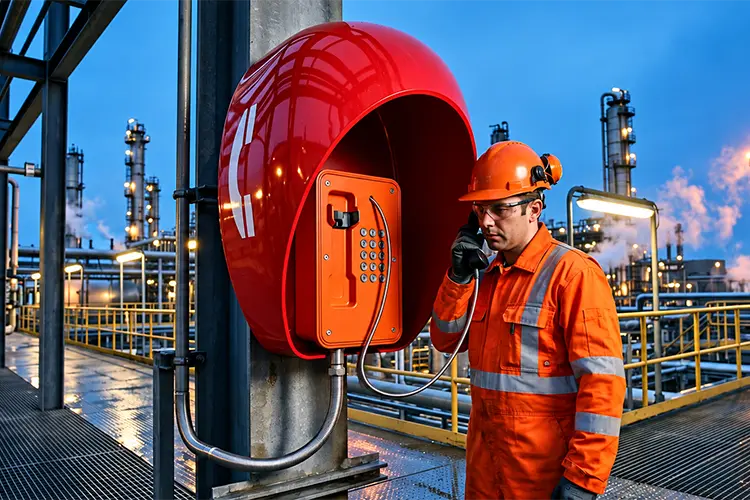
OPTIMUS public address built for maximum demand
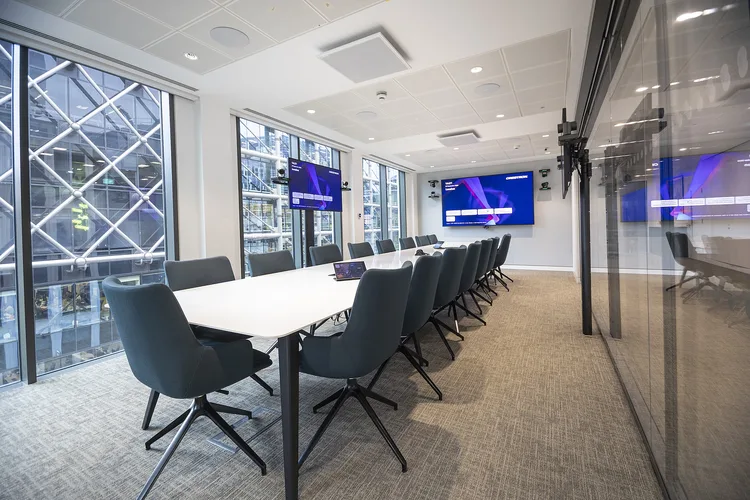
Sony equips Crestron's new Experience Centres

AV over IP: When the Network Becomes the System
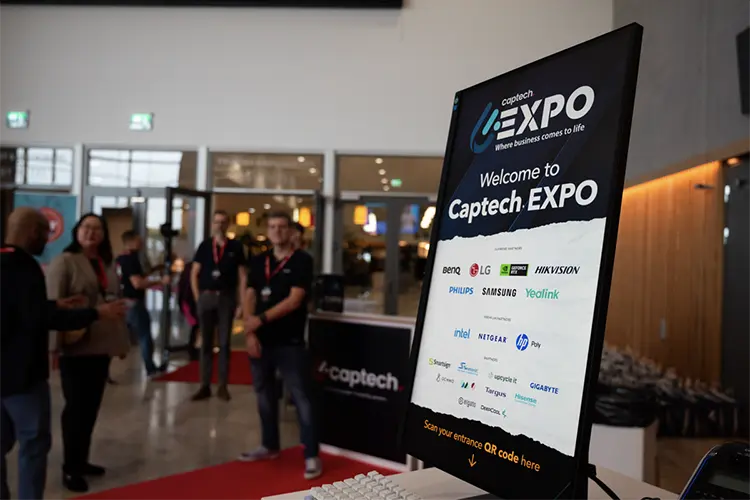
Captech EXPO Tests Technological Convergence

IFMA Spain: Technology, Spaces and People

Crestron connects more than 200 rooms at Camp Nou
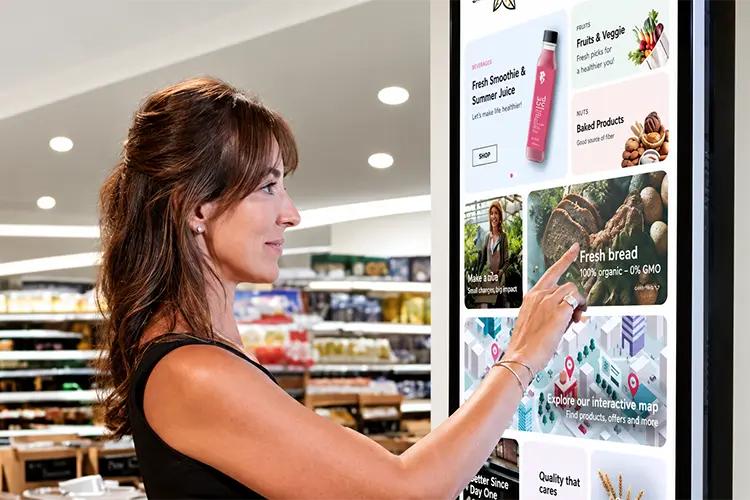
Self-Service Kiosks and AI at InfoComm Latin America
Collaboration, Wireless Audio and AV Management
Sommer hybrid cable for underwater lighting
AVL SUMMIT by AFIAL: Exhibition and Technical Sessions
A Sharp plugin connects Q-SYS with NEC displays
AISpeech and effective listening in meetings