eRetail Congress 2022: convenience and tech drive New Retail
Written by ISP Integration editorial teamCategory: NEWS
Published:

Convenience, omni-experience and technology solutions: a differentiating bet for New Retail and the keys to eRetail Congress 2022.
More than 1,160 professionals took part in eRetail Congress 2022, held in Madrid in a hybrid format, with the aim of sharing the latest trends to boost retailers' competitiveness.
Knowledge and data-driven analysis of the digital customer's real needs and the implementation of technology solutions, combined with empathy and the human and emotional factor, stood out as the most strategic aspects enabling retailers to deliver integrated, assertive and personalised experiences.
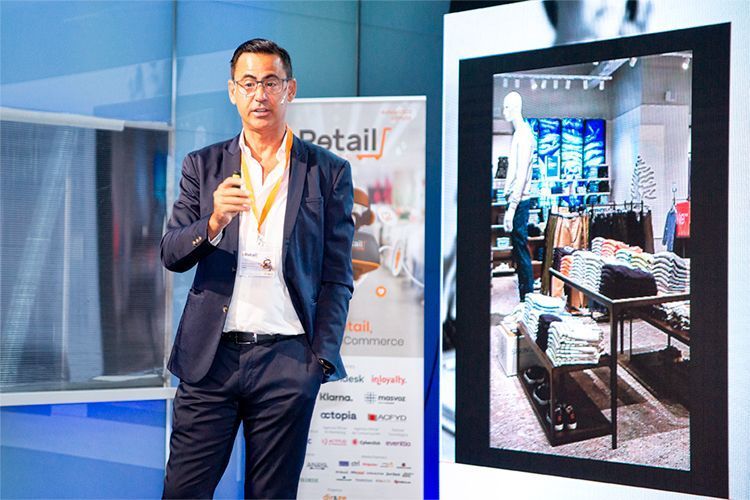
The opening keynote was given by Raúl Ramírez, Global Retail General Manager at Tendam, who emphasised how digitalisation has influenced retail and the consumer shopping experience.
At Tendam we adapt our points of sale to new technology trends so that we can accompany customers by combining the physical and digital shopping experience as the key to success. We use technology, combined with the human factor, to streamline basic processes and deliver an immersive, sensory experience in both the back and front office.
Convenience, conversational strategy and omni-experience
New Retail guarantees seamless shopping experiences in which immediacy and convenience are paramount to offering consumers the very best, both online and in the real world. Enrique Benayas, Director of ESIC Corporate Education and Managing Director of ICEMD, highlighted convenience as a key concept in retail. “If something is useful and convenient for the customer, it will be easier for them to connect with the brand. Offering a shopping experience that delivers real value requires understanding the capabilities of each technology in order to implement it optimally. Solutions such as virtual reality, social commerce, shoppable video and livestream shopping enable an extended experience”.
For his part, Alberto Becerra, Regional Manager, Enterprise and Commercial Sales – Iberia & Italy at Zendesk, focused on the new era of conversational business. “Brands are looking to build a relationship with the customer that goes beyond interaction, and in this respect messaging channels guarantee convenient, fast, personalised and asynchronous interaction”.
“The brand must maintain its identity across all points of sale, and the customer must feel the experience regardless of the channel”, noted Sara Vega, Marketing & Communications Director Spain at Fnac, who also stressed that “at Fnac we act as a cultural catalyst that, beyond the product, offers book signings, presentations, interviews… which generates an emotional connection with the customer that strengthens brand consideration”.
Building customer loyalty profitably is one of the challenges facing companies and, in this respect, adopting an analytical approach is essential. This was highlighted by Mª Jesús Yribarren, Lead Data Scientist, and Alejandro Soto, Head of Business Development & Strategy at Inloyalty. “Analytics projects can be divided into three levels: the first focused on discovering and measuring, the second geared towards knowing and understanding, and a third level focused on predicting and personalising. This is the most sophisticated level, allowing the loyalty strategy to be optimised by focusing investment and maximising results”.
Alfredo Moya, Account Executive, and Anouk Shlamovitz, Pre-sales Engineer at Masvoz, part of Enreach, analysed how to increase sales by offering customers a multichannel experience and how to optimise processes through Artificial Intelligence. “To reduce abandonment and drive conversion, it is important to identify where each customer comes from, offer a multichannel experience, use artificial intelligence tools and automate processes”.
Challenges of digital transformation in retail and new business opportunities for the sector
Omnichannel consumers expect brands to deliver personalised experiences tailored to their expectations, and having access to as much relevant data as possible is essential to understanding customer behaviour patterns and steering strategy towards the best business decisions.
This was the common thread of the first panel discussion at eRetail Congress, promoted by SAP and moderated by David Tomas, General Manager and Co-founder of Cyberclick.
To tackle the challenges of retail's digital transformation, the panel featured Lola López, Director of Digital Marketing, Branding, Innovation and New Projects at El Ganso; Rogelio Chung Loo, Ecommerce Manager Iberia at Lego; Caroline Arrú, Chief Marketing & Chief Customer Officer at IskayPet; Diego Revilla, Ecommerce and Marketing Automation Manager at Multiópticas, and Ramón Ortiz, Head of Customer Data Solutions (Spain & Portugal) at SAP.
The participants highlighted the digitalisation of logistics, the implementation of personalised advice, the unification of the digital and physical experience through connected channels, and enriching the database to drive loyalty in a competitive environment as the main challenges companies face in their digital transformation process.
Knowing customers and anticipating their needs, eliminating data fragmentation, responding to consumer needs in real time and adapting to regulatory requirements are other challenges companies face in the current context, noted Ramón Ortiz, Head of Customer Data Solutions (Spain & Portugal) at SAP.
Hyper-personalisation and data analytics to reach the digital customer
Data is a fundamental company asset and a differentiating factor with respect to the competition. Fernando Gutiérrez-Cabello, Account Manager at Microstrategy, pointed out the need to “have a modern, open, enterprise platform to hyper-personalise the customer experience through innovation and advanced analytics. A lack of information is critical, which is why we have developed technology that makes it possible to consolidate all the data sources an individual works with”.
Arnaud Vaissiere, Senior Sales Account Executive Iberia at Octopia, highlighted the benefits offered by marketplace solutions. “In retail, marketplace leaders are redefining convenience and, beyond the platform, it is essential to have a range of quality sellers and products, as well as a logistics strategy and sound business performance”.
Although different indicators have been used in digital areas, it is increasingly common to implement correlated metrics tracking across all departments to identify business improvements. Eloy Mariaud, eCommerce & Digitalisation Director at Casa del Libro, presented real business examples based on data analysis and showed how all of a company's current information can be leveraged to substantially improve the customer experience. “The four ‘V’s that define Big Data are: volume, variety, velocity and veracity”.
In a hyper-growth company, maintaining a growth hacking mindset is far from easy. Isabel Salazar, Country Manager Spain at ManoMano, explained that “the virtuous circle of growth hacking is characterised by multidisciplinary teams, a dynamic of continuous testing and a focus on achieving short-term results in order to launch medium- and long-term projects”.
How to understand the superpowers of the digital consumer
Understanding the customer's decision-making process and empathising with their needs to drive acquisition, retention and loyalty. This was the common thread of the second panel discussion at eRetail Congress, promoted by Klarna and featuring Ricardo Carrasco, General Manager Spain & Portugal at Babyliss; José Carlos González, Head of Retail at JD Sports; Ismael Varela, CRO Manager & Data Analytics at Mayoral Moda Infantil; Mauricio Sánchez, E-Commerce Director at Cartucho.es, and Daniel Espejo, Country Manager at Klarna, moderated by Juan Carlos Lozano, CEO of Dir&Ge.
The executives highlighted the importance of combining information on digital and in-store consumers to improve the experience, and pointed to adaptability as a guiding principle for retaining digital customers and building their loyalty.
Offering new features that make the buying process easier, such as new payment methods that provide security, is essential to increasing the chances of conversion. Payment is an emotional concept, which is why it is important for payment methods to invest in building their brand, noted Daniel Espejo, Country Manager at Klarna.
Metaverse and retail media
The metaverse is a concept still unknown to many, complex for others and highly impactful for new generations. David Hernández, Partner at ACFYD Análisis, explained how the metaverse helps to streamline and improve invoicing and expense procedures in our companies. “In a world of data it is much easier to create an organisation that helps us streamline all tasks, including administrative ones”.
For his part, Fernando Siles, Head of Online Marketing at Worten, explained that retail media is changing e-commerce, trade marketing and the relationship between brands and retailers on a basis of transparency. “Shifting trade marketing investment from the offline to the online environment is a necessary strategic move. Marketing campaigns must be visible, generate traffic and do so through an offer that adds value”.
“Knowing today's consumer well, as well as the customer journey and the right technologies, is the key to success in delivering a good customer experience”, stressed Rafa Romero, Regional VP Iberia at Sitecore, who focused on “composable technology, in which each component can be replaced and continuously improved to meet changing business requirements”.
María José Cuenda, Managing Director of Commercial and Real Estate at Aena, addressed travel retail trends in the closing keynote. “Sustainable consumption, passenger connectivity, automation, immediacy and personalisation are the trends that will shape travel retail, and in this context Aena's goal is to stay ahead and adapt to our customers through digitalisation, personalisation and changes in business models”.
You may also like

Genelec bolsters its Western Europe team

SOLTEC unveils its RET-G retractable monitors

Neutrik brings TRUE1 and DR Series to JTSE 2026

TBS Education warns of AI bias when hiring staff

Panasonic and HIVE: 80% less AV infrastructure
IDC names Shure a Leader in AI meeting rooms
AVPro Edge MXnet 10G-MSE: 4K and H.265 from one encoder

500 Sony BRAVIA displays connect 100 stores

Sony: the traditional office is falling behind

Datapath to operate under the VITEC brand in 2027

40 giant Sony displays for collaborative learning

OPTIMUS installs 19 SIP intercoms at a Mexican power plant

LEA Cloud diagnoses issues without on-site visits

Genelec equips a music school with 143 loudspeakers

AVIXA appoints Marco Pardi as new chief executive

Spark 2027 to open with Casa Batlló mapping artists
Hikvision Village: a city where it all connects
Barco recreates realistic maritime scenarios

LEDVANCE: free training in LED and smart lighting

Daktronics upgrades video and audio at Lane Stadium
Crestron Collab Engine: meetings and AV control in one

Nureva appoints Ted Shuter as VP, Products
Kramer makes SailPoint's Pune rooms divisible

Pulse brought seven minutes of AV to InfoComm

Sony miniaturises medical imaging with the IMX742
Sony equips Crestron’s centres in London and Paris

ISLE 2027 opens visitor registration in Shenzhen

Nureva brings AI to meeting room management
Hikvision applies thermography to fire prevention
Spark 2027 opens registration and grows at Montjuïc

Ghost meetings under the technological spotlight
Genelec creates a sound forest inside Finlandia Hall
Light + Building strengthens British lighting presence
Bluesound brings licensed music to shops and hotels
Hikvision renews its Madrid Excelente certification

Crestron develops its first proprietary AV chipset
Video Control and Distribution on a Single Platform
Immersive audio and smart rooms: how InfoComm went

Video control and distribution on a single platform
SeeSound equips Cuenca Hospital auditorium

Hikvision Village 2026 recreates a connected city

Curved displays, transparent LED and COB technology

InfoComm América Latina puts AI into practice

Mo Gawdat examines the impact of AI on businesses
IntelliMix Bar Pro takes centre stage in Shure’s strategy

OPTIMUS public address built for maximum demand

Sony equips Crestron's new Experience Centres

AV over IP: When the Network Becomes the System
Captech EXPO Tests Technological Convergence

IFMA Spain: Technology, Spaces and People

Crestron connects more than 200 rooms at Camp Nou
Self-Service Kiosks and AI at InfoComm Latin America
Collaboration, Wireless Audio and AV Management
Sommer hybrid cable for underwater lighting
AVL SUMMIT by AFIAL: Exhibition and Technical Sessions
A Sharp plugin connects Q-SYS with NEC displays
AISpeech and effective listening in meetings

ISE 2027 expands its technological and creative universe