Access control systems: types and applications, by By Demes
Written by ISP Integration editorial teamCategory: NEWS
Published:

Advanced solutions from prestigious brands in the By Demes access control catalogue.
More and more companies and individuals are opting for access control solutions that allow them to effectively control and protect their factories, offices, premises or homes. In this respect, being able to offer access control devices is added value that complements the most advanced intrusion and video surveillance systems on the market.
If you do not yet have access control systems in your portfolio, we invite you to find out more about them with By Demes. We will explain everything you need to know about access control: what it is, the types that exist and the security applications you can use in your professional projects.
What is an access control system and why can it be essential?
The concept of access control, in the general field of security, refers to automation systems that allow or deny the entry of people or vehicles into homes, businesses or institutions, according to previously configured indicators.

We distinguish proximity systems, which require an object to authenticate and authorise entry (a card, for example), from biometric devices that authenticate the person by recognising their physical characteristics (face, fingerprint or palm, for example), without the need to carry an additional object. They can be installed on the doors of buildings, homes, premises and car parks – in short, on all kinds of entrances.
Solutions of this kind can be essential for managing workers' access to workplaces, vehicles in shared car parks and even for allowing workers to enter a home when the owner is not present. All of this helps to prevent and promptly identify a possible intrusion.
In terms of connectivity, there are standalone access control systems and server-based ones. We look at them in detail below
Standalone access control installations
Standalone access control devices, as their name suggests, allow or prevent people's access independently, without any need for a connection.
In general, they are small and easy to install and use. In terms of operation, they need prior configuration to set the desired parameters and thus manage entries and exits autonomously, which makes them highly reliable and useful.
U-Prox access control systems stand out, generally used for doors and car parks. They are easy to install, need hardly any management and are single-door
The U-Prox access control system is recommended for:
- Shared entrances
- Residential communities
- Offices
- Entrances to residential buildings
- Warehouse entrances
- Vehicle access
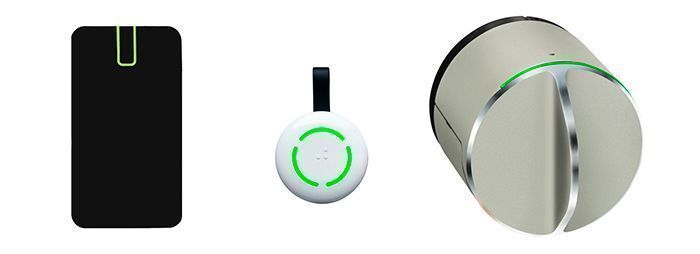
UPROX-044 versatile reader
The U-Prox multi-credential reader works effectively with cards, Mifare, Mifare Plus and mobile credentials. Installation is particularly convenient and simple, and it is easily adjustable from the user's own smartphone.
UPROX-045 standalone controller
It allows smartphones to be used as credentials with the U-Prox Mobile ID app and U-Prox ID mobile identifiers. It incorporates a touch-sensitive exit button and allows an external U-Prox SL series reader to be connected.
UPROX-046 contactless identifier tag
It allows users of the access control system to be authorised in hands-free mode. The U-Prox tag transmits the included mobile identification, has a built-in activation button and works only with U-Prox SL (SmartLine) readers.
Danalock SALTO-001 smart electronic lock
It can be linked to the VESTA Alarm System via the Z-Wave protocol for installation in homes, residential properties or holiday rentals. This smart lock can be managed from a smartphone. Installation requires no screws or drilling, and it fits on the inside of the lock. It also keeps a summary of activity and monitors when and who enters or leaves the home.
For more information about these security devices, see our article detailing how smart electronic locks work
For small and medium-sized access control systems, of 3 to 4 doors, By Demes offers the widest range of solutions, adapted to all kinds of professional installations. The ZKTeco Atlas system, one of the most efficient and widely used ranges on the market, can manage up to 21 controllers and 84 doors, with advanced access control functions.
The devices have the advantage that the management software is embedded directly in the controller, making it easier to manage multiple access control devices connected in various zones. It is designed for small and medium-sized businesses with a considerable number of doors that do not require IT maintenance and that also want a more advanced event log.
ZKTeco ZK-160 fingerprint and card reader
The device allows the use of fingerprint or card and is compatible with Atlas controllers, but also with standalone devices. It has an LED indicator and an audible one. It is ideal for wall installation and, thanks to its stainless steel construction, it is very durable.
The third and last type of access control we will discuss is server-based, that is, controlled by management software that offers various functions
Installations of this type make it possible to manage multiple zones and access points with different technologies. They combine LPR, biometrics, proximity, visitor management… and are very useful for critical infrastructure and complex sites such as large logistics centres that require advanced access control. They are also suited to managing car parks with a large number of spaces, large offices and business complexes, including time-based and permission-based access control functions.
This type of access control also makes it possible to integrate various devices into the security ecosystem and to combine different brands and ranges, such as ZKTeco ZKBioSecurity or Hikvision HikCentral.
You may also like

Genelec bolsters its Western Europe team
SOLTEC unveils its RET-G retractable monitors
Neutrik brings TRUE1 and DR Series to JTSE 2026

TBS Education warns of AI bias when hiring staff

Panasonic and HIVE: 80% less AV infrastructure

IDC names Shure a Leader in AI meeting rooms
AVPro Edge MXnet 10G-MSE: 4K and H.265 from one encoder

500 Sony BRAVIA displays connect 100 stores

Sony: the traditional office is falling behind

Datapath to operate under the VITEC brand in 2027

40 giant Sony displays for collaborative learning

OPTIMUS installs 19 SIP intercoms at a Mexican power plant

LEA Cloud diagnoses issues without on-site visits
Genelec equips a music school with 143 loudspeakers

AVIXA appoints Marco Pardi as new chief executive

Spark 2027 to open with Casa Batlló mapping artists
Hikvision Village: a city where it all connects
Barco recreates realistic maritime scenarios

LEDVANCE: free training in LED and smart lighting

Daktronics upgrades video and audio at Lane Stadium
Crestron Collab Engine: meetings and AV control in one

Nureva appoints Ted Shuter as VP, Products
Kramer makes SailPoint's Pune rooms divisible

Pulse brought seven minutes of AV to InfoComm

Sony miniaturises medical imaging with the IMX742
Sony equips Crestron’s centres in London and Paris
ISLE 2027 opens visitor registration in Shenzhen

Nureva brings AI to meeting room management
Hikvision applies thermography to fire prevention
Spark 2027 opens registration and grows at Montjuïc
Ghost meetings under the technological spotlight
Genelec creates a sound forest inside Finlandia Hall
Light + Building strengthens British lighting presence
Bluesound brings licensed music to shops and hotels
Hikvision renews its Madrid Excelente certification
Crestron develops its first proprietary AV chipset
Video Control and Distribution on a Single Platform
Immersive audio and smart rooms: how InfoComm went
Video control and distribution on a single platform
SeeSound equips Cuenca Hospital auditorium

Hikvision Village 2026 recreates a connected city
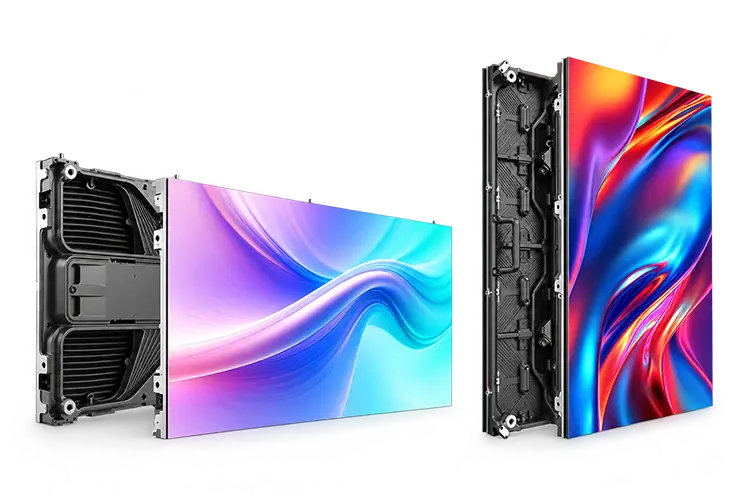
Curved displays, transparent LED and COB technology
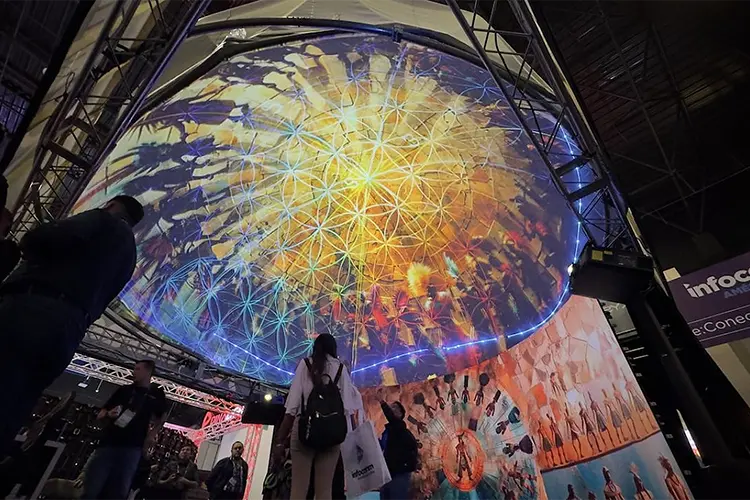
InfoComm América Latina puts AI into practice

Mo Gawdat examines the impact of AI on businesses
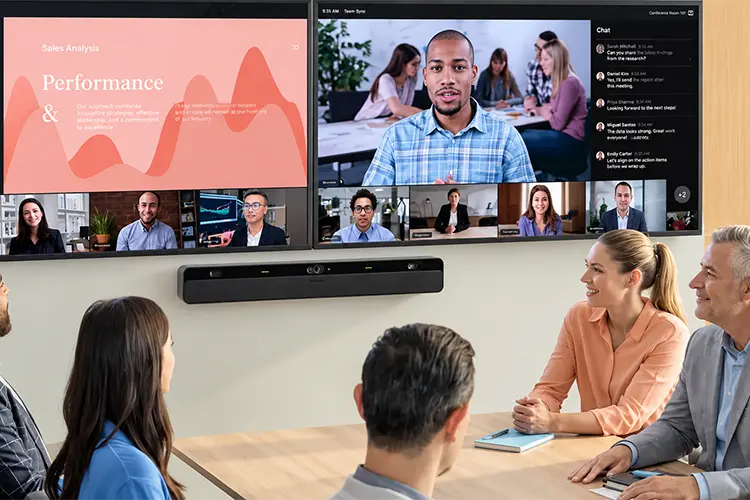
IntelliMix Bar Pro takes centre stage in Shure’s strategy

OPTIMUS public address built for maximum demand

Sony equips Crestron's new Experience Centres

AV over IP: When the Network Becomes the System
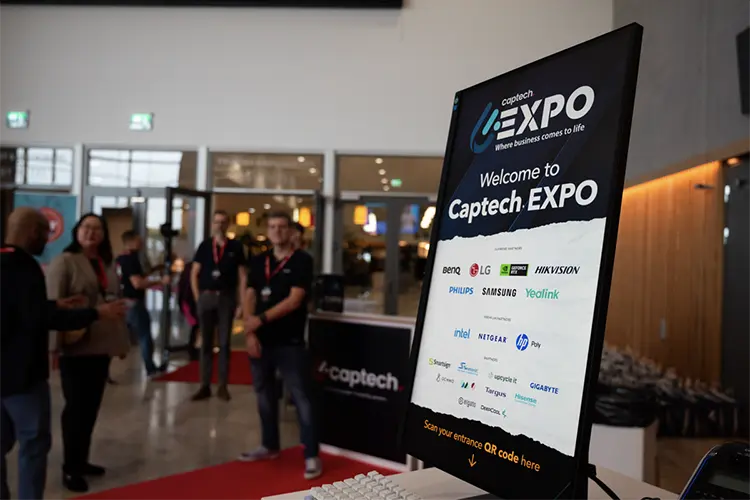
Captech EXPO Tests Technological Convergence

IFMA Spain: Technology, Spaces and People
Crestron connects more than 200 rooms at Camp Nou
Self-Service Kiosks and AI at InfoComm Latin America
Collaboration, Wireless Audio and AV Management
Sommer hybrid cable for underwater lighting
AVL SUMMIT by AFIAL: Exhibition and Technical Sessions
A Sharp plugin connects Q-SYS with NEC displays
AISpeech and effective listening in meetings

ISE 2027 expands its technological and creative universe