Canary Islands adopts Inetum SCAAR remote court appearances
Written by ISP Integration editorial teamCategory: NEWS
Published:
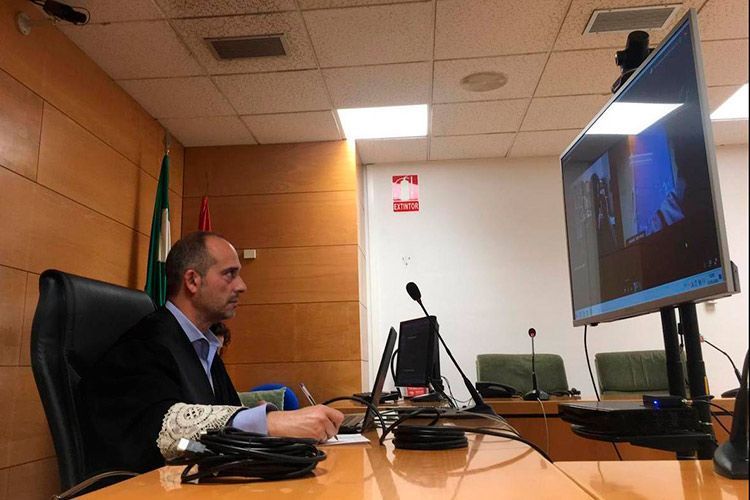
The Canary Islands Government is implementing a remote court appearance system with biometric identification.
Physical attendance is replaced by remote identification which will gradually be extended to the rest of the region’s courts.
The Canary Islands Government’s Department of Public Administration, Justice and Security has launched a remote appearance system at the investigating courts of Las Palmas de Gran Canaria, replacing physical attendance with secure remote biometric identification via mobile phone.
It is a pioneering initiative in Spain which will gradually be extended to the rest of the region’s courts
The Canary Islands Government’s Deputy Minister for Justice, Carla Vallejo, explains that this is the Remote Apud Acta Appearance System (SCAAR), developed by Inetum for the Canary Islands Justice Administration. Its implementation brings many advantages, both for the person subject to the court order of periodic appearances, who may, if they consent, replace them with remote verification via their mobile phone, and for the Justice Administration itself.
Vallejo explains that this technology moves appearance verification from a purely manual, human process to a fully digital system which will also be integrated into the Case Management System, generating immediate notifications and alerts. She highlights gains in efficiency and in making the most of the Justice Administration’s human resources by computerising a task that previously could only be done in person.
She also stresses its particular importance and value at this time of health crisis, as it avoids travel and crowds at courts and continues the trend of relying on new technologies to improve public services.
Remote system
The Remote Apud Acta Appearance System makes it possible to replace physical attendance, on the days set by the judicial authority when a precautionary measure is ordered, with secure remote biometric identification via mobile phone. Already implemented and successfully proven in markets such as aeronautics, border control and banking, among others, it relies on document verification systems and facial biometrics.
It is a two-phase solution in which the person appearing verifies their identity with any valid document and generates their biometric credential through facial recognition. Once generated, the credential is used to verify their identity remotely, together with geolocation that confirms the person is in the territory where they are required to remain.
This provides a double check. First, verification of the person’s identity, essential to guarantee the appearance, and second, biometric identification, which confirms identity and prevents identity fraud.
In terms of security and reliability, the facial biometric systems support technologies that prevent fraudulent use with masks or photographs that could enable impersonation, and guarantee, based on an algorithm calculated against a defined threshold, that the captured facial evidence belongs to a real person who matches the holder of the verified document.
You may also like
Shure adds MX415 DUAL gooseneck microphone to Microflex range
Sennheiser MobileConnect at Kiel University (Christian-Albrechts)

QSC expands Microsoft Teams Rooms portfolio

Sennheiser TeamConnect Ceiling 2 now certified for Zoom

Sennheiser wireless conference system at Sheraton Grand Doha

HK Audio promotes Isabelle Wear to Head of Sales EMEA

ISE 2027: a working TV studio, AI at work and 1,500 drones
Genelec bolsters its Western Europe team
SOLTEC unveils its RET-G retractable monitors
Neutrik brings TRUE1 and DR Series to JTSE 2026

TBS Education warns of AI bias when hiring staff

Panasonic and HIVE: 80% less AV infrastructure

IDC names Shure a Leader in AI meeting rooms
AVPro Edge MXnet 10G-MSE: 4K and H.265 from one encoder

500 Sony BRAVIA displays connect 100 stores

Sony: the traditional office is falling behind
Datapath to operate under the VITEC brand in 2027

40 giant Sony displays for collaborative learning

OPTIMUS installs 19 SIP intercoms at a Mexican power plant

LEA Cloud diagnoses issues without on-site visits
Genelec equips a music school with 143 loudspeakers

AVIXA appoints Marco Pardi as new chief executive
Spark 2027 to open with Casa Batlló mapping artists
Hikvision Village: a city where it all connects
Barco recreates realistic maritime scenarios

LEDVANCE: free training in LED and smart lighting

Daktronics upgrades video and audio at Lane Stadium
Crestron Collab Engine: meetings and AV control in one

Nureva appoints Ted Shuter as VP, Products
Kramer makes SailPoint's Pune rooms divisible

Pulse brought seven minutes of AV to InfoComm
Sony miniaturises medical imaging with the IMX742
Sony equips Crestron’s centres in London and Paris

ISLE 2027 opens visitor registration in Shenzhen

Nureva brings AI to meeting room management
Hikvision applies thermography to fire prevention

Spark 2027 opens registration and grows at Montjuïc
Ghost meetings under the technological spotlight
Genelec creates a sound forest inside Finlandia Hall
Light + Building strengthens British lighting presence
Bluesound brings licensed music to shops and hotels

Hikvision renews its Madrid Excelente certification
Crestron develops its first proprietary AV chipset
Video Control and Distribution on a Single Platform

Immersive audio and smart rooms: how InfoComm went

Video control and distribution on a single platform
SeeSound equips Cuenca Hospital auditorium

Hikvision Village 2026 recreates a connected city

Curved displays, transparent LED and COB technology

InfoComm América Latina puts AI into practice

Mo Gawdat examines the impact of AI on businesses

IntelliMix Bar Pro takes centre stage in Shure’s strategy

OPTIMUS public address built for maximum demand

Sony equips Crestron's new Experience Centres

AV over IP: When the Network Becomes the System

Captech EXPO Tests Technological Convergence

IFMA Spain: Technology, Spaces and People

Crestron connects more than 200 rooms at Camp Nou