Poly study on hybrid working: twelve key considerations
Written by ISP Integration editorial teamCategory: NEWS
Published:
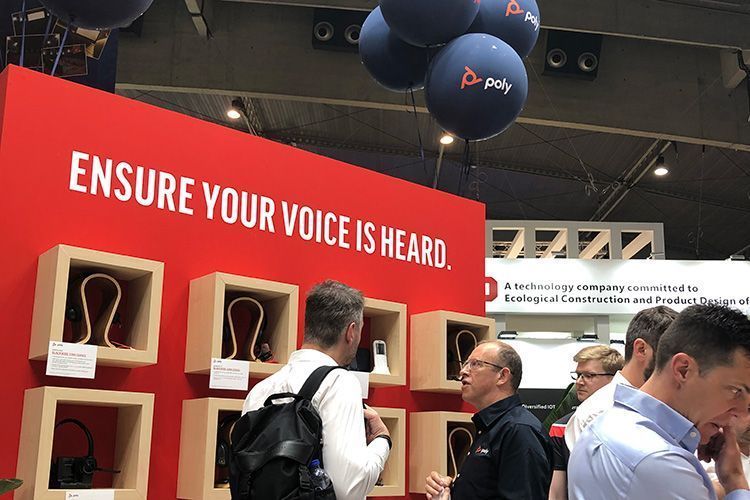
Poly has presented the study The Journey to Hybrid Working: Twelve Considerations.
Carried out in collaboration with WORKTECH Academy, a workplace research platform, the report was presented at ISE 2022 – Europe's most important audiovisual trade show, held in Barcelona from 10 to 13 May. It identifies twelve key considerations, expressed as dichotomies, that companies should take into account when tackling and managing their hybrid working models, and pinpoints the key challenges they face in relation to people, technology and spaces.
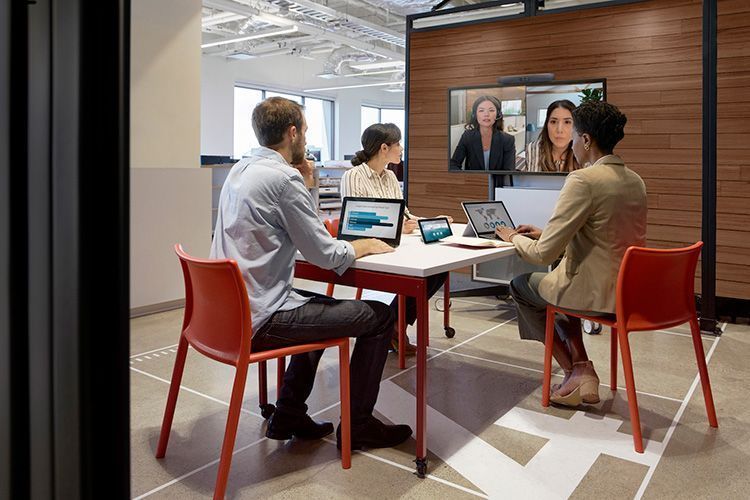
Hybrid working is becoming an increasingly permanent part of companies' management policies, rather than a one-off plan or short-term trend, although making the new model work successfully is no easy task
The study analyses the differences between working in person and virtually, as well as the need to create a level playing field in meetings regardless of where employees are located, using the right tools and technologies.
The main areas that Poly and WORKTECH Academy address across the twelve considerations are:
- Balancing the always-on culture and employee work overload: Organisations must clearly define expectations around these labels at a time when time and place are increasingly blurred.
- Redrawing the rules of informal and formal collaboration for a hybrid workforce: Companies need to know their employees to understand their behaviours and preferences.
- Weighing up the advantages of standardised versus personalised approaches: Organisations must strike a balance between being prescriptive and giving employees elements of choice and personalisation in the way they work and collaborate.
- Shifting the focus from physical comfort to psychological comfort: Hybrid working environments require, among other things, adequate investment in technology so that employees have a sense of belonging and purpose outside the office.
- Creating diverse and inclusive workplaces: Equality of experience will be at the heart of inclusive organisations that enable everyone to feel involved regardless of their location and individual characteristics.
Poly is working with WORKTECH Academy on an ongoing programme to generate new ideas, define the main challenges and explore emerging opportunities around hybrid working. The report presented today identifies key themes that will be addressed in depth in subsequent research and analysis
Jeremy Myerson, Director of WORKTECH Academy, says: "For organisations to seize the opportunities that hybrid working offers, they must first understand the complex scenarios of the model and recognise certain inherent dichotomies. Our first report with Poly sets out some of the key debates around hybrid working and sets an agenda for professionals to prepare to face a flexible future with the necessary confidence".
John Goodwin, Senior Vice President of Public Affairs at Poly, comments: "Hybrid working is here to stay, but significant hurdles must be overcome before organisations can consider it a success. By identifying the twelve considerations on hybrid working in our study, Poly outlines some of the key issues organisations will face as they begin to implement hybrid models. 48% of the companies we surveyed [as part of another study] have already adopted a hybrid approach. At the same time, 37% of business leaders say they are ready for hybrid working in the short term, although they have not addressed their long-term planning. The key to doing so will be understanding how to make the most of their spaces, how their staff work best and where best to invest their money in technologies that enable a seamless hybrid experience. Identifying the challenges and opportunities of hybrid working now will pave the way for companies to map out successful hybrid working strategies".
To produce the study, Poly and WORKTECH Academy drew on, among other resources, the latest research and surveys in this field (including Poly's latest study of more than 2,500 senior executives at companies with more than 100 employees). The Journey to Hybrid Working: Twelve Considerations is available here.
You may also like
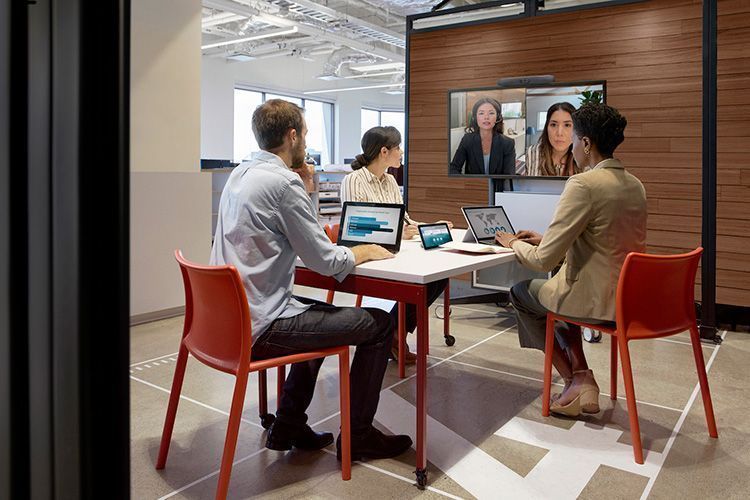
Poly and WORKTECH Academy: 12 Key Hybrid Working Considerations

Poly Sync 10 USB speakerphone launched at ISE 2022
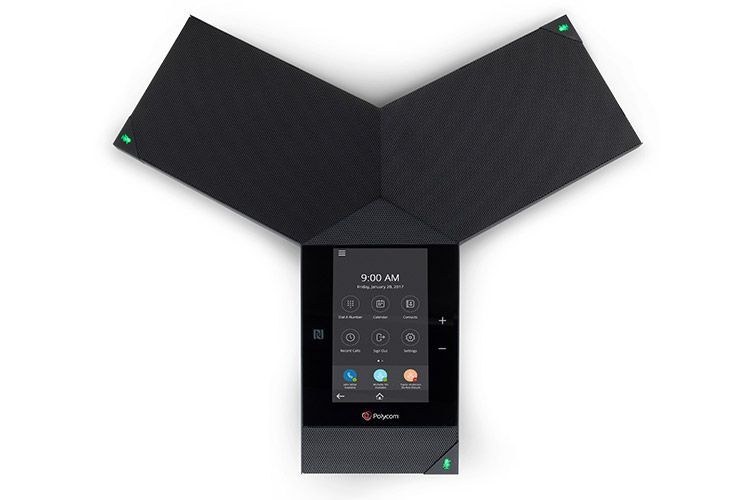
Poly new bussines media phones
ISE 2027: a working TV studio, AI at work and 1,500 drones

Genelec bolsters its Western Europe team

SOLTEC unveils its RET-G retractable monitors
Neutrik brings TRUE1 and DR Series to JTSE 2026

TBS Education warns of AI bias when hiring staff

Panasonic and HIVE: 80% less AV infrastructure

IDC names Shure a Leader in AI meeting rooms
AVPro Edge MXnet 10G-MSE: 4K and H.265 from one encoder

500 Sony BRAVIA displays connect 100 stores

Sony: the traditional office is falling behind

Datapath to operate under the VITEC brand in 2027

40 giant Sony displays for collaborative learning

OPTIMUS installs 19 SIP intercoms at a Mexican power plant

LEA Cloud diagnoses issues without on-site visits

Genelec equips a music school with 143 loudspeakers

AVIXA appoints Marco Pardi as new chief executive

Spark 2027 to open with Casa Batlló mapping artists
Hikvision Village: a city where it all connects
Barco recreates realistic maritime scenarios

LEDVANCE: free training in LED and smart lighting

Daktronics upgrades video and audio at Lane Stadium
Crestron Collab Engine: meetings and AV control in one

Nureva appoints Ted Shuter as VP, Products
Kramer makes SailPoint's Pune rooms divisible

Pulse brought seven minutes of AV to InfoComm

Sony miniaturises medical imaging with the IMX742
Sony equips Crestron’s centres in London and Paris
ISLE 2027 opens visitor registration in Shenzhen

Nureva brings AI to meeting room management
Hikvision applies thermography to fire prevention
Spark 2027 opens registration and grows at Montjuïc
Ghost meetings under the technological spotlight

Genelec creates a sound forest inside Finlandia Hall
Light + Building strengthens British lighting presence

Bluesound brings licensed music to shops and hotels
Hikvision renews its Madrid Excelente certification
Crestron develops its first proprietary AV chipset
Video Control and Distribution on a Single Platform
Immersive audio and smart rooms: how InfoComm went

Video control and distribution on a single platform
SeeSound equips Cuenca Hospital auditorium

Hikvision Village 2026 recreates a connected city

Curved displays, transparent LED and COB technology

InfoComm América Latina puts AI into practice

Mo Gawdat examines the impact of AI on businesses
IntelliMix Bar Pro takes centre stage in Shure’s strategy

OPTIMUS public address built for maximum demand

Sony equips Crestron's new Experience Centres

AV over IP: When the Network Becomes the System
Captech EXPO Tests Technological Convergence

IFMA Spain: Technology, Spaces and People

Crestron connects more than 200 rooms at Camp Nou
Self-Service Kiosks and AI at InfoComm Latin America
Collaboration, Wireless Audio and AV Management
Sommer hybrid cable for underwater lighting