Strengthening security in meetings
Written by ISP Integration editorial teamCategory: NEWS
Published:

Smart meeting rooms boost productivity, but they also pose new security and management challenges for IT.
Hybrid working has transformed meeting rooms, turning simple AV set-ups into smart, networked environments full of cameras, microphones, sensors, collaboration displays and wireless sharing tools. While this digital evolution drives productivity, it has also introduced two major challenges for IT teams: security and fragmentation.
According to Frost & Sullivan, security is now the main challenge for IT, with 66% of decision-makers considering it a significant or critical concern. Meeting rooms, once isolated spaces, are now full of connected endpoints that can become unmonitored attack surfaces if they are not properly protected.
At the same time, Android now powers many meeting room devices. However, because each vendor ships its own variant of Android, IT teams are forced to manage a mix of versions, custom interfaces, patch schedules and security levels. This creates a heterogeneous estate that is difficult to secure, manage and update at scale.
That is precisely the challenge the Microsoft Device Ecosystem Platform (MDEP) sets out to solve, and why Barco has built ClickShare Hub on it.
What is MDEP? (Beyond the acronym)
The Microsoft Device Ecosystem Platform (MDEP) is an Android-based platform built on the Android Open Source Project (AOSP) that enables device manufacturers and software developers to build, secure and manage smart Android devices for the enterprise using Microsoft’s security, management and deployment tools.
It is neither a fork nor a new variant of AOSP. Instead, it uses the AOSP foundation while adding Microsoft’s enterprise services for security, lifecycle stability and device integration. Historically, Android-based devices have been implemented in an inconsistent and fragmented way. MDEP addresses this problem with a coherent, Microsoft-managed platform that is secure, stable and uniform across vendors.
For IT leaders, the benefit is clear: a predictable, enterprise-grade Android foundation designed to reduce fragmentation and improve control at scale. Microsoft maintains a regular cadence, including monthly security patches and up to four feature releases a year, enabling manufacturers such as Barco to keep devices up to date while focusing on differentiating hardware and experience. OEMs remain responsible for firmware; MDEP standardises the operating system layer.
AOSP vs MDEP at a glance
| Category | AOSP | MDEP |
|---|---|---|
| Core foundation | Open, highly customisable foundation managed by each OEM. | AOSP-based foundation managed by Microsoft, with enterprise services for security, lifecycle and device integration. |
| Security | Basic verified boot; varies by vendor. | Hardware-based attestation (PKI), app integrity services and hardened protections for enterprise environments. |
| Update management | Schedules depend on the OEM and can be inconsistent. | Monthly security patches managed by Microsoft, plus new features; OEMs package firmware that incorporates these updates. |
| Accessibility services | Defined by the OEM. | Built-in accessibility services, including on-device Microsoft Text-to-Speech. |
| Target use case | General consumer use and embedded devices (TVs, phones, appliances). | Designed for a growing range of enterprise devices (collaboration systems, touch controllers, signage, etc.). |
How MDEP reduces fragmentation for IT
Managing mixed fleets of Android-based room devices often means dealing with different firmware, update cycles and management portals. MDEP addresses this by providing:
- A consistent, Microsoft-managed Android operating system foundation across vendors.
- A predictable update stream (monthly patches and new features).
- Alignment with Microsoft management services such as Intune for policies and compliance, and with the Teams admin centre for monitoring and lifecycle management of Teams devices.
The result: fewer surprises, fewer management tools and fewer security gaps.
A multi-layered approach to security
Security is non-negotiable in modern collaboration spaces. MDEP offers a foundation that includes:
- Hardware-based attestation (PKI): devices validate their identity before accessing the cloud.
- Secure foundation: secure boot and app integrity to reduce unauthorised tampering.
- Enterprise patching: monthly updates to respond quickly to vulnerabilities.
What ClickShare adds on top of MDEP
ClickShare Hub, one of the first products built on MDEP, takes a multi-layered approach to security spanning hardware, network and software. On top of MDEP’s secure foundation, Barco adds:
- Secure boot: only authorised software is allowed at start-up.
- Firmware encryption: protects the operating system against unauthorised access or modification.
- Rigorous security validation: extensive testing to meet enterprise and regulatory requirements.
- Wi-Fi 6E support: greater connectivity and bandwidth for sharing 4K content.
What IT needs to know
- MDEP reduces the operational burden: Consistent foundation + predictable updates = less complexity and greater standardisation.
- Simplified management: Policies and compliance with Intune; Teams device management from the admin centre; XMS Cloud for ClickShare-specific controls.
- Hardware- and platform-based security: Attestation, secure boot and integrity as the foundation of modern trust.
The way forward
As meeting rooms evolve into smart, AI-driven environments, organisations need infrastructure that is easy to deploy and secure by design. MDEP provides that foundation; ClickShare Hub builds on it to deliver a managed, secure and scalable experience without adding complexity for IT.
You may also like

Meetings: the cost of a meeting room that fails

Platform for remote projector control
Agentic AI demands smarter meeting rooms
25 Barco projectors bring an AI museum to life

MDEP strengthens security in meetings
Workspaces ready for hybrid collaboration
Workspaces ready for hybrid collaboration

Collaborative workplace for the future

More precise medical imaging with Barco technology

Strategic expansion of Barco’s portfolio

Barco Security Organization
Driving enhanced simulation experiences at GM
Unlocking new creative frontiers

Beyond the video wall: control and security

Simpler hybrid collaboration with Microsoft Teams

Projection Mapping and the Experience Economy

Haute couture with Barco’s visual showcase

Barco powers scientific education in China
AI-powered quality control in digital pathology

Barco ushers in a new era in digital pathology

LED solutions and wall mounts at InfoComm 2025

Barco integrates AI, productivity, and security into meetings
Barco: pioneer in the evolution of image and global technology

Control rooms revamped for greater efficiency

Immersive wonders at the Vatican Basilica

Barco: excellence in visualization technology

Better wireless collaboration for meetings

ARTE MUSEUM, powered by Barco, opens its doors

What is the F400 simulation laser? Practical cases

Barco improves mammography with AI

Yamaha expands Barco partnership with ADECIA

Barco helps Healthcare Operations Centers

Barco's new tools for medical service

Barco expands its LED portfolio

IDC names Shure a Leader in AI meeting rooms
AVPro Edge MXnet 10G-MSE: 4K and H.265 from one encoder

500 Sony BRAVIA displays connect 100 stores
Sony: the traditional office is falling behind

Datapath to operate under the VITEC brand in 2027
40 giant Sony displays for collaborative learning

OPTIMUS installs 19 SIP intercoms at a Mexican power plant

LEA Cloud diagnoses issues without on-site visits

Genelec equips a music school with 143 loudspeakers

AVIXA appoints Marco Pardi as new chief executive

Spark 2027 to open with Casa Batlló mapping artists
Hikvision Village: a city where it all connects

LEDVANCE: free training in LED and smart lighting

Daktronics upgrades video and audio at Lane Stadium
Crestron Collab Engine: meetings and AV control in one

Nureva appoints Ted Shuter as VP, Products
Kramer makes SailPoint's Pune rooms divisible

Pulse brought seven minutes of AV to InfoComm
Sony miniaturises medical imaging with the IMX742
Sony equips Crestron’s centres in London and Paris
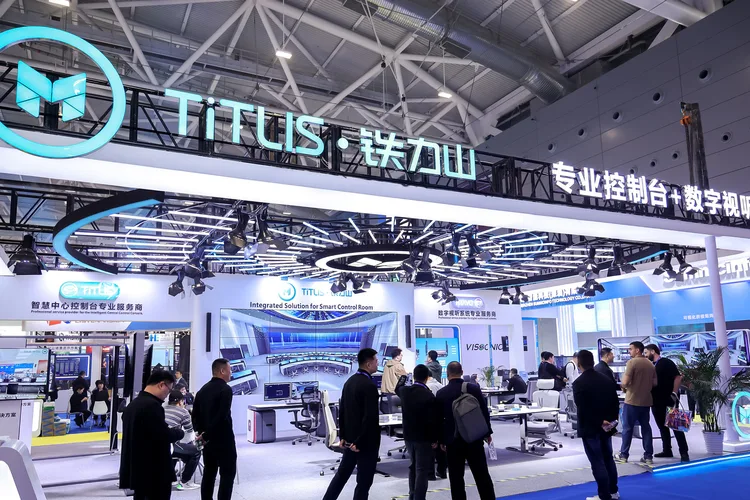
ISLE 2027 opens visitor registration in Shenzhen

Nureva brings AI to meeting room management
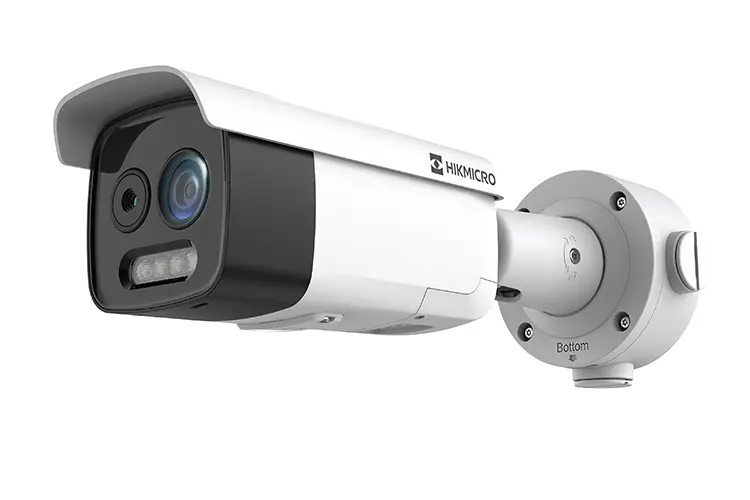
Hikvision applies thermography to fire prevention
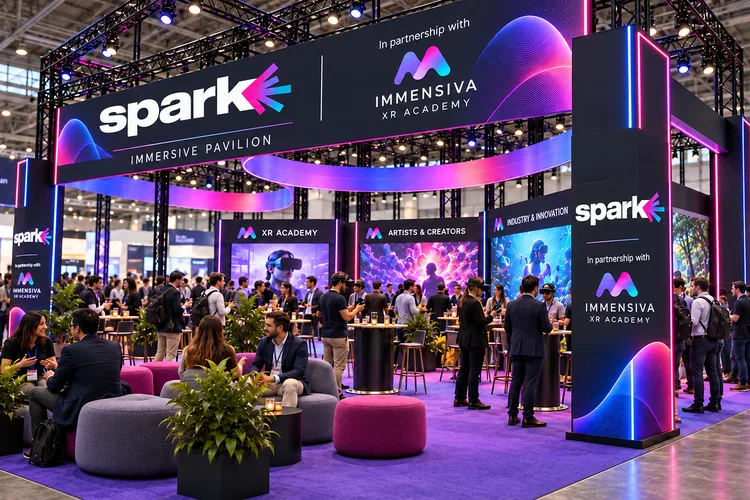
Spark 2027 opens registration and grows at Montjuïc