Sony TEOS and BRAVIA digitise North West Ambulance Service
Written by ISP Integration editorial teamCategory: SUCCESS STORIES
Published:
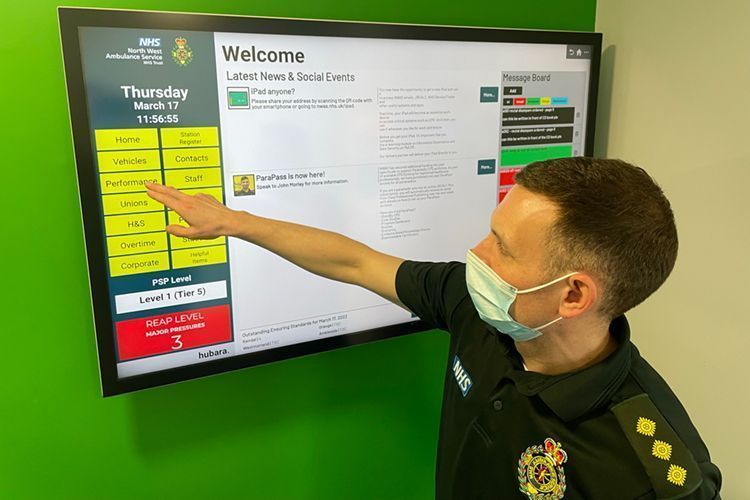
The North West Ambulance Service in England chooses Sony TEOS and BRAVIA to improve efficiency and sustainability.
The North West Ambulance Service (NWAS) NHS Trust is the ambulance service for North West England. It is one of ten ambulance organisations providing emergency medical services in England and is part of the government-funded National Health Service (NHS).
The organisation has 109 ambulance stations and has recently begun a major overhaul of its IT set-up. NWAS decided to work with professional solutions and displays from Universal AV and Sony to modernise and improve the efficiency of core functions across all its sites with the TEOS workplace management solution and BRAVIA 4K professional displays.
The challenge
The noticeboards used to communicate vehicle damage or road closures in the area were paper-based, and the ambulance stations did not have the right tools to deliver maximum efficiency for staff and visitors. NWAS needed to find a solution that would allow its employees to work better and with fewer complications.
This need became even more evident during the COVID-19 pandemic, when ambulance services were stretched to the limit and saving valuable time in day-to-day management became even more crucial.
The field we work in leaves no room for error. We are an essential service for the public and we must be able to respond accurately and on time. The set-up we had across all our stations did not stop us from working properly, but nor did it allow NHS staff to work in the most efficient and best possible way. I turned to Sony because I had seen how well its TEOS and BRAVIA ecosystem had worked in other organisations, and I went ahead with this digitalisation project with Universal AV knowing that the products and solutions they offered would revolutionise the experience of NWAS staff. The aim of this project is to make sure our systems work better to help the employees who assist the public when they need it, says John Martland, Head of IT Solutions Services at NWAS.
The solution
In November 2020, NWAS decided to work with Sony to digitise its systems and deploy interactive interfaces on site to modernise its outdated system, which relied heavily on paper.
Each ambulance station used up to six noticeboards to share crucial and urgent information. Martland was clear that they needed to get rid of paper and start automating their processes with smart technology to support their employees and also ensure they deliver the most efficient urgent medical care to the public.
The roll-out began at the Kendal station, which had an old fibre line that affected latency. NWAS is now installing a bespoke fibre line in the building. In addition, to use the latest technology, the organisation also had to modernise the core infrastructure on which everything is based.
Martland adds: "It was not easy at all, as you can imagine, given a project of this scale and in a sector that tends to rely on old infrastructure and has many protocols and processes to change. At first the cloud kept failing and could not keep up without lag, as there was not enough RAM. Thanks to working with AV Interactive and Sony, we found a solution quickly. When we installed a new external cloud server, we achieved instant response at the push of a button. We are now going to roll it out across all our stations and corporate sites. One of the most rewarding aspects is that neighbouring ambulance services and healthcare partners are looking at what we are doing with Sony and thinking about how they can apply a similar approach".
Full list of solutions deployed:
- 250 Sony BRAVIA 4K professional displays from 43” to 65”
- 70 interactive overlays for BRAVIA displays
- 90 TEOS TEB22XPL tablets
- 3 years of TEOS in the cloud
- More than 200 TEOS advanced licences
Benefits and results
So far, the team has rolled out the new set-up at 25 sites. At each of them, there is a network of Sony BRAVIA 4K professional displays, interactive tablets and various IoT devices connected to the core of the Sony TEOS management solution. This single-pane management system means that, for example, each site can let employees access an interactive screen, report on the task they have just completed and include data such as the equipment they have used, what needs restocking before the vehicle goes out again, whether the vehicle was damaged during the call-out and whether the damage must be urgently repaired before that ambulance is used again.
Unlike the previous paper-heavy set-up, once this information is entered into the system, it can automate the report and give the user quick data to ensure maximum efficiency in subsequent processes and protocols. It has storerooms with connected IoT lights to clearly show where the necessary equipment is so that it can be restocked efficiently, as well as LORAWAN ambulance bays with IoT sensors that identify whether the bay is occupied and how long the vehicle has been at the station, and that can also show whether that vehicle is out of service because it was damaged on its last call-out.
In a modern, connected world like this one, we wanted to be pioneers in a sector that tends to be traditional. NWAS will now be able to operate in a truly modern, simple and automated way, just as other sectors do. The revolution brought by this deployment has not only had an impact on ambulance stations, but has extended across the network of hospitals, police stations, fire stations and mountain rescue teams, says Martland.
Now, thanks to the Sony TEOS management solution, if there is a major incident, the NWAS team can access a complete view of all the hospitals in the area, their capacity and how long it would take to divert the ambulance there based on current traffic. The system ensures that the team can dispatch resources to the most suitable hospital, as well as to police, fire and mountain rescue teams.
The system is also better equipped for employees to report holidays and personally justified sick days: staff will only need to type an email address or scan their ID card to receive an automated form that will be sent to the relevant people once completed.
The new IT system also ensures that all stations can operate as smart buildings, with optimised temperature controls and environmental and lighting management. In addition, shower regulation has been configured with smart technology to ensure maximum efficiency and sustainability. By migrating NWAS to the new cloud service, its environmental footprint also improves because paper is no longer used.
Looking ahead
The future of essential services is changing as new technologies develop. Solutions such as this TEOS and BRAVIA ecosystem are fundamental not only to improving the efficiency of the service for the public, but also to enabling essential staff to work with ease and minimal stress. Making life easier for essential services staff has never been as important as during the pandemic of the last two years.
In these difficult times, the urgency of having consistent and efficient ambulance services has become clear. Looking ahead, NWAS is confident that it has what it needs for the day-to-day management of its stations and that it is prepared for any crisis that may arise. By upgrading its infrastructure, this modernisation project also opens up possibilities for the technological needs ambulance services may have in the future.
This is future-proofing that guarantees the best in safety, processes and practice for both staff and customers.
You may also like
Sony unveils new generation of BRAVIA professional displays
Sony's BRAVIA 4K professional displays at UCF

500 Sony BRAVIA displays connect 100 stores

Sony: the traditional office is falling behind

40 giant Sony displays for collaborative learning

Sony equips Crestron's new Experience Centres
Sony technology to inspire architects
European retail technology gap: a trust challenge
Sony reinvents comfort in hospitals
The NHS Hospital installs Sony BRAVIA displays
Technological and sustainable universities
Installation agile, elegant and scalable
Sony and Allianz Portugal: Innovation in Lisbon
Crestron transforms its workspace
Sony strengthens its BRAVIA display lineup
Stella McCartney with Sony BRAVIA and TRISON
Technological advertising signage
The SAGA space habitat takes off with Sony
Modern and high-quality learning with Sony
Assosia modernizes its offices with Sony
Sony expands its range of BRAVIA monitors
Sony and Telelogos technology
Sony present at Paris Fashion Week 2024
Sony expands BRAVIA integration capabilities
Sony provides collaborative visual experiences

Future of connected experiences at ISE
Sony opens an immersive exhibition in Madrid
The restaurant Drevny Kocur installs 69 Sony displays
Motoya Itako, new manager at Sony Mexico
Sony appoints Henrik Breda as Head of Sales

AVIXA produces ‘Transform! @ InfoComm 2024’
Control room with a Crystal LED display in Istanbul
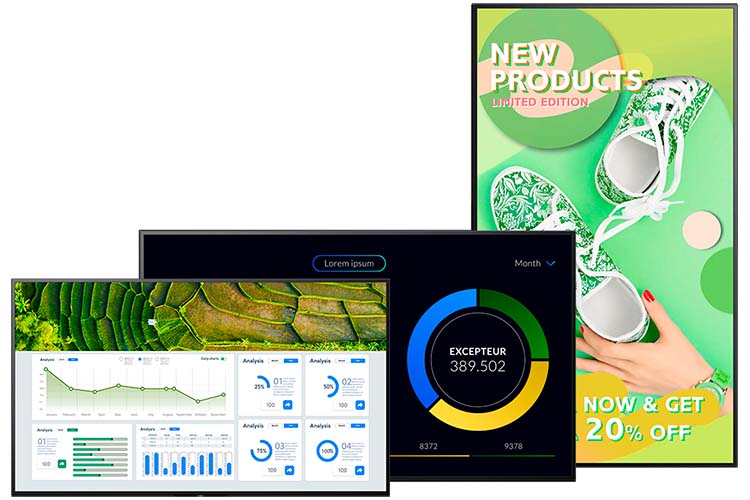
New line of Sony BRAVIA 4K displays

Sony BRAVIA 4K HDR professional displays
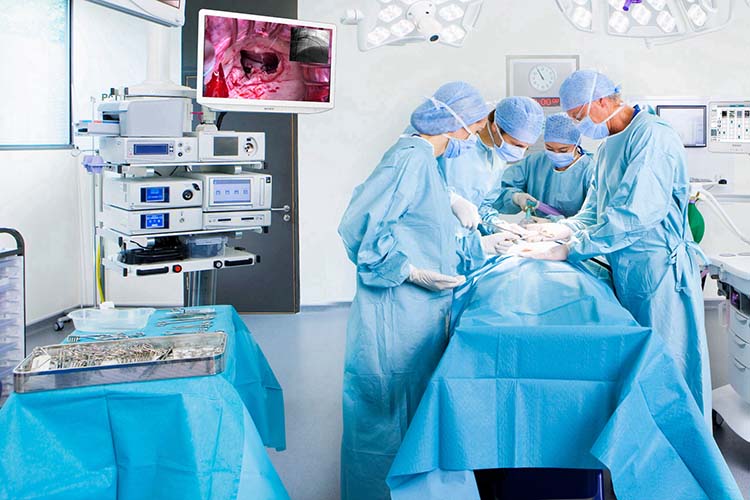
Latest developments in operating theatre digitalisation
Rik Willemse is Sony's new European head

Sony connected experiences at ISE 2023
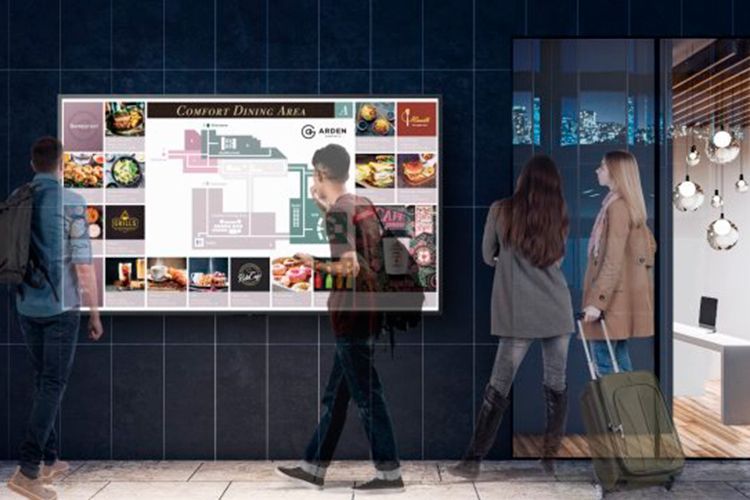
Sony presents its new developments for 2023
Key technology trends for 2023

The future of Sony will be on show at ISE 2023
Sony partners with Kramer to optimise a classroom
Sony launches 3LCD laser projectors
Sony LMD-XH550MT and LMD-XH320MT 4K HDR surgical monitors
Sony BRAVIA 4K digital signage partners with Navori Labs
Sony TEOS Meet and TEOS Lite: next-generation workplace management

Sony NUCLeUS LIVE cloud streaming for surgical collaboration
Sony SRG-X40UH: new 4K PTZ camera with up to 40x zoom
Sony Edge Analytics: hybrid learning at the University of Bamberg

Optimal Audio sets the sound at Unc's Pizza in Detroit

LEDVANCE cuts street lighting energy by up to 75%
Vokkero keeps the Ura Bere Bidean crew connected
Biamp Vocia: a paging system running for over ten years
31 Million Pixels Revolutionise Simulation

Genelec provides sound for a mini-golf venue in Germany
A journey through imagery, interaction and architecture
A new look for the Barcelona Metro with Soltec
Invisible Technology, Great Experiences
Fewer loudspeakers, greater clarity in the classroom