












Sony will help train astronauts and academics on Earth before missions to outer space.
Sony Professional Displays & Solutions announces that its professional BRAVIA monitor will play an essential role in the SAGA habitat, a company specializing in space architecture, which will provide information and training for astronauts and scientists before actual space missions.
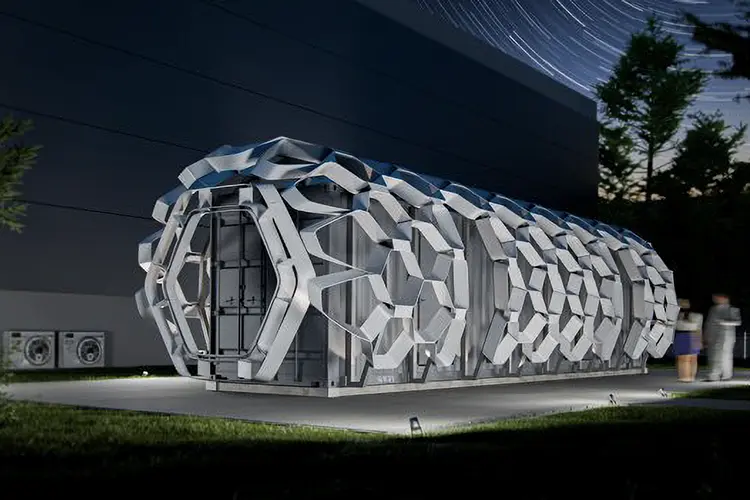
Built by SAGA, the 28-square-meter lunar habitat, FLEXHab, will simulate life on the lunar surface for astronauts training to conduct vital scientific research and will use Sony BRAVIA professional displays to recreate the lunar external environment. It is the first space training habitat that combines both indoor and outdoor environments for enhanced training.
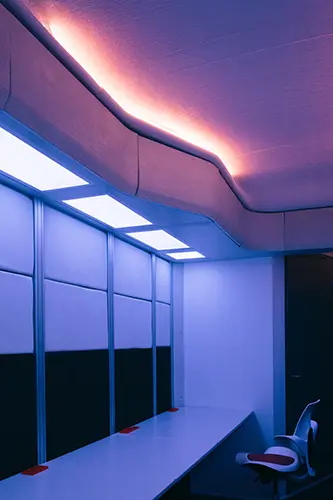
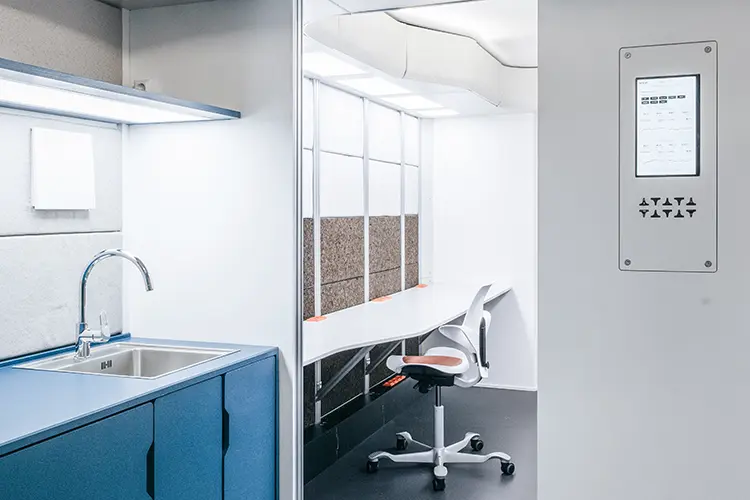 Last month, the European Space Agency (ESA) unveiled the new FLEXHab habitat, located at a specific facility of the European Astronaut Centre in Cologne, Germany. The habitat, which can accommodate up to four astronauts for training missions lasting one week or one month, was designed to provide living space while fulfilling its scientific function. It also needed to be easily transportable to various testing and training facilities and ultimately replicate its exact design for transport into space on actual missions. Its multifunctionality includes common areas, bedrooms, training equipment, and a state-of-the-art laboratory.
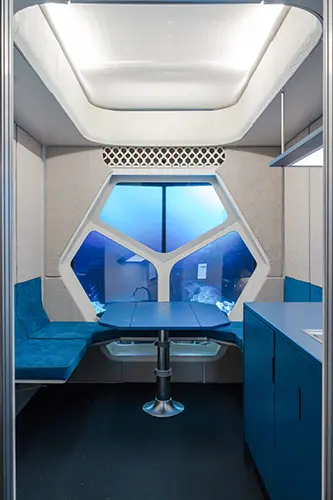
Two Sony BRAVIA G5" displays have been integrated to create a large artificial window—the “viewing dome”—which will serve as a wall to fully immerse inhabitants during training. The displays will be crucial in preparing astronauts to face any eventualities when residing in space, including the possibility of real disasters in outer space.
The BRAVIA displays will be used to simulate situations such as the collision of large debris against the window, causing a large crack or a pressure leak. The displays will also add an interactive element to the training, allowing astronauts to conduct simulated external experiments from inside FLEXHab using specialized tools and BRAVIA displays for real-time visual guidance.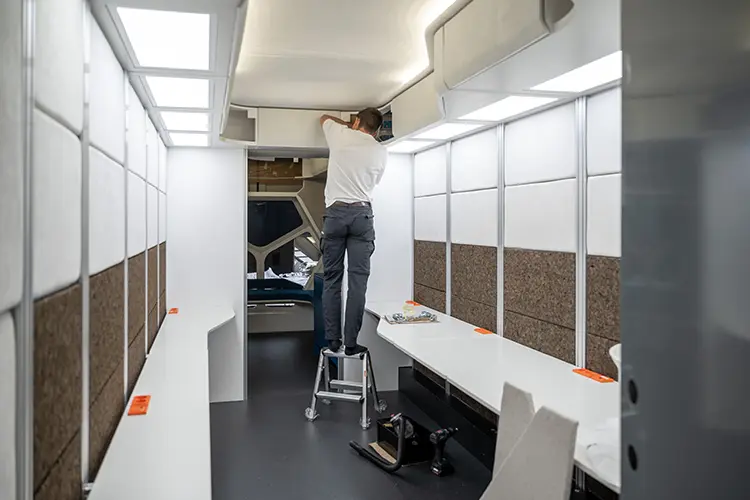
It has been over 50 years since humans last landed on the moon, and now the world is preparing for astronauts to land safely and efficiently again. For the most part, astronauts will be inside the habitat conducting research during their stay in outer space, so training astronauts in the FLEXHab environment is critical for the success of future missions. Being able to visually simulate external events, environments, and experiments through Sony BRAVIA means we can make training as accurate as possible and provide the best possible preparation for astronauts before their space journey. The displays are not just static to emulate the lunar surface; they are an integral part of the tests astronauts undergo. With Sony BRAVIA, any environment can be loaded in minutes, so there is enormous potential for additional uses. Existing space training habitats on Earth focus on preparing astronauts to live in confined spaces for long periods, or sometimes require enormous physical facilities that transform into a simulated lunar surface using terrestrial rocks. What makes FLEXHab different is that we are now integrating external environments and testing how that affects the internal environment, says Sebastian Aristotelis, CEO of SAGA.
The partnership with Sony to integrate their BRAVIA displays has enabled us to do this. The displays offer exceptional image quality, allowing astronauts to train with near-perfect precision, and see and feel connected to the outside world, which is enormously important for mental well-being.
 |
 |
About the habitat, Matthias Maurer, ESA astronaut and project leader, commented: "I am absolutely delighted to see and check our new FLEXHab LUNA module. It is a centerpiece of our new LUNA analog facility, which completes the lunar surface within the LUNA room with the intravehicular part of a lunar landing module or base. FLEXHab will allow the ESA and DLR to carry out complex and fully integrated multi-day missions".
The extraordinarily wide viewing angles and Deep Black Non-Glare anti-reflective technology of Sony BRAVIA ensure that it maintains its high-contrast colors and exceptional image quality regardless of where in the room it is viewed. We are very pleased that SAGA has decided to work with us on a project of this magnitude. We look forward to continuing to provide them with the best tools on the market so they can continue offering innovative solutions for vital exploration of space and Earth, says Petra Norinder, Junior Trade Marketing Manager for Northern Region at Sony Professional Displays and Solutions.
The installation has been under construction since June and will continue to undergo a series of rigorous testing environments to ensure its suitability. The ESA presented the FLEXHab on Wednesday, September 25, and its first official astronaut training mission will begin in March 2025.