Key technology trends for 2023
Written by ISP Integration editorial teamCategory: NEWS
Published:

Six key technology trends according to Sony, with input from Olivier Bovis.
With technological advances, changes in the broadcast landscape, rising energy costs and increased sustainability measures, 2023 is shaping up to be a year of change for the media and entertainment sector.
Olivier Bovis, Head of Media Solutions at Sony Europe, highlights six key technology trends to watch in the coming year:
Sustainability, virtual and cloud production, IP-based networks, high image quality, the metaverse and security will be the highlights of 2023. Broadcasters and other industry players will need to explore these trends to stay ahead in a year of innovation under cost pressure.
 Sustainability and environmental commitment are an ever-present topic in the sector; viewers increasingly demand content produced sustainably from start to finish and at every level of production. Sony has always taken this into account and is committed to reaching net zero by 2040.
One area where sustainability is particularly relevant is live production, as it requires transporting large amounts of equipment and people to locations.
As discussed in Sony's white paper, an increasingly common way to make live production more sustainable is the use of modular solutions. These provide a more tailored set-up for each broadcast, which means less equipment needs to be transported.
Virtual and cloud production is set to dominate the media solutions sector in 2023, as it requires fewer physical resources than more conventional production methods and is therefore a more sustainable option.
In addition, the rapid improvement of virtual and cloud production technology also gives filmmakers more creative freedom more efficiently. Being able to generate and store high-quality content allows them to be more creative in a less costly and faster way. One of the main challenges facing creators in 2023 is how far to rely on the cloud compared with conventional storage methods.
Sony's Creators' Cloud platform ensures efficient delivery and distribution in the optimum formats for various forms of distribution and provides a common system for ID management, authentication and streamlined billing.
IP-based workflows for remote and distributed production will also become a staple in 2023. Although remote production has gained prominence since the pandemic, it is set to become standard practice in the sector thanks to improvements in the technology that enables it, with companies having higher expectations of creating content with complete freedom in terms of locations and processing power. The growing focus on sustainability means that many companies want to minimise their carbon footprint and costs.
Thanks to improved technology, the use of IP has become a flexible and cost-effective solution for live production. Remote production is an important part of this process, as are software-defined networking (SDN) and IP connections to broadcast control systems, which increase the efficiency and sustainability of local and remote production. Sony and Nevion's Networked Live addresses the need for modularity and efficiency in the use of IP.
Content-hungry viewers demand content with high image quality, so we are likely to see 4K broadcasts more and more often, as well as a greater presence of 8K UHD as more broadcasters use technology capable of delivering it.
Olivier Bovis also suggests that broadcasters are increasingly using cinematic-quality images, which give conventional broadcasts a more dramatic look with slightly more depth of field.
The cinematic touch is becoming a popular way of adding depth to live productions, something that is gaining more and more popularity with the launch of new cameras offering new cinematic possibilities in live production. For example, Sony's FR7 is the first PTZ camera with interchangeable lenses, the perfect camera for delivering a cinematic look while integrating into existing live production systems.
Security will be a particularly important issue in 2023, as more and more content is stored in the cloud, making it vulnerable to sophisticated cyberattacks. "Zero trust" systems, which require secure identity verification to access files, will be used more frequently.
These systems require verification at every stage of a digital interaction, which means that a single password does not grant access to all files, something that could pose a risk if confidential content is stored.
Finally, the possibilities offered by the metaverse are pushing creators on all fronts to seek monetisation and to build a body of content for the new interactive universe. High-quality volumetric content and photogrammetry will be key to offering users a believable and valuable experience.
Sony's SDK, available for a growing share of its camera line-up, is already opening up opportunities for third parties to develop content with the metaverse in mind.
You may also like

Sony: the traditional office is falling behind
40 giant Sony displays for collaborative learning
Sony equips Crestron's new Experience Centres
Sony technology to inspire architects
European retail technology gap: a trust challenge

Sony reinvents comfort in hospitals
The NHS Hospital installs Sony BRAVIA displays
Technological and sustainable universities
Installation agile, elegant and scalable
Sony and Allianz Portugal: Innovation in Lisbon

Crestron transforms its workspace

Sony strengthens its BRAVIA display lineup
Stella McCartney with Sony BRAVIA and TRISON

Technological advertising signage
The SAGA space habitat takes off with Sony
Modern and high-quality learning with Sony
Assosia modernizes its offices with Sony
Sony expands its range of BRAVIA monitors
Sony and Telelogos technology
Sony present at Paris Fashion Week 2024
Sony expands BRAVIA integration capabilities
Sony provides collaborative visual experiences

Future of connected experiences at ISE
Sony opens an immersive exhibition in Madrid
The restaurant Drevny Kocur installs 69 Sony displays
Motoya Itako, new manager at Sony Mexico

Sony appoints Henrik Breda as Head of Sales
Control room with a Crystal LED display in Istanbul
New line of Sony BRAVIA 4K displays

Sony BRAVIA 4K HDR professional displays

Latest developments in operating theatre digitalisation

Rik Willemse is Sony's new European head

Sony connected experiences at ISE 2023
Sony presents its new developments for 2023

The future of Sony will be on show at ISE 2023

Sony Corporation partners with signageOS

Sony partners with Kramer to optimise a classroom
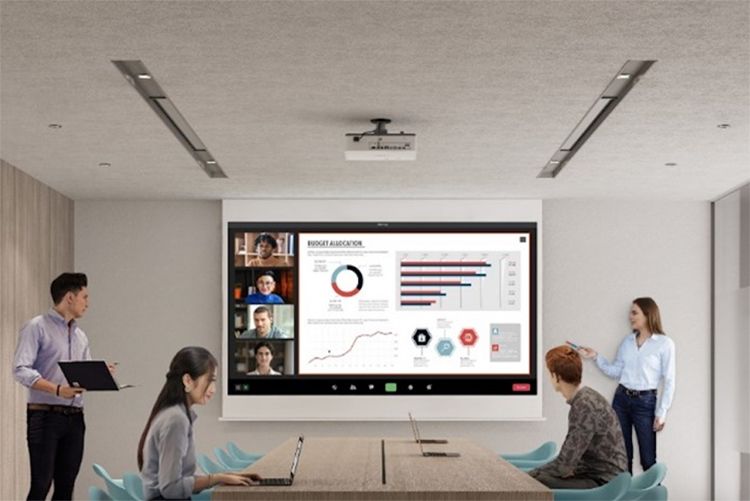
Sony launches 3LCD laser projectors
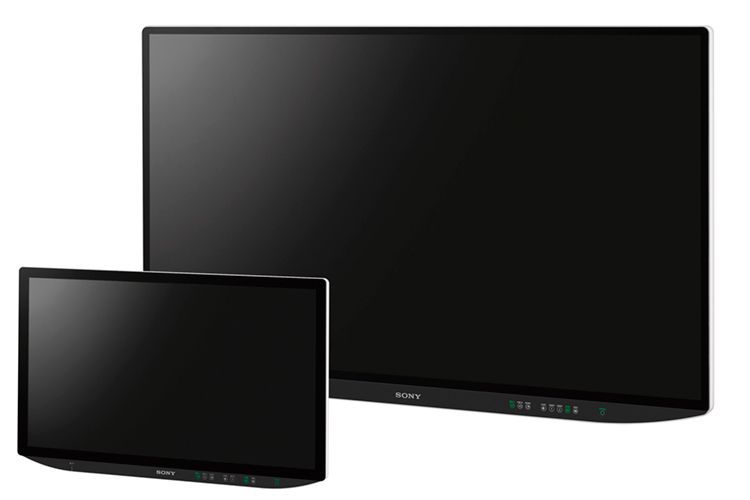
Sony LMD-XH550MT and LMD-XH320MT 4K HDR surgical monitors
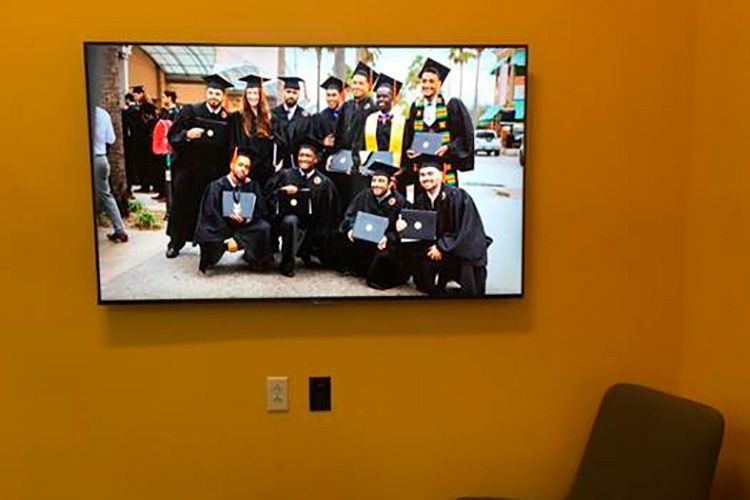
Sony's BRAVIA 4K professional displays at UCF
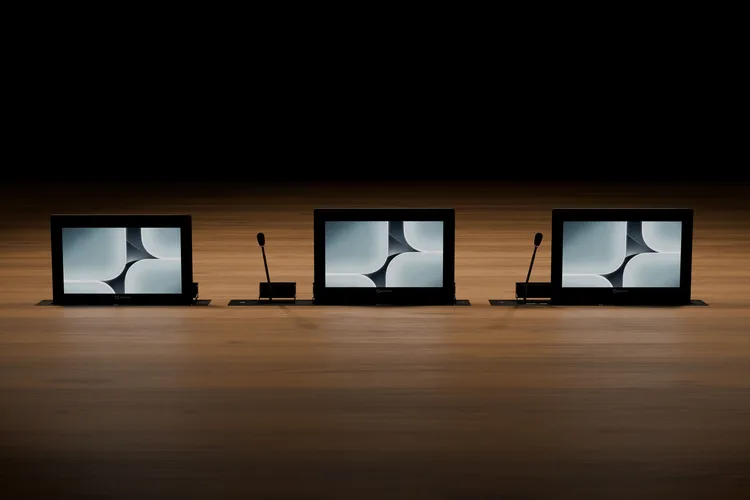
SOLTEC unveils its RET-G retractable monitors
Neutrik brings TRUE1 and DR Series to JTSE 2026

TBS Education warns of AI bias when hiring staff
Panasonic and HIVE: 80% less AV infrastructure

IDC names Shure a Leader in AI meeting rooms
AVPro Edge MXnet 10G-MSE: 4K and H.265 from one encoder

Datapath to operate under the VITEC brand in 2027

OPTIMUS installs 19 SIP intercoms at a Mexican power plant

LEA Cloud diagnoses issues without on-site visits

Genelec equips a music school with 143 loudspeakers

AVIXA appoints Marco Pardi as new chief executive

Spark 2027 to open with Casa Batlló mapping artists
Hikvision Village: a city where it all connects
Barco recreates realistic maritime scenarios

LEDVANCE: free training in LED and smart lighting

Daktronics upgrades video and audio at Lane Stadium
Crestron Collab Engine: meetings and AV control in one

Nureva appoints Ted Shuter as VP, Products