AES at SICUR 2022: interview with Paloma Velasco
Written by ISP Integration editorial teamCategory: NEWS
Published:
We interview Paloma Velasco to take an in-depth look at AES and its presence at SICUR 2022
What exactly is the Spanish Association of Security Companies and what is its core mission?
It is the business association that brings together companies in the physical security and electronic surveillance industry. Our core mission is to support and advise our members on all the issues that concern them, including legislation, regulations and networking, and to ensure that our companies are not only competitive, but also offer society their products and services to make it safer and to protect lives and property.

What are AES's objectives and its value proposition?
Our objectives are as follows: to ensure respect for the principles of professional ethics in the private security industry; to promote the enactment of rules and legal provisions aimed at encouraging the development, research and improvement of security equipment, methods and systems; to represent and defend our members before the State Administration and all kinds of persons, entities, bodies and institutions; to promote our members' interests through the press, radio and television; to exchange information, opinions and experiences affecting our members; to act as a mediator in disputes between companies in the security sector; and to promote research and study in the field of security.
Our value proposition is: driving the private security industry since 1981
Which areas of work stand out?
We currently have eight areas of work: physical security, electronic security, cybersecurity, alarm receiving centres, engineering, installation and maintenance, fire protection, standardisation and certification, and institutional relations.
What challenges has AES faced during the pandemic? What initiatives have been carried out in this context?
During the 2020 lockdown, the Association changed the way it worked and advised our companies. The Board of Directors reacted quickly with several measures: the first was the suspension of membership fees for April and May 2020, as a way of helping, as far as we could, with the hard times our members were beginning to go through.  We also began sending a weekly newsletter with the main regulatory and legislative news at a time of so much change. We held our monthly Board meetings online, and our General Assemblies in the same way. We organised several sessions, in particular for Private Security Day on 21 May 2020, one of which explained the products and services through which our companies were helping to manage those difficult moments of the health crisis (occupancy control, crowd and access control, automatic distance monitoring, remote automatic temperature detection, IP audio technologies, remote detection of infected people, identification of people, temperatures or symptoms, beacon systems for visits, vehicle disinfection arches or air purifiers and disinfectants…). Finally, we asked the competent authorities for two key points for our industry: first, that private security be considered an essential service, with all that this entailed, and second, that alarm receiving centre operators be given priority for the vaccine.
Regarding the SICUR fair, what will be the main topics covered in the conference programme? What activities and initiatives will be included? Are you taking part in them?
At every edition of SICUR we organise a session, which this year will take place on 23 February at 11:00 in the Retiro room, entitled: AES, 40 years driving the industry: global security, new challenges and demands. The programme can be viewed at the following link: AES | AES Programme – SICUR 2022
What are the main objectives that can be achieved at the fair? What will be new compared with previous editions?
Last year, AES celebrated its 40th anniversary. For this reason, at this edition of SICUR we will have a specially designed stand, together with a promotional campaign to encourage new companies to join the industry's most representative association. Our main objective is to raise our profile and reach 100 members during the fair.
How has the pandemic affected the security sector?
We can list some of the situations affecting security companies' revenues, such as the following:
- Those with a presence in airlines, ports, airports, hotels and restaurant businesses are suffering a sharp drop in revenue owing to the temporary halt in these companies' activity.
- However, those with customers in the distribution sectors are facing growing demand.
- Those operating in shops, retail chains and small and medium-sized businesses not considered essential services have suffered a drastic fall in revenue.
- Medium-sized and large private security companies covering requests for services normally provided by public services, which cannot cope owing to a lack of resources due to the quarantine, are another factor to take into account when assessing the impact on our industry.
- As is, very importantly, the use of payment methods other than cash, due to electronic orders and health recommendations to pay by credit card or bank transfer.
What role have new technologies and digital transformation played, and do they play today, in the security sector?
In the coming years, our companies will continue to focus, through the Association's areas of work, on adopting robotic advances (drones, robots…) and verification systems for in-person and remote communication of security incidents, and will analyse their contributions to strategic sectors such as tourism, agri-food and healthcare.
Progress in digitalisation, the convergence of security disciplines and the creation of a cybersecurity standard for all technology products and services in the security industry will be fundamental pillars this year to keep driving innovation, momentum and professionalisation in security.
How would you describe the future of the security sector in Spain across its different fields?
The future of any industrial sector at the moment is uncertain, to say the least. However, as I said, the fact that our companies are the guarantors of society's security makes them necessary. Without private security, economic activity would be chaos; financial institutions, businesses, critical infrastructure and official buildings could not be protected. As far as electronic security is concerned, which is our field, the recovery of this segment will be based essentially on digitalisation and the Internet of Things.
You may also like
SICUR 2022: FORO SICUR tackles new security challenges

Hikvision technology at ISE 2023

By Demes at SICUR 2022: intrusion and security convergence
LDA Audio Tech returns from SICUR 2022 with positive feelings
SICUR 2022 brings together 38,906 security professionals

i-PRO and Genetec at SICUR 2022: AI security cameras
SICUR 2022 Innovation Gallery: 31 new security solutions
SICUR 2022 at IFEMA: 529 security companies from 20 countries
SICUR 2022 gains strong industry backing at IFEMA MADRID
Yamaha Brings Stylish, Discreet Sound to San Matías
HK Audio promotes Isabelle Wear to Head of Sales EMEA
ISE 2027: a working TV studio, AI at work and 1,500 drones
Genelec bolsters its Western Europe team
SOLTEC unveils its RET-G retractable monitors
Neutrik brings TRUE1 and DR Series to JTSE 2026

TBS Education warns of AI bias when hiring staff

Panasonic and HIVE: 80% less AV infrastructure

IDC names Shure a Leader in AI meeting rooms
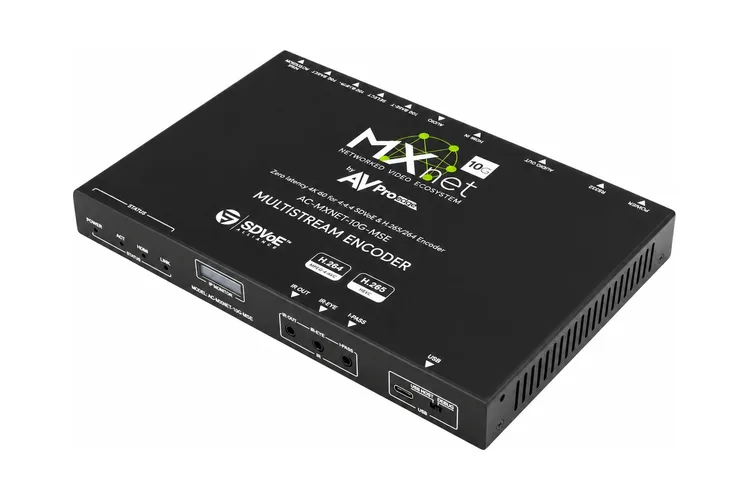
AVPro Edge MXnet 10G-MSE: 4K and H.265 from one encoder

500 Sony BRAVIA displays connect 100 stores

Sony: the traditional office is falling behind
Datapath to operate under the VITEC brand in 2027
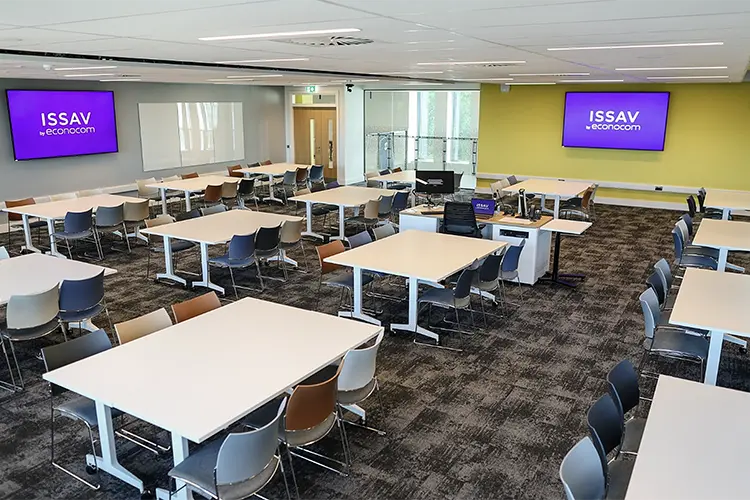
40 giant Sony displays for collaborative learning
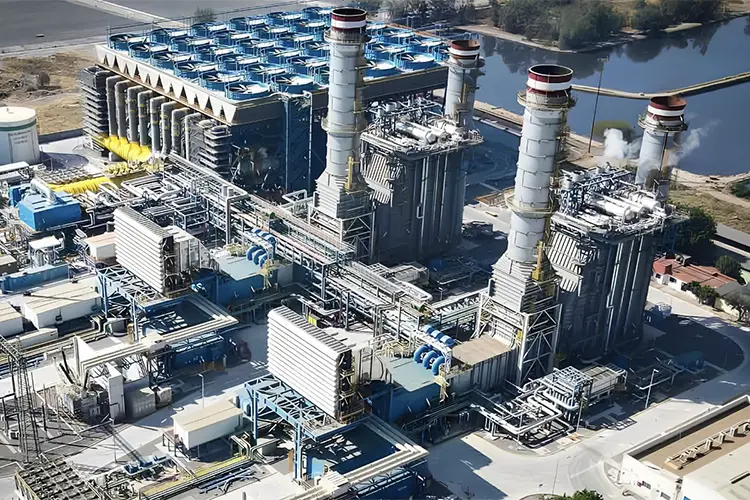
OPTIMUS installs 19 SIP intercoms at a Mexican power plant
LEA Cloud diagnoses issues without on-site visits
Genelec equips a music school with 143 loudspeakers
AVIXA appoints Marco Pardi as new chief executive

Spark 2027 to open with Casa Batlló mapping artists
Hikvision Village: a city where it all connects
Barco recreates realistic maritime scenarios
LEDVANCE: free training in LED and smart lighting
Daktronics upgrades video and audio at Lane Stadium
Crestron Collab Engine: meetings and AV control in one

Nureva appoints Ted Shuter as VP, Products
Kramer makes SailPoint's Pune rooms divisible

Pulse brought seven minutes of AV to InfoComm

Sony miniaturises medical imaging with the IMX742
Sony equips Crestron’s centres in London and Paris
ISLE 2027 opens visitor registration in Shenzhen

Nureva brings AI to meeting room management
Hikvision applies thermography to fire prevention

Spark 2027 opens registration and grows at Montjuïc
Ghost meetings under the technological spotlight

Genelec creates a sound forest inside Finlandia Hall
Light + Building strengthens British lighting presence
Bluesound brings licensed music to shops and hotels
Hikvision renews its Madrid Excelente certification
Crestron develops its first proprietary AV chipset
Video Control and Distribution on a Single Platform

Immersive audio and smart rooms: how InfoComm went
Video control and distribution on a single platform
SeeSound equips Cuenca Hospital auditorium

Hikvision Village 2026 recreates a connected city

Curved displays, transparent LED and COB technology
InfoComm América Latina puts AI into practice
Mo Gawdat examines the impact of AI on businesses
IntelliMix Bar Pro takes centre stage in Shure’s strategy
OPTIMUS public address built for maximum demand