Atlona and the 2026 World Cup in Mexico
Written by ISP Integration editorial teamCategory: NEWS
Published:

New upgrade projects have emerged at Mexico's main stadiums.
As a result, Atlona, a Panduit company, says that demand for smart stadium solutions will increase by approximately 500% over the coming years.
Venues such as the Estadio Omnilife in Guadalajara and the Estadio BBVA in Monterrey have seen notable changes in recent years as a result of their digital transformation, which has put them on track to join the list of World Cup stadiums for 2026. Meanwhile, venues such as the Estadio Azteca have announced upgrade projects that will begin in mid-2023, in order to meet FIFA's requirements in terms of security, capacity, attendee management, data transfer and transmission.
There is currently a major area of opportunity in sports stadiums in Mexico, as the country's main stadiums require technological equipment capable of meeting the needs of spectators, staff and the media. The main challenge for this World Cup will be acquiring high-quality functional solutions that address these needs, says Manuel Pineda, Regional Sales Engineer at Atlona.
Smart stadiums mainly respond to security, commercial and process optimisation needs. In terms of security, the audio and video systems deployed in these venues allow greater control of the facilities, making it easier to manage spectators at different types of events.
Through the use of facial recognition systems and the integration of AV systems with emergency protocols, it is possible to help prevent crime and identify and locate people, as well as raise the alarm in the event of potential environmental hazards such as earthquakes, hurricanes and tsunamis, allowing effective evacuation.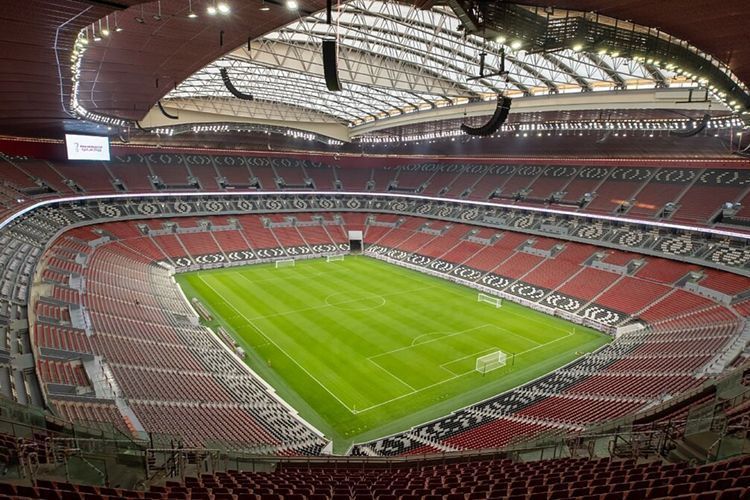 From a commercial perspective, smart stadiums make use of digital signage systems, consisting mainly of audio and video solutions, which, in addition to providing useful information for spectators, act as an advertising space suitable for selling airtime, helping to generate revenue and enabling brands to connect with their audiences effectively and in an environmentally friendly way, as they produce no waste. Furthermore, the integration of all the systems that converge in a digital stadium simplifies processes and optimises resources, leading to considerable savings in operating costs.
According to the AV specialist, the main challenge for the digital transformation of stadiums in Mexico is the limited progress in applying new technologies such as Edge Data Centres, which enable information to be moved and processed to meet data transfer requirements inside and outside the venue.
In addition, smart stadiums require a robust network infrastructure capable of meeting connectivity needs and coping with the adversities of uncontrolled environments, such as weather, humidity and constant handling of hardware, thus avoiding possible network service outages.
Restaurants and bars: other players in sport
Some social venues such as bars and restaurants have been affected by a lack of information in their digital transformation process; according to Atlona data, 70% of venues with audio and video systems (screens, loudspeakers, satellite television, among others) tend to have problems related to connectivity, transmission and power supply.
For this reason, the main recommendation for these types of establishments is to determine, with the help of an expert, which solutions will be needed to meet the business's audio and video transmission needs, since a small venue will not have the same requirements as a larger restaurant or bar. The idea is to optimise cabling systems, data transfer modules and AV systems, in order to avoid any setbacks and deliver a better experience for customers, concludes Manuel.
You may also like
New Atlona GAIN Series Amplifier Launch

Advanced tools for educational applications
Atlona simplifies connectivity in meeting rooms
Atlona introduces Velocity™ Keypad Controller

New sound system at Barrosa Palace Hotel

Kor Media Pro, new representative of Atlona
Atlona launches new versatile HDMI switches
Atlona opens new EMEA training and knowledge center
New Atlona upgrade: OmniStream 2.0 for video
Atlona refines its market vertical focus
Atlona will celebrate its 20 years at ISE 2023

Bolzonello: Regional Sales Manager
Atlona emphasizes the “three C’s” at ISE 2022
Partnership between Atlona and Lightspeed
Atlona transforms channel partner strategy in Brazil
SOLTEC unveils its RET-G retractable monitors
Neutrik brings TRUE1 and DR Series to JTSE 2026

TBS Education warns of AI bias when hiring staff

Panasonic and HIVE: 80% less AV infrastructure

IDC names Shure a Leader in AI meeting rooms
AVPro Edge MXnet 10G-MSE: 4K and H.265 from one encoder

500 Sony BRAVIA displays connect 100 stores

Sony: the traditional office is falling behind

Datapath to operate under the VITEC brand in 2027
40 giant Sony displays for collaborative learning

OPTIMUS installs 19 SIP intercoms at a Mexican power plant

LEA Cloud diagnoses issues without on-site visits

Genelec equips a music school with 143 loudspeakers

AVIXA appoints Marco Pardi as new chief executive

Spark 2027 to open with Casa Batlló mapping artists
Hikvision Village: a city where it all connects
Barco recreates realistic maritime scenarios

LEDVANCE: free training in LED and smart lighting

Daktronics upgrades video and audio at Lane Stadium
Crestron Collab Engine: meetings and AV control in one

Nureva appoints Ted Shuter as VP, Products
Kramer makes SailPoint's Pune rooms divisible

Pulse brought seven minutes of AV to InfoComm

Sony miniaturises medical imaging with the IMX742
Sony equips Crestron’s centres in London and Paris
ISLE 2027 opens visitor registration in Shenzhen

Nureva brings AI to meeting room management
Hikvision applies thermography to fire prevention
Spark 2027 opens registration and grows at Montjuïc

Ghost meetings under the technological spotlight
Genelec creates a sound forest inside Finlandia Hall
Light + Building strengthens British lighting presence
Bluesound brings licensed music to shops and hotels
Hikvision renews its Madrid Excelente certification
Crestron develops its first proprietary AV chipset
Video Control and Distribution on a Single Platform
Immersive audio and smart rooms: how InfoComm went

Video control and distribution on a single platform
SeeSound equips Cuenca Hospital auditorium

Hikvision Village 2026 recreates a connected city

Curved displays, transparent LED and COB technology

InfoComm América Latina puts AI into practice

Mo Gawdat examines the impact of AI on businesses