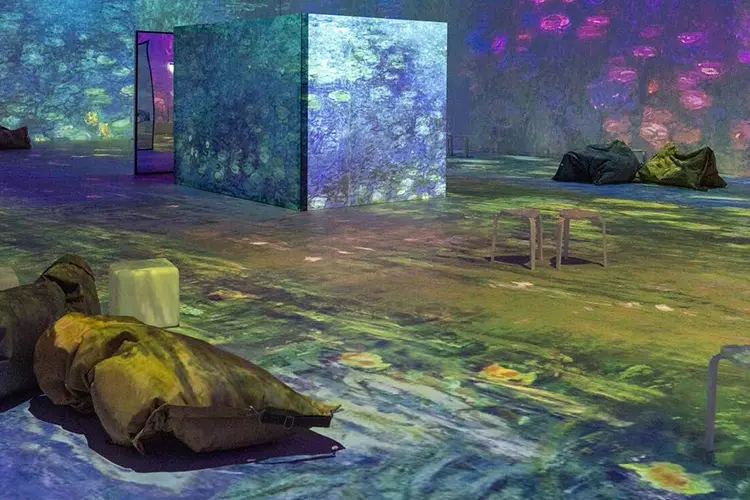
Panasonic projectors at 'Frameless'
Written by ISP Integration editorial teamCategory: SUCCESS STORIES
Published:
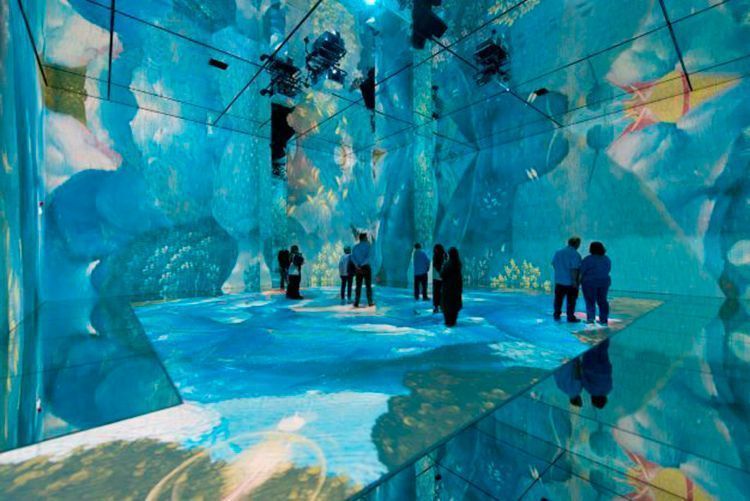
Panasonic at the Frameless show, the UK's largest immersive digital art experience.
The Frameless team planned its ambitious project to “set art free” in a venue of almost 3,000 square metres at London's Marble Arch. According to the project's organisers, the aim was to create an immersive experience that would move and inspire visitors of all ages.
Frameless uses more than 50 state-of-the-art projectors to take the traditional art experience to a whole new level, accompanied by a stunning score of classical and contemporary music played through 158 state-of-the-art surround sound loudspeakers.
The innovative techniques used in the galleries include mirrors and projectors covered with mirror film to create a visual infinity effect, six-sided projections that place visitors at the centre of an almost spherical landscape, seascape or cityscape, and semi-transparent screens in a dark room to create a maze of content in which to lose oneself.
A competitive test
To test the capabilities of the latest projectors on the market, Frameless worked with its integration partner and live events and immersive experiences specialist, Creative Technology, to hold a shoot-out with the three leading projector manufacturers.
“The success of the project depended on the quality of the immersive experience we delivered”, says Simon Kentish, Technology Director at Frameless. “Once we saw Panasonic's 3-chip DLP projectors in action, they were the undisputed leader in image quality and reliability”.
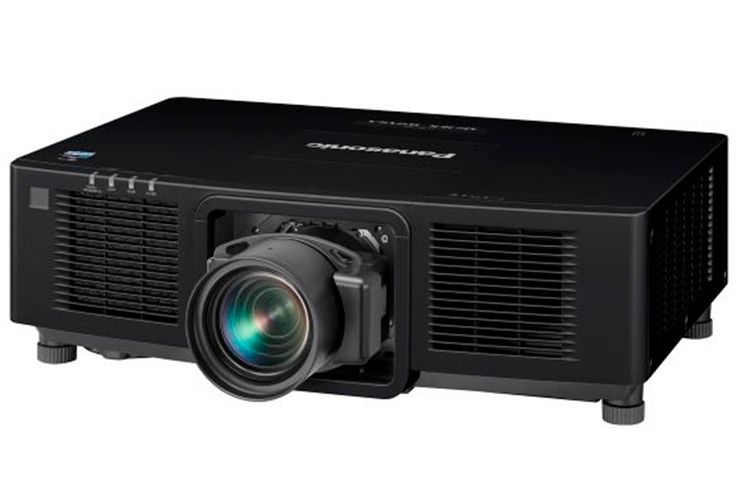
Panasonic's original quad pixel drive technology in its RQ22K and RQ35K projectors produces stunning 4K+ images at 20,000–30,500 lumens. The projectors deliver uniformity in both brightness and colour performance, allowing images to blend seamlessly and avoiding distractions or imperfections that could break the connection with the viewer.
In addition to the immersive experience, Simon said that another important factor was the ability for the projected images to be captured on video and in photos for social media.
Visitors' ability to share images and videos of the projected art show on social media was an important marketing consideration. Many of the projectors delivered images that did not capture well, but, to be honest, the images from the Panasonic projector looked even better on camera!, explained Simon.
The other major consideration was reliability. With a build time for the venue of just over a year, deadlines were tight. The AV equipment would have to be installed and configured while there was still a great deal of construction dust on site. The venue therefore needed projectors that would keep delivering spectacular images day after day for a high-profile London attraction. The filter-free design and dust-proof optical system, together with the high-performance cooling system, ensure that the projectors can deliver 20,000 hours of real-world use without maintenance.
Frameless also uses Panasonic's MZ16 projection series, which delivers long-lasting brightness and excellent colour performance at 10,000 lm (MZ10k), 13,000 lm (MZ13k) and 16,000 lm (MZ16k). This 3LCD technology provides vibrant HD-quality images, and reliability is ensured by the liquid-cooled laser diodes and the sealed phosphor wheel, which protects against dust ingress to provide long-lasting brightness.
Using more than 50 Panasonic projectors in total to create innovative applications, the art projections inside the attraction are delivered with 479 million pixels, 1 million lumens of brightness and vivid colours. Art seeps into every centimetre of the space. Visitors do not look at a painting; they are inside the painting, with every brushstroke, every burst of colour and every moment of inspiration surrounding them. Each of the four immersive galleries, and the fifth, dedicated to corporate and educational events, has a completely different visual concept and projection design.
To create the incredible immersive effects, Panasonic ultra-short throw (UST) lenses are used with 80% of the projectors. These specialist lenses allow the projectors to be concealed in the ceilings, so as not to distract from the immersive illusion, and to project at incredible angles to surround the visitor without casting shadows.
The content creators have pushed the projectors' capabilities to the limit, and the incredible features of the Panasonic projectors and UST lenses have allowed us to create fully immersive experiences in large (up to 9 metres high) and complex spaces. There is no greater pleasure for me than standing at the entrance to one of the galleries and watching art lovers, families and children interact with and enjoy the immersive experiences in the room. The joy on their faces is wonderful, and it is the combination of art, content creation, projection and sound that has made that happen, says Simon.
You may also like
Panasonic and HIVE: 80% less AV infrastructure

Panasonic strengthens its 4K range
Innovation in projection and LED at ISE 2026

Modern and ergonomic space with Sony screens

Generative AI drives a 38% increase in sales

Seamless collaboration and communication with Panasonic
360-degree environment with Datapath
Panasonic projectors: 4K resolution and high brightness

Integrated Systems Europe supports the Joan Miró Prize 2024
The digital version of the Sistine Chapel comes to life
The digital version of the Sistine Chapel
Digital version of the Sistine Chapel comes to life
Lifesize Plans projects the future with Panasonic
Lifesize Plans projects the future with Panasonic

Immersive audiovisual experience

Panasonic's immersive karting experience

New sound system at Barrosa Palace Hotel

Panasonic immerses audiences in 'The Life of Hokusai'
Panasonic crea una experiencia inmersiva de 'Game of Thrones'
Panasonic 1-Chip DLP™ laser projectors
Panasonic brings the Normandy landings back to life
Panasonic immersive visual exhibition
Panasonic at the Musée du Débarquement
Panasonic at the Musée du Debarquement

Panasonic and the high-brightness SQ2H series

Immersive: new Panasonic laser projectors
Panasonic launches its outdoor 4K PTZ camera

Panasonic projectors and displays with ImaginArt

Panasonic expands its touchscreens with the EQ2-PCAP series
Panasonic launched the latest generation of KAIROS at ISE

Panasonic 4K collaboration and education

Top 4 things for an immersive experience
New Panasonic Connect website
New Panasonic Connect website

Panasonic unveils 4K LCD displays
Panasonic launches new PT-CMZ50 LCD projector
Panasonic PT-MZ20 series Solid Shine LCD laser projectors
Make you audience part of the action with Panasonic
Panasonic Visual Webinars
Panasonic launches AW-UE100 camera
TOP 5 Panasonic at ISE
Panasonic Business Mapping at the Palacio de Cibeles in Madrid

Optimal Audio sets the sound at Unc's Pizza in Detroit

EM lights Manuel Carrasco at La Cartuja

LEDVANCE cuts street lighting energy by up to 75%
Vokkero keeps the Ura Bere Bidean crew connected
Biamp Vocia: a paging system running for over ten years
31 Million Pixels Revolutionise Simulation
Genelec provides sound for a mini-golf venue in Germany
A journey through imagery, interaction and architecture

A new look for the Barcelona Metro with Soltec

Invisible Technology, Great Experiences
Fewer loudspeakers, greater clarity in the classroom

Communication in critical situations with UDE

The Value of Sound in Hospitality and Retail
Acoustics designed for sports and events

Platform for remote projector control

Real-time information for British Airways