AV in retail: putting the customer first ahead of ISE 2022
Written by ISP Integration editorial teamCategory: SUCCESS STORIES
Published:
Even before the pandemic, bricks-and-mortar retail was undergoing major change.
As shoppers return to shopping centres and high streets, this trend shows no sign of slowing down, as retailers seek to offer unique, interactive and contactless experiences linked to their digital offerings.
Toni Viñals, CEO of nsign.tv, says: "The retail sector is entering a phase of reinvesting in its business models for physical stores, with the aim of getting back to normal by offering consumers optimal shopping experiences that are safer and more interactive, making the customer journey as attractive as possible."
Scott Pickus, marketing director at Dynascan Technology, states: "After more than a year of closures and limited access to shops, retailers are inevitably feeling the pressure to restore footfall in their physical stores." Although online shopping has eased the loss of revenue for some retailers, a physical presence is more necessary than ever to maintain brand loyalty and increase revenue.
"We are seeing sustained demand for shop windows in retail. The goal has not changed and is still to get customers into the shop, but the pressure to achieve lively shop windows is growing after COVID"
To draw people into shops, retailers are choosing to offer multiple interactions and touchpoints designed to enhance the customer journey, and digital signage and eye-catching shop windows play a prominent role for many. Supermarkets, for example, are targeting their promotions according to the different areas of their stores or using screens to manage queues. Elsewhere, digital signage at the point of sale is used to inform and educate customers. Digitalisation is also helping retailers keep their customers entertained during their visit to the shop.
Pickus adds: "Digital signage in shop windows is one of the most effective and economical ways of attracting visitors into stores, as it allows retailers to communicate with the public instantly and keep them up to date on new promotions, sales and trends. This is exceptionally useful in sectors such as fast fashion, where styles change continuously, and restaurants, where new menu items and daily offers can be displayed visually."
A vivid example of this is the city-centre store concept that furniture retailer Ikea has in Vienna. The store features extensive digital signage, kiosk terminals, full app integration, a hotel, a restaurant and a rooftop terrace to offer a completely new shopping experience.
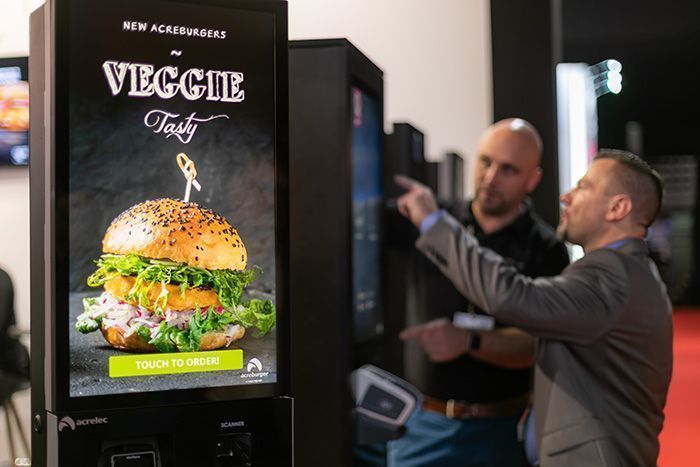
Particularly interesting is the digitalisation of the customer journey and the role of digital touchpoints in the store. More than 100 displays have been installed across the store's five floors to combine bricks-and-mortar retail in a limited space with e-commerce. Most of the digital touchpoints are digital signs designed to inspire and provide product information. Interactivity matters most in the restaurants, which now have self-order kiosks similar to those of QSR restaurant chains. New at Ikea are the shop windows and checkout areas on every floor, designed to attract, entertain and inform customers.
This level of digitalisation is also helping retailers to quantify and analyse their customers' behaviour from the moment they decide to enter the store until the end of the purchasing process
Personalised preferences
Creating a consistent, personalised shopping experience across physical and digital stores remains a challenge, but AV technology is providing a solution. Viñals adds: "AV systems are being used for a wide variety of functions that allow consumers to try out products and obtain personalised information, as well as to access promotions and specially priced products in a visually striking way. From 'click and collect' screens to 'lift and learn' experiences or interacting with touchscreens to browse the retailer's website and choose the desired product for immediate purchase in store, these are all positive experiences enabled by AV systems."
Pickus agrees: "A digital medium allows retailers to match the pace of their in-store advertising to that of their online shopping platform. Data collected from online engagement can even be applied to adapt in-store messages and content according to online trends and demand. Good content is always key. Eye-catching, dynamic content helps capture and engage viewers in a way that static images or printed posters simply cannot."
"From lift-and-learn point-of-sale displays and interactive mirrors to digital mannequins, the AV industry is giving retailers powerful new tools to attract customers and enhance the traditional in-store shopping experience with digital elements, bridging the gap with online shop windows and giving shoppers an incentive to buy in store."
Looking ahead, the future looks positive for this sector, as Viñals explains: "We continue to see digitalisation processes increasing, from small to large retailers. In five or ten years, every shop and business will have screens to inform, communicate or interact with their customers, employees and visitors. We have an incredible future ahead of us. In addition, the coexistence of digital systems in stores (brands and retailers) will remain a market trend, with the aim of coordinating consumers' offline and online experiences as a single user experience."
ISE 2022
ISE 2022 will host exhibitors showcasing the latest technologies for the retail sector. The Digital Signage and DOOH zone in Hall 6 will be the centre of attention, displaying all kinds of signs and screens, from transparent and flexible units to those controlled by touch, voice and gesture. This hall will feature suppliers covering the entire ecosystem of digital signage solutions, including digital signage software, media players and display controllers.
The Digital Signage Summit, organised in partnership with invidis consulting and chaired by its managing director, Florian Rotberg, also returns this year. Taking place on Monday 31 January, the event will explore the business, technology and strategy of the digital signage and DOOH market.
There will also be a retail area in Hall 6, presenting case studies from large and small innovative retailers. Attendance will be free
Mike Blackman, managing director of Integrated Systems Events, explains: "As a physical, in-person event, we are in a unique position to bring together every element of the industry under one roof. We are looking forward to seeing everyone. In preparing for Barcelona, we have worked hard to ensure that ISE 2022 offers a safe, enjoyable and highly valuable experience for the industry to showcase innovations and draw inspiration from the highlights of the market. We hope to see you there."
Integrated Systems Europe (ISE) 2022 will take place at Fira de Barcelona Gran Via from 1 to 4 February 2022.
You may also like
PPDS PHILIPS INTERACTIVE DISPLAYS
ISE in 60 seconds
The latest dedicated direct view LED series
AVIXA AV Experience Zone at ISE 2022 draws 1,400 attendees
Hortus Audio and TAG showcased at ISE 2022
OPTIMUS DA-4PM modular amplifiers for PA and voice alarm
Sony at ISE 2022: Crystal LED, BRAVIA 4K and TEOS Meet
Jabra Engage 55 and PanaCast 20 for hybrid work at ISE 2022
ISE 2022 Barcelona Recap: ISE Returns in January 2023
Panasonic Connect ISE 2022 stand: behind the scenes
Shure MXA920 ceiling array microphone launched at ISE 2022
FRENETIK unveils the Resist series at ISE 2022
Kramer showcases KDS-7 AVoIP and VIA Connect² at ISE 2022
AVIXA at Integrated Systems Europe
AV Experience Zone at ISE 2022: connecting Spanish end users
BROMPTON TECHNOLOGY LED TECHNOLOGY
Yamaha ADECIA conference audio solutions at ISE 2022
nsign.tv digital signage platform debuts at ISE 2022
Video: AV Experience Zone at ISE 2022 in Barcelona
ISE 2022 arrives in Barcelona, May 10-13
AVIXA at ISE 2022: AV Experience Zone, CTS and training
ISE 2022 launches a creative programme
AVIXA AV Experience Zone returns to ISE 2022 in Barcelona
ISE 2022 Tech Zone: Education
Looking forward to ISE 2022

Shure to provide full audio support for packed ISE 2022
AtlasIED at ISE 2022: Atmosphere and EN 54-24 loudspeakers
ISE teams up with IOT Solutions World Congress
After consulting with the exhibitor ISE 2022 rescheduled

ISE the latest AV Hospitality sector
Education in times of hybrid learning digital signage
The Keys to the Smart Building and residential
Hybrid working drives digital transformation: ISE 2022 insights
Over 700 exhibitors confirmed for ISE 2022

ISE teams up with LLUM BCN light festival
ISE 2022: great expectations ahead of the show in Barcelona
Barcelona - sharing the excitement
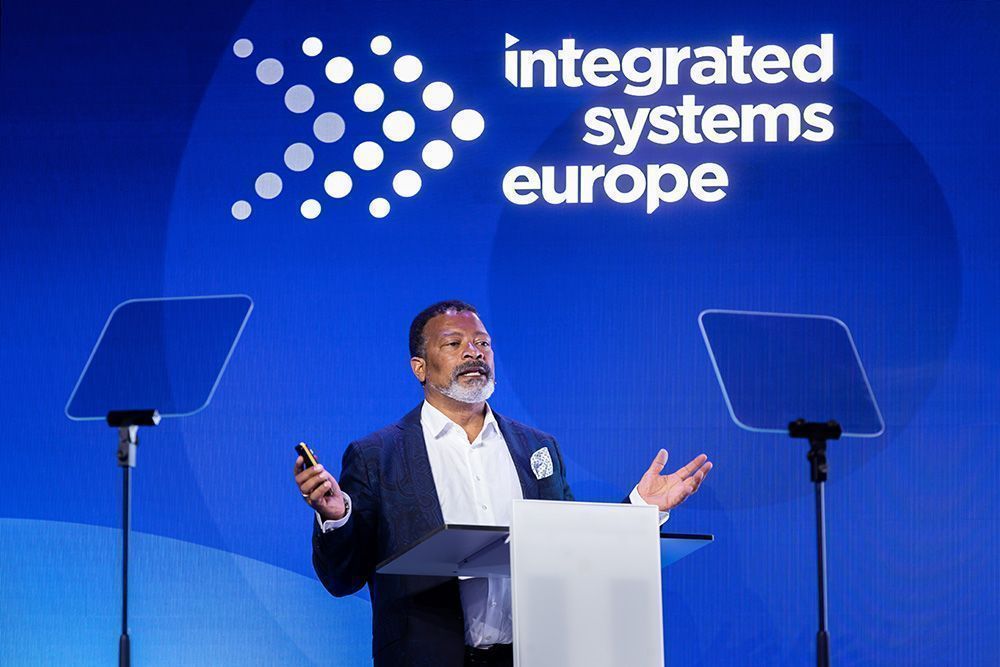
Mike Blackman interview ISE 2022
Visitor registration opens for ISE 2022 Barcelona
The Jeroen Pit House begins as ISE community rallies
L-Acoustics covers 182 metres at Primavera Sound
Martin Audio TORUS powers Rotterdam's reborn Baroeg
Optimal Audio sets the sound at Unc's Pizza in Detroit
LEDVANCE cuts street lighting energy by up to 75%
Vokkero keeps the Ura Bere Bidean crew connected
Biamp Vocia: a paging system running for over ten years
31 Million Pixels Revolutionise Simulation
Genelec provides sound for a mini-golf venue in Germany
A journey through imagery, interaction and architecture
A new look for the Barcelona Metro with Soltec
Invisible Technology, Great Experiences
Fewer loudspeakers, greater clarity in the classroom
Communication in critical situations with UDE
The Value of Sound in Hospitality and Retail
Acoustics designed for sports and events
Platform for remote projector control

Real-time information for British Airways
Crestron turns the classroom into Wall Street