






The workplace is no longer just a physical space, but an ecosystem that integrates technology, culture and organization.
This shift, driven by digitalization and the consolidation of hybrid work, is forcing companies to rethink how they design their environments to improve productivity, collaboration and employee experience.
According to various studies, more than 70% of leaders believe that hybrid and remote models have had a positive impact on employee satisfaction. This confirms a clear trend: organizations need more flexible, connected and adaptable environments suited to different profiles and ways of working.
In this context, the workplace is built on several key elements, such as the physical space —lighting, ergonomics or acoustics—, organizational culture and technology, which acts as the backbone connecting distributed teams. Depending on how these factors are combined, different work models emerge, adapted to each organization’s needs:
Traditional: structure and on-site control
The traditional workplace remains the most recognizable model. It is based on physical offices, defined schedules and a clear hierarchical structure. This type of environment offers predictability and control, which is useful in sectors where direct supervision is essential.
However, its main limitation is the lack of flexibility. In a context where employees increasingly value autonomy, this model can feel rigid and less adaptable.
Remote: flexibility and full digitalization
The remote environment removes the need for a shared physical space and relies entirely on digital tools. Communication takes place through videoconferencing platforms, messaging and online collaboration tools.
This model allows access to global talent, reduces commuting time and improves work-life balance. However, it also presents challenges, such as potential team disconnection or total dependence on technology to maintain productivity.
Hybrid: the dominant model
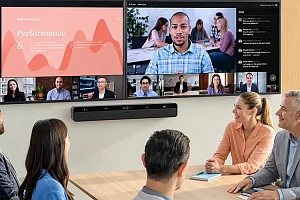
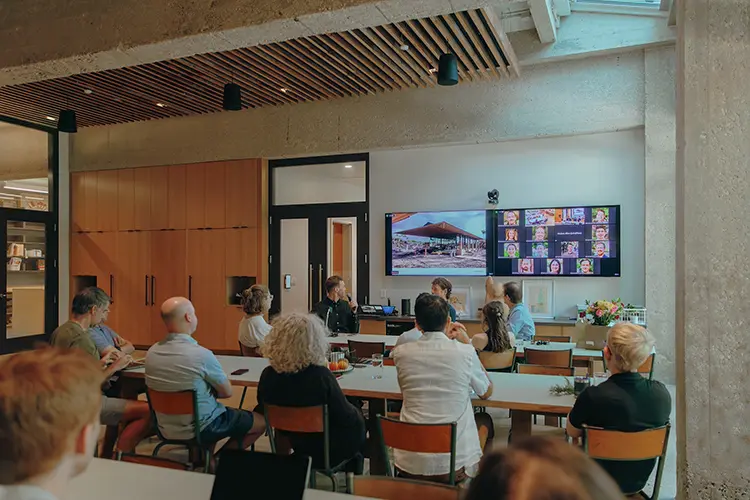
The hybrid environment combines on-site and remote work and has become the most widespread model today. It allows companies to maintain a certain structure while offering flexibility to employees.
Its main advantage is the balance between in-person collaboration and autonomy. However, it also introduces challenges, particularly in managing distributed teams and ensuring an equitable experience for all participants, regardless of location.
Coworking: flexibility without fixed infrastructure
Coworking spaces offer a flexible alternative for companies and professionals who do not require a fixed office. They help reduce costs and encourage interaction with other profiles and organizations.
However, they also present limitations in terms of privacy and customization, which may affect company identity or certain types of work that require concentration.
Collaborative: spaces for innovation
Collaborative environments are designed to foster creativity and the exchange of ideas. They typically include open spaces, shared work areas and dedicated zones for informal meetings or brainstorming sessions.
This model promotes innovation and team cohesion, although it can also lead to distractions if the balance between collaboration and focus is not properly managed.
Autonomous: focus on individual responsibility
In autonomous environments, employees have a high degree of freedom to decide how, when and where they work. This model is effective with highly skilled and self-motivated profiles.
Its main advantage is the boost to innovation and talent attraction, although it requires discipline and may reduce interaction between teams if not supported by appropriate tools.
Fast-paced: constant adaptation
Fast-paced environments are common in dynamic sectors such as sales, media or startups. They are characterized by constant change, rapid decision-making and high demands.
While they can be motivating for certain profiles, they also carry risks such as burnout or lack of clarity if not properly managed.
Towards an effective workplace
Regardless of the model, the challenge for organizations is to create a workplace that functions coherently across all its elements. This means not only designing comfortable spaces, but also aligning culture, processes and technology to improve both performance and employee well-being.
One of the most important aspects is the physical environment. Factors such as lighting, noise levels, ergonomics and space layout directly influence productivity and motivation. In on-site environments, this translates into well-designed and accessible spaces, while in remote work it is increasingly common for companies to support employees with equipment or ergonomic guidance for home offices.
Alongside the space, organizational culture plays a key role. Encouraging recognition, promoting open communication and fostering an inclusive environment helps improve team engagement. Organizations that support feedback dynamics, celebrate achievements and encourage participation tend to achieve better results in cohesion and collaboration.
At the same time, technology has become the core of the workplace. Videoconferencing, messaging and collaboration tools enable distributed teams to stay connected and maintain workflow continuity. However, having these solutions is not enough—their integration, ease of use and adoption by employees are critical to delivering real value.
Another increasingly important factor is internal communication. Establishing clear channels and promoting respectful, two-way communication helps avoid misunderstandings and improves coordination. One-to-one meetings, feedback spaces and active listening are key elements for keeping teams aligned, especially in hybrid environments.
In addition, companies are placing greater emphasis on work-life balance. Flexible schedules, the ability to organize work autonomously and reducing unnecessary meetings help minimize fatigue and improve well-being. Initiatives such as meeting-free blocks or respecting downtime are gaining importance.
Professional development is also part of the workplace experience. Providing training, access to resources, mentoring programs and career plans helps employees grow within the organization and increases their level of engagement.
Finally, it is important to identify potential warning signs within the workplace. Issues such as poor communication, high turnover, excessive workload or overly hierarchical cultures can negatively impact productivity and morale. Detecting them early allows organizations to take corrective action and improve team performance.
An evolving workplace
The workplace will continue to evolve alongside technology and employee expectations. Rather than choosing between on-site, remote or hybrid work, the challenge lies in designing flexible models that adapt to different needs and situations.
Ultimately, the future of work will be defined by more connected, adaptable and experience-driven environments, where the integration of physical space, culture and technology will be key to organizational success.