










CEDIA presents two new technical guides for integrators on immersive audio and human-centric lighting.
CEDIA strengthens its commitment to the smart home sector by publishing resources that help integrators understand the evolution of new technologies and standards, with a practical approach focused on system design, implementation and maintenance.
CEDIA’s technical guides take an in-depth look at applications, recommendations and advice across a wide range of industry topics, from software and hardware to best practices, standards and formats. These documents are produced by experts and based on extensive research, with the goal of explaining complex concepts clearly for professionals.
Recently, CEDIA introduced two new technical guides. Here are the key takeaways.
Reference Audio Level and SPL Capabilities
One of the core performance parameters in the CEDIA RP22 Immersive Audio Design Recommended Practice is SPL capability. It is often discussed and misunderstood, along with the so-called reference listening level.
In commercial cinema, a reference SPL has long been established and consistently applied to match post-production to intended playback levels in theatres. However, in private entertainment spaces there is far greater variability in the range and type of source content, the type and size of rooms, the scope and capability of audio systems, and the perception of loudness.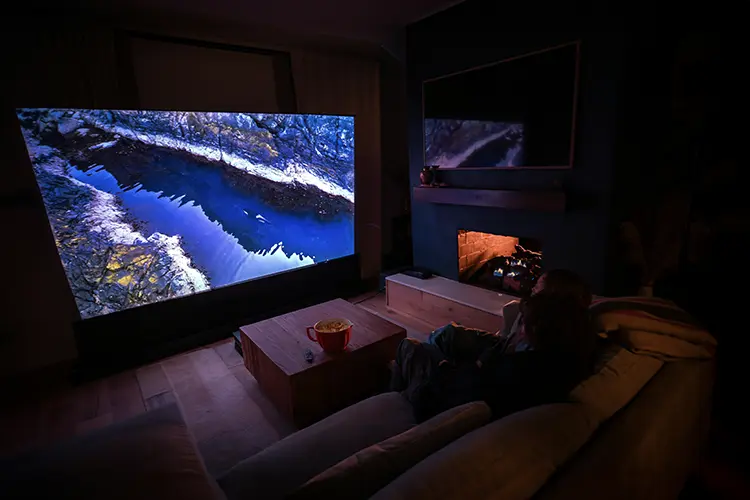 This technical guide explores what reference audio level means for both commercial and home content, examines the many facets of loudness perception, and clarifies the SPL recommendations set out in RP22.
As part of the Smart Home Technology Conference at ISE, CEDIA delivered the course Loud and Clear: The Math Behind SPL Metrics in RP22, focused on the precise calculation of SPL requirements to meet a performance standard such as RP22. The course emphasises that proper design means going beyond selecting components that “should be loud enough”, factoring in real-world conditions, system configuration and the physics of sound propagation.
Human-Centric Lighting Part 1: Why we need it
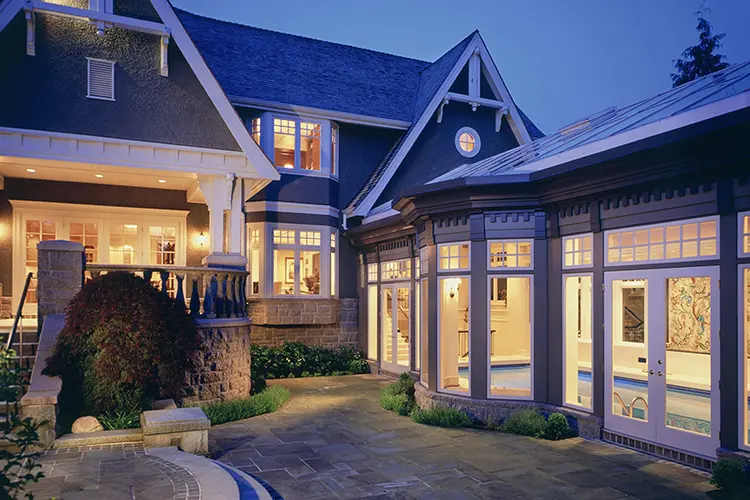
Humans evolved spending bright days outdoors and nights in relative darkness. Our physiological systems have functioned for millennia around this daily cycle. However, today we spend most of our time indoors, with artificial light enabling varying levels of illumination at any time of day or night.
While we are psychologically well adapted to artificial light—and use it to extend our days and enhance comfort, productivity and entertainment—this shift has an impact on health and wellbeing.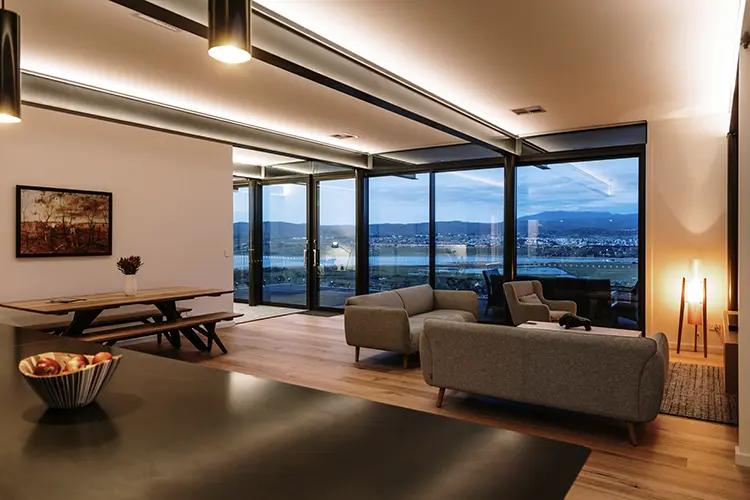 This technical guide takes a deep dive into photobiology as the foundation for why human-centric lighting is so relevant. Topics include the composition of light, how light affects human physiology, and the developing standards for optimising light at different times of day and night.
The document also outlines how integrators can optimise light throughout the day and night to better support health and wellbeing.
The figures I discovered during my research for the document revealed that, as a society, we spend somewhere between 85% and 90% of our time indoors. I later found out that this figure has been revised upwards and is now 93% in the United States and 92% in the UK. This is unhealthy for humans, especially if the quality of that light is poor, and this is where integrators come into the equation, commented David Meyer, author of this technical guide.
At ISE, CEDIA also hosted the education session Lighting for Life: Why Human-Centric Design Matters in Smart Homes, focused on how modern lifestyles and artificial light have increasingly disrupted circadian rhythm, and on the principles of bio-adaptive lighting applied to the smart home.