
Shure and Frost & Sullivan report: improving meeting room audio
Written by ISP Integration editorial teamCategory: NEWS
Published:
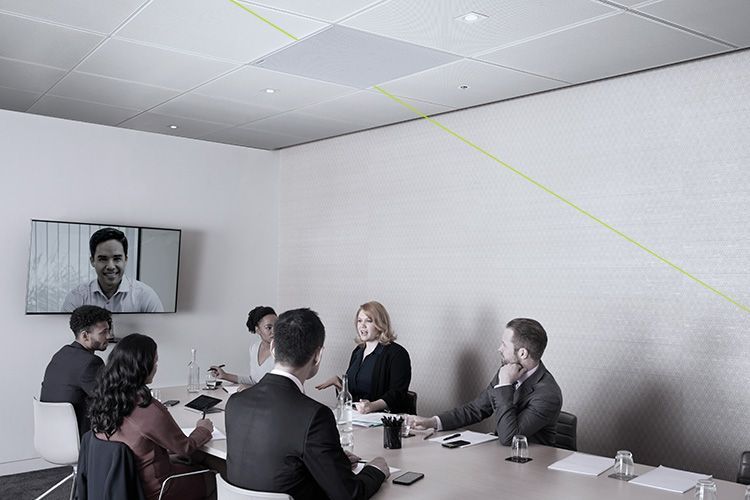
95% of meeting rooms are equipped with only bare-minimum technology for sharing information.
According to the report “7 Steps to Improve Virtual Meetings in the New Era of Work”, produced by the consultancy firm Frost & Sullivan for Shure, switching between working in the office and working remotely from home will be a permanent feature for many professionals in the short and medium term.
Along these lines, a Microsoft survey states that 71% of employees and managers want to be able to continue working from home, at least part-time, in the future. When the pandemic broke out, this trend accelerated rapidly, with little opportunity to lay the proper foundations for doing so effectively.
Now, however, knowing that remote working is here to stay to a greater or lesser extent, Frost & Sullivan states that “remote participants cannot be relegated to second-class citizens; they need to hear and be heard clearly within the conversation”. Continuing to consolidate this new era means boosting connectivity and collaboration from anywhere, streamlining processes and communication between work teams.
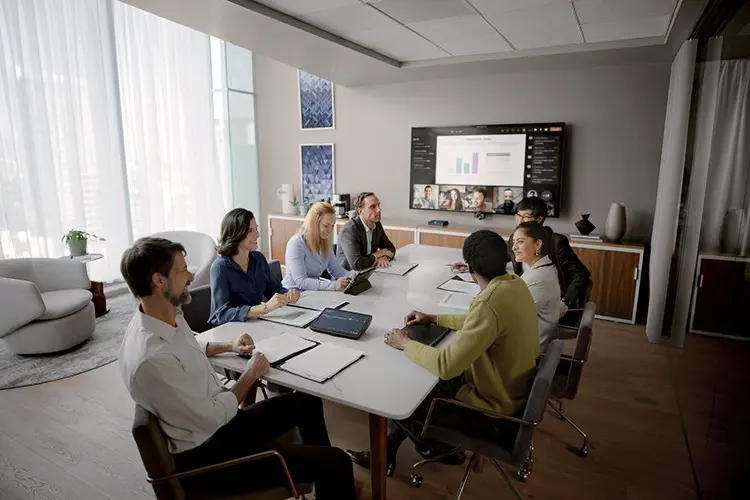
However, 95% of meeting rooms are currently equipped with only bare-minimum technology for sharing information, such as a basic telephone and a display
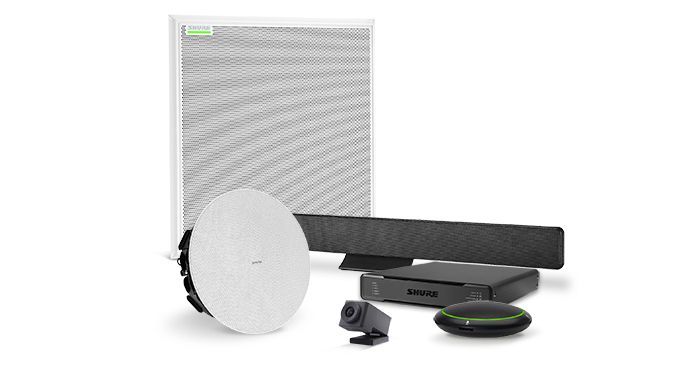
Towards a consolidated remote working model
In this research commissioned by Shure, Frost & Sullivan takes an in-depth look at the working-from-home landscape, revealing some very interesting facts and figures. Among them, the percentage of office employees working remotely soared from around 5% before the pandemic to 50%. The consultancy expects this figure to settle at around 25-30% once the COVID-19 pandemic is over.
All of this is likely to have an impact on organisations’ investment in the equipment they need to maintain their employees’ communication and productivity: “The importance of equipment such as headsets and earphones with built-in microphones will be even more prominent for the large number of people in this segment working from home, so they must be actively considered in companies’ overall virtual conferencing plans”.
High-quality audio conferencing
It is essential to be able to offer flawless audio that lives up to these new needs. This is especially relevant considering that the average meeting now lasts between 31 and 60 minutes, an increase of 10% over the past 15 years.
Poor audio during a meeting causes frustration and has a significant impact on participants’ productivity. By contrast, audio capable of filtering out background noise and improving pickup helps to minimise errors caused by miscommunication; reduces the need to repeat information; lessens participants’ fatigue and frustration; fully includes them in conversations and makes it possible to shorten meetings, reducing costs.
Frost & Sullivan argues that, in order to optimise audio performance in rooms connected to any conferencing service and to remote colleagues, technology investment decision-makers should prioritise standardising on certified audio devices. This will also help to optimise room audio management and drive user adoption.
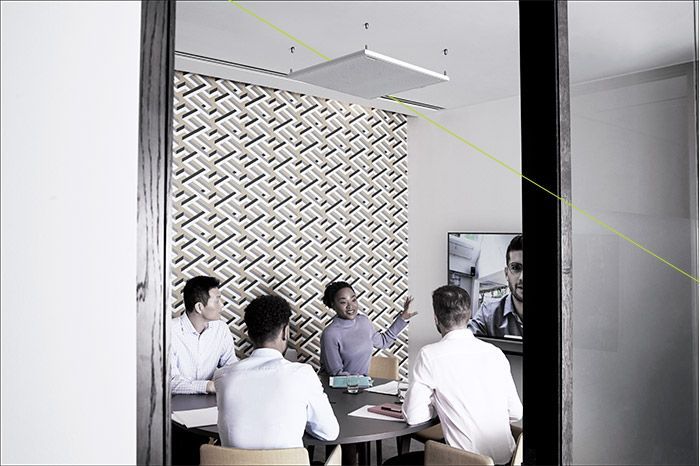
The key: adopting a complete ecosystem
As companies increasingly adopt AV technologies geared towards simple deployment, intuitive operation and seamless compatibility with the leading collaboration platforms, having a complete ecosystem of conferencing solutions is more important than ever.
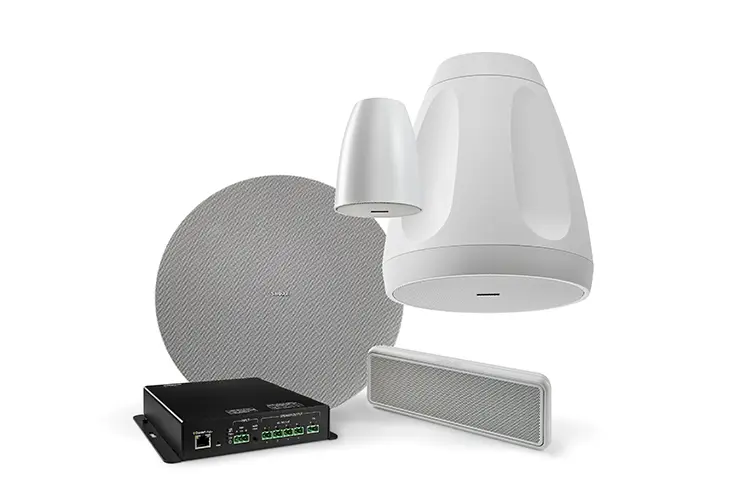
Microphones, loudspeakers, DSP, software and accessories must work together seamlessly
This ecosystem must be flexible and able to adapt to the needs of every type of room. Along these lines, Frost & Sullivan highlights some relevant points:
• One size does not fit all: Most organisations have meeting rooms of different sizes, configurations and purposes. The same microphones, loudspeakers, processors, controllers and IT cannot efficiently address different specifications and challenges without compromising quality.
• Wider deployment does not mean greater complexity: A vendor’s interoperable devices must be able to integrate with the range of most popular cloud conferencing services, including Microsoft Teams, Cisco Webex and Zoom.
• Certification is essential: Certified audio solutions provide much-needed peace of mind. They require rigorous performance, reliability and other testing to ensure that advanced audio devices meet the high standards of interoperability and integration with the leading cloud conferencing platforms. This assurance offers strong differentiation from non-accredited alternatives in a crowded market.
With a product portfolio covering the complete audio signal chain, from microphone to DSP and loudspeaker, Shure offers networked audio solutions adaptable to all kinds of needs, from small meeting rooms to large conference spaces, with unrivalled ease of deployment, reduced complexity and remote management capabilities.
You may also like
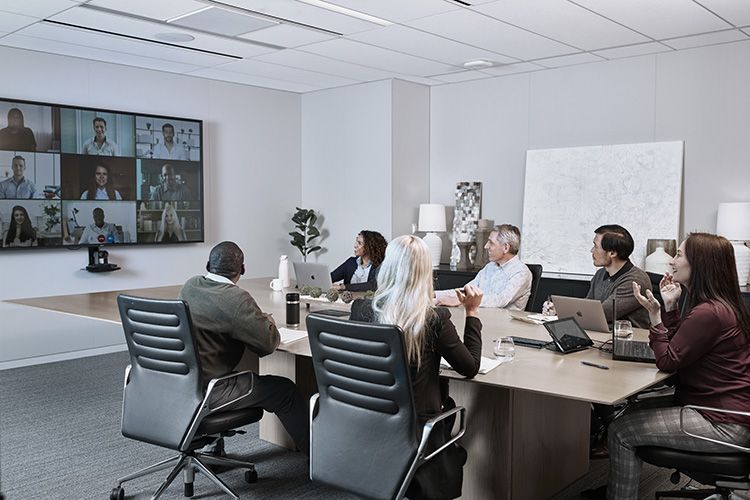
Shure MXA920 ceiling array microphone launched at ISE 2022
Atlona Velocity powers Hotel Barrosa Park meeting rooms
Shure and Frost & Sullivan report on meeting room technology
Shure meeting rooms report
The meeting room learns to listen and broadcast

IDC names Shure a Leader in AI meeting rooms
IntelliMix Bar Pro takes centre stage in Shure’s strategy
Audio, AI and Remote in a Single Platform
Ten Years of Innovation in Corporate Audio
Simultaneous in-person and virtual classes with Shure solutions
Advanced hybrid education with Shure ecosystem

technology for more efficient meetings
Smart tabletop audio for corporate
AI-powered meetings: premium audio and cloud management
Flexible solutions to meet the needs of the AV market
Superior audio and video performance in meetings
Superior meeting experiences with Shure
Shure integrated solution for meetings
Shure's integrated solution for meetings
Teachers and students with Shure technology
Easy installation and audio for meeting rooms
Unified control and management with Shure

Seamless integration in meetings with Shure and Neat
The future in the El Nacional.cat newsroom
Digital future in the writing of El Nacional.cat

Shure continues to enhance conferencing
Australian Interactive Jewish Museum of Sydney
Holistic learning at SMU with Shure audio
Integrated ceiling microphone for conferencing
Shure unveils a ceiling microphone for meetings
360º Technological Transformation at The Yellow Nest
Shure introduces a ceiling microphone for meetings

Shure enhances the integration and efficiency of Q-SYS
Integrated ceiling microphone for conferences
Shure and Philips revitalize the UNE building

New sound system at Barrosa Palace Hotel
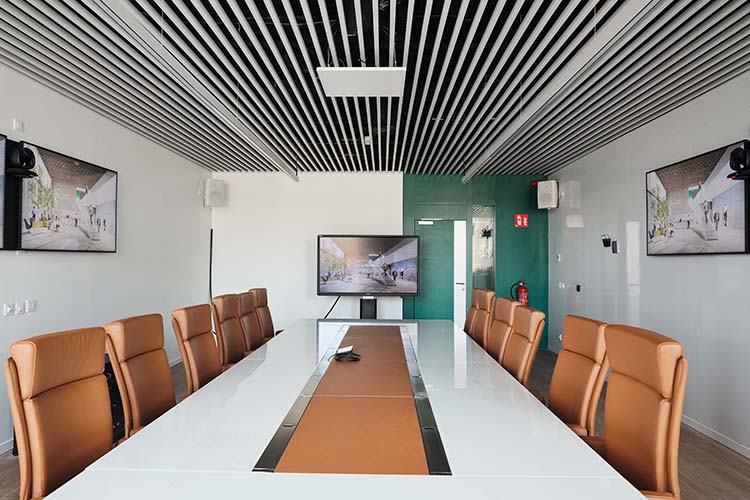
New teaching models at TBS Education
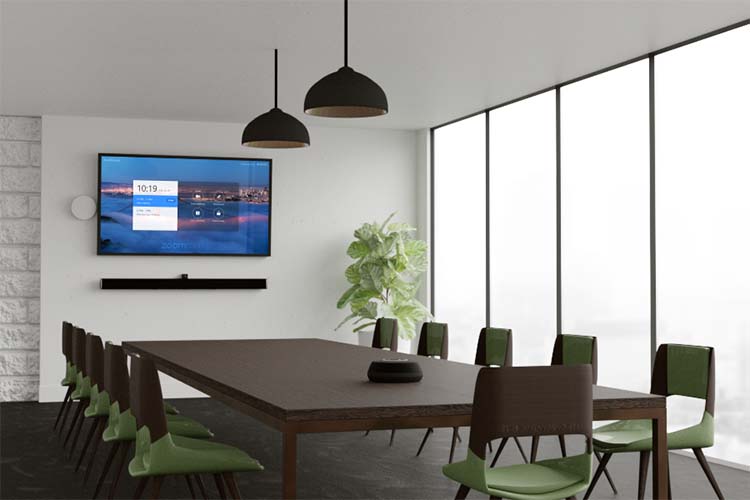
New from Shure: the Stem Ecosystem
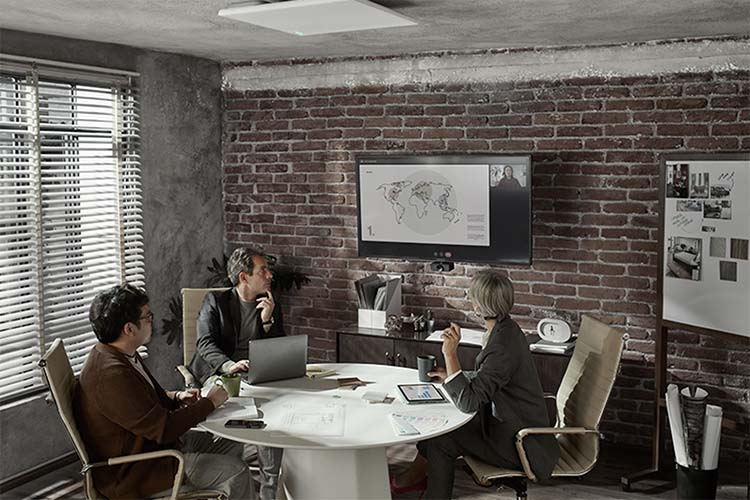
Shure ceiling microphone for conferencing
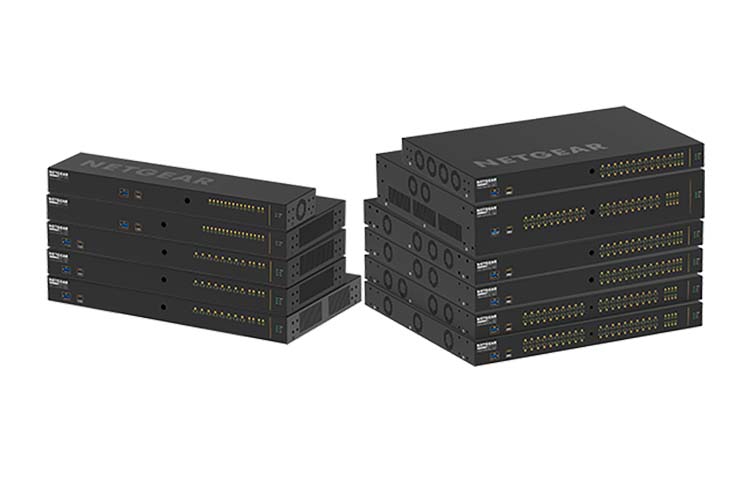
Earpro & EES now distribute Netgear

InfoComm 2023 registration is open
Shure participated in Integrated Systems Europe 2023
Shure unveils IntelliMix® Room 4.0

Shure and Netgear: reliable integration
Shure MXA920 and IntelliMix Room earn Zoom Rooms certification
Shure MXA920 ceiling array microphone for simple collaboration
Shure official PSNI audio provider at ISE
zactrack SMART automated tracking Open Day by EARPRO and EES
Q-SYS and Shure refit Ourense Medical Association auditorium

Shure to provide full audio support for packed ISE 2022
EARPRO to distribute Neat video conferencing in Iberia
Shure conference system upgrades Concello de Teo council chamber
Shure Stem Ecosystem conferencing now in Spain and Portugal
Shure adds MX415 DUAL gooseneck microphone to Microflex range
Shure Microflex Advance (MXA) microphones: video overview

QSC AcousticDesign sound for Nova Sunset Club in Cádiz
Fundación Caja de Burgos HQ: Shure, JBL and Absen AV via EARPRO
EARPRO to distribute Huddly cameras in Spain and Portugal