












The convergence of AV, IT, artificial intelligence, analytics, control and building management is changing the role of the integrator.
Clients no longer need only meeting rooms, displays or videoconferencing systems. They need spaces capable of responding to people, context and business objectives. And this means AV needs to become involved much earlier in the project, alongside architects, interior designers, IT and facility management.
For years, describing an audiovisual project was relatively straightforward: provide sound for a room, install videoconferencing, distribute signals, deploy displays or incorporate a control system. The space was already largely defined, and technology came afterwards. That approach is starting to fall short.
The major professional events of 2026 are pointing in the same direction. ISE has placed smart spaces, artificial intelligence, technology convergence and connected buildings among its key areas of interest. InfoComm 2026 brought these ideas directly onto the show floor with spaces specifically dedicated to the Smart Workplace and Retail Experience. And in October, InfoComm Latin America will once again address topics such as AV/IT convergence, collaboration, corporate broadcast, digital signage and space design. Behind very different technologies, the same question is beginning to emerge:
What should the space be able to do?
From equipment to behaviour
A smart space is not simply one that contains more connected devices. The real evolution begins when different systems start sharing information and responding to what is actually happening.
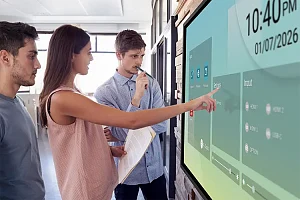
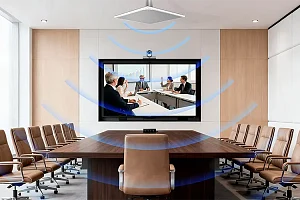
A meeting room can detect that it is occupied, activate the required resources, adapt cameras and audio to the participants and subsequently provide data about how the space has been used. A building can cross-reference booking and occupancy data to determine whether it has the right mix of meeting spaces. A store can adapt content according to inventory, time of day, footfall or campaigns.
AI accelerates this process, but it is only part of the equation. Sensors, APIs, analytics, CMS platforms, cloud services, booking systems, control and remote management are already becoming part of the same ecosystem. The value of the integrator therefore no longer lies solely in making each subsystem work. It lies in making all of them work together to achieve a specific result.
The hybrid meeting room is beginning to understand what is happening
Collaboration illustrates this change particularly clearly. In recent years, much of the effort has focused on making hybrid meetings simple and reliable. That remains essential, but it is no longer enough. Today's platforms can use audio, video, identity and context to frame participants automatically, generate transcripts, summarise conversations, translate content or extract action items.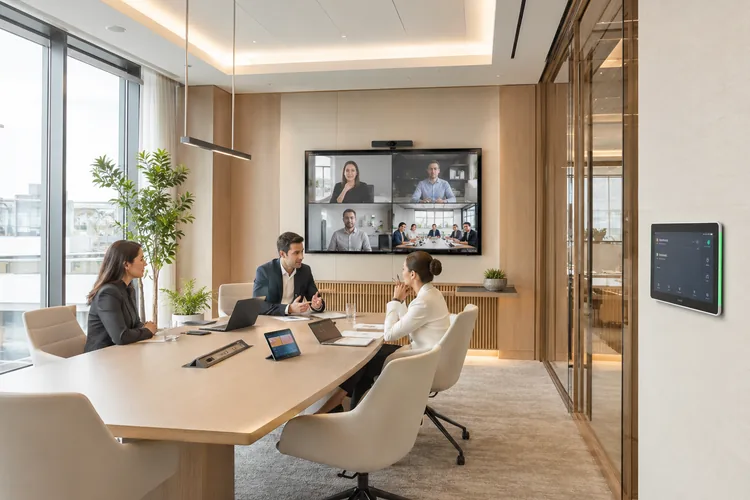
But the smarter the software becomes, the more important the information it receives from the physical space becomes.
Poor acoustics undermine speech intelligibility. Inadequate lighting affects both video quality and analysis. A camera positioned without considering room geometry and sightlines limits tracking systems. Even furniture can improve or compromise the hybrid meeting experience.
The paradox is interesting: AI increases the importance of good audiovisual integration. The integrator is no longer simply transporting audio and video. AV systems generate part of the data that other systems will subsequently interpret.
Those same systems can also begin to provide valuable information about the building: how many people actually use a room, which room sizes are most in demand, which spaces remain empty or where recurring problems occur. AV therefore begins to intersect with facility management, workplace strategy and real estate management. The next project can, in part, be designed using data obtained from the previous one.
Retail: installing a display is no longer enough
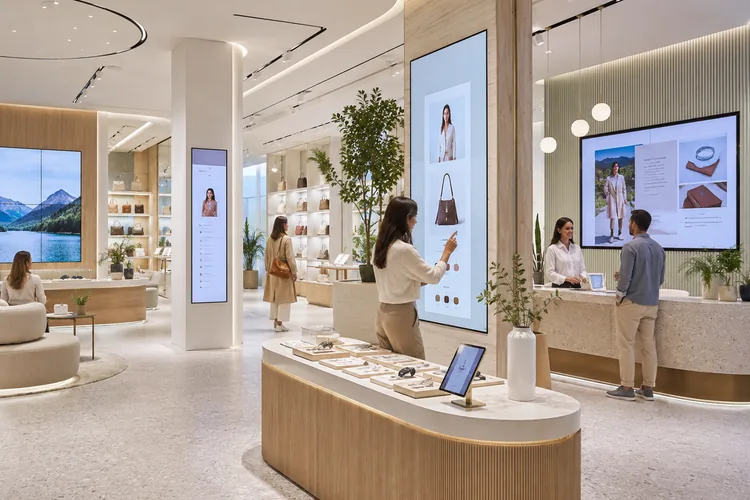
The transformation is similar in retail. For many years, digital signage was explained primarily in terms of the display: size, brightness, resolution, videowall, LED or LCD. All of these remain important, but they describe only the visible part of the system. InfoComm 2026's Retail Experience focused precisely on this evolution: displays, audio, lighting, content, CMS platforms and analytics operating as components of a connected store.
The question therefore stops being: Where should we place the display? and becomes: What do we want to happen at this point in the customer journey?
The answer may involve a display. But it may also involve lighting, sound, sensors, dynamic content, inventory information, point-of-sale integration or data from other platforms. Something similar is happening with Retail Media Networks and DOOH. Digital signage is increasingly connecting with advertising, data and commerce. Content can change according to location, time of day, weather, product availability, footfall or events.
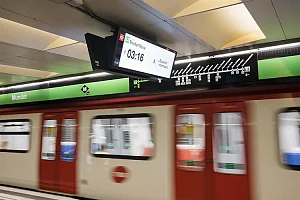
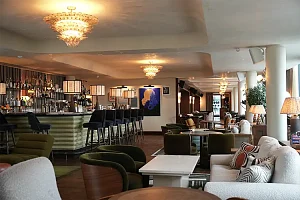
Signage therefore stops behaving like an isolated electronic poster and starts becoming part of the client's information system. In corporate environments it can show space availability. In hospitality it can integrate wayfinding and events. In retail it can connect promotions with inventory. In DOOH it can introduce context and data into campaign planning.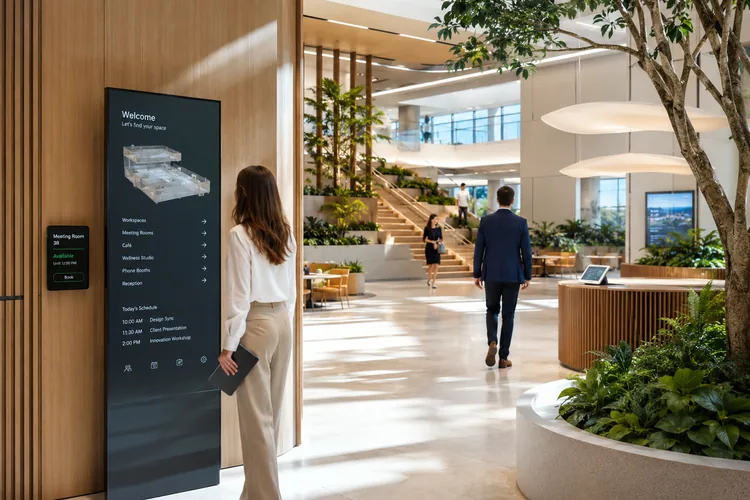
For the integrator, correctly installing one hundred displays no longer guarantees success if the client cannot manage them, feed them with relevant information or subsequently measure the results they deliver.
AV and IT: from transporting signals to managing infrastructure
The network is another major element in this transformation. AV-over-IP has been part of the professional market for years, but the next stage is not simply about transporting video and audio over Ethernet. It is about managing the whole environment.
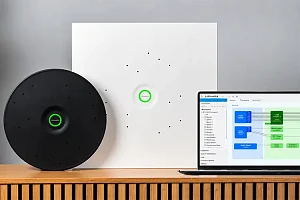
When an organisation has hundreds or thousands of endpoints, it needs platforms capable of discovering devices, configuring them, monitoring them, updating them and diagnosing problems. The software and orchestration layer therefore becomes increasingly important.
At the same time, the boundaries between AV, IT and broadcast continue to blur. Companies are producing increasing amounts of content for town halls, training, webinars, streaming, presentations and internal communications. Technologies originating in professional audiovisual production are entering corporate environments and sharing IP infrastructures.
For integrators, this requires new skills in networking, software and cybersecurity, but it also significantly expands their field of activity.
AV needs to arrive earlier
Perhaps the most important consequence of all this is not technological. It is methodological.
If the experience depends simultaneously on acoustics, lighting, displays, cameras, furniture, sensors, people flow, networking and automation, the integrator cannot arrive when architecture and interior design have already been almost completely defined.
- The camera depends on the geometry of the room.
- Intelligibility depends on the materials.
- Microphone systems can affect ceiling design.
- Lighting influences the atmosphere, but also video performance.
- Display placement affects sightlines and circulation.
- Sound can form part of a store's identity.
And all this technology requires power, networking, cooling, accessibility and maintenance. This does not mean that the integrator needs to become an architect or interior designer.
It means that the integrator needs to enter the conversation earlier.
Architecture, interior design, lighting, IT, facility management and AV can no longer be designed entirely in sequence when all of them ultimately affect the same experience.
Smart should also mean simple
There is one final rule worth remembering.
The user does not want to know which protocol is transporting a signal, which algorithm is tracking the speaker or which system is controlling a display.
- They want to enter a room and start a meeting.
- They want to present.
- They want to find their destination.
- They want to buy.
- They want to receive useful information.
A smart space should reduce the number of decisions a person needs to make, not increase them. And this may be one of the best measures of success.
The more technology a space contains, the less the user should have to think about it.
The client is not buying artificial intelligence, sensors or AV-over-IP for their own sake. They are buying better meetings, more efficient use of office space, improved communication, increased sales, better customer experience, lower consumption, useful information and greater management capability. This creates a significant opportunity for the audiovisual integrator.
Integrators will continue to work with displays, cameras, loudspeakers, processors, networks and control systems. But the conversation increasingly needs to begin before the product:
- What does the client want to achieve?
- What should happen within this space?
- What information is worth obtaining?
- Which systems need to work together?
- And how will we know afterwards whether the solution is working?
The project is no longer simply about equipping a space. It is about enabling the space to understand what is happening well enough to respond in a useful way. That is probably one of the new frontiers of audiovisual integration.