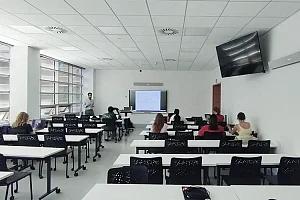








A recent study once again highlights the influence of light on academic performance and school well-being.
Researchers at the Korea Advanced Institute of Science and Technology confirmed that proper lighting can make a difference: cool light at 6,500K enhances concentration, while warmer tones are ideal for relaxation and more creative activities.
Light as an ally of learning
In recent years, multiple studies have underscored the relevance of lighting in education. It is not only about seeing better, but about creating an environment where students and teachers feel comfortable, focused, and less prone to eye strain. For AV integrators, this knowledge opens a field of action in which lighting ceases to be just a technical element and becomes a pedagogical tool.
Regulations and best practices in projects
In Europe, lighting projects in educational centers must comply with the UNE-EN 12464-1 standard, which regulates aspects such as lighting levels, uniformity, glare control, or color rendering. A design that respects these criteria not only ensures legal compliance but also guarantees a safe environment adapted to the needs of students.
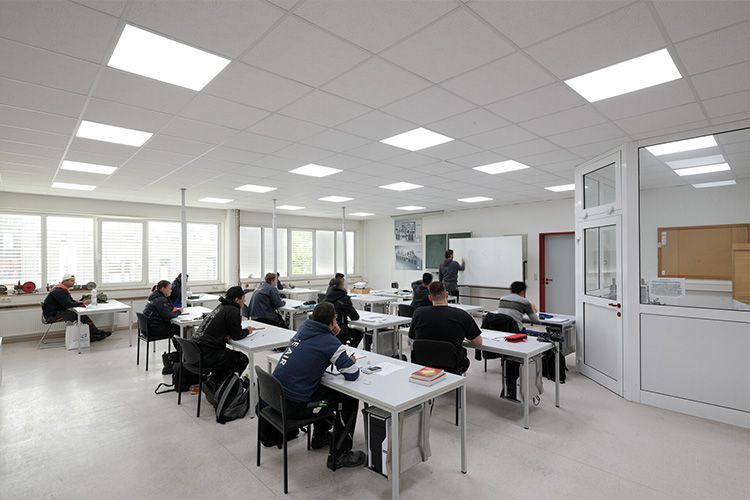
Smart and customizable systems
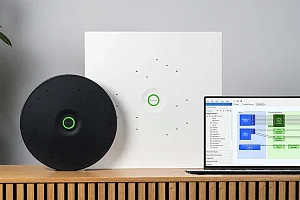
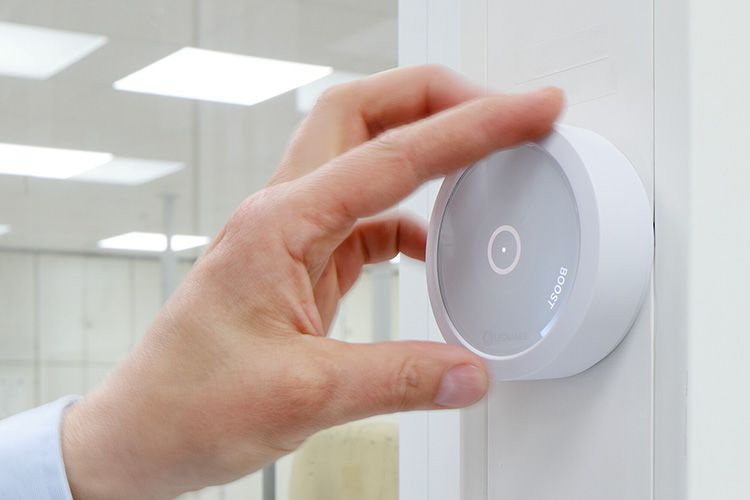
The most recent trend is to incorporate Human Centric Lighting (HCL) systems, capable of adapting light to circadian rhythms and the activity being carried out in class. Current technology offers preset modes tailored to different situations: maximum concentration for exams or detailed reading, creative environments for workshops and collaborative projects, or relaxation settings for downtime.
Ease of installation and wireless control have made these solutions a viable and efficient option for schools and universities. In addition, the latest updates allow lighting schedules to be programmed to accompany the school day, even integrating into cloud-based management platforms to optimize maintenance and energy efficiency.
Experiences in Europe
Germany, France, and the Netherlands already have numerous success stories where next-generation LED lighting has proven to be a key factor in learning. These projects confirm that investing in a well-designed solution is not only a matter of efficiency but also of health, motivation, and performance.
In summary, well-being-oriented LED lighting is consolidating as a key element in the educational ecosystem. For AV integrators, it represents an opportunity to add value to each project, not only from a technological perspective but also from pedagogy and care for people.