











The integration of reliable and precise technological solutions is key to achieving clearer and more efficient hearings.
Particularly in judicial environments, where speech clarity, orderly turn-taking, and faithful record-keeping are critical elements, audiovisual systems must meet the highest standards of quality and robustness.
Clear voice capture: conference microphones
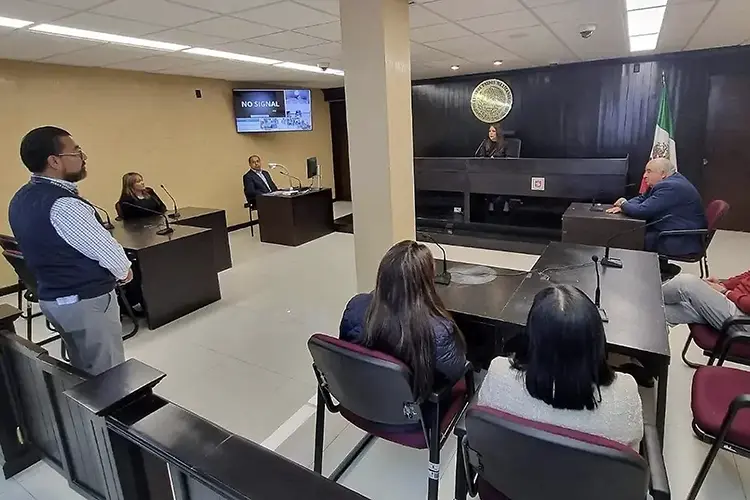
One of the most important elements in a courtroom is the correct capture of spoken interventions. For this, gooseneck microphones or conference stations are used to record each contribution with high fidelity. These devices not only ensure speech intelligibility but also facilitate orderly turn management, which is essential to maintain the formality of the proceedings.
With this in mind, the state of Tlaxcala in Mexico was the setting for a major modernization initiative driven by the Federal Judiciary Council. Through an ambitious project carried out by the integrator Asesores y Consultores en Tecnología, eight oral trial rooms were refurbished and implemented across various Judicial Districts: Juárez, Sánchez Piedras, Guridi y Alcocer, Zaragoza, and Ocampo.
These renovations focused on incorporating cutting-edge technology aimed at improving the judicial experience for both system operators and citizens.
Each room was equipped with 13 TAIDEN HCS-1857CA/15 gooseneck microphones, distributed in Mexico by Navits, specifically designed for environments where speech intelligibility is essential. These devices enable precise voice capture with excellent noise rejection, ensuring every intervention is heard clearly.
The microphones were mounted on HCS-1858BS conference bases, which integrate speech control functions, light indicators, and facilitate system operation during hearings by providing independent signals for each microphone.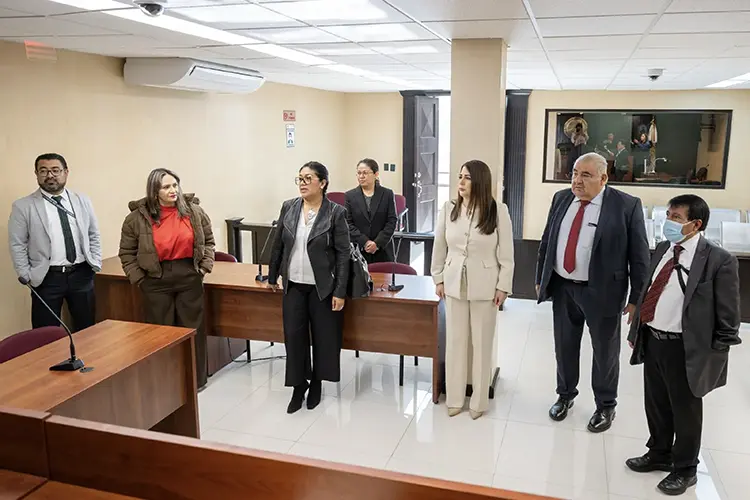
Audio and video distribution: uniform coverage and visibility
A well-designed audiovisual system includes strategically distributed loudspeakers that ensure everyone present can hear clearly, regardless of their location in the room. This is complemented by the inclusion of monitors or screens used to display evidence, presentations, or participate in videoconferences, promoting a more inclusive and understandable experience for everyone involved.
Recording and archiving: accurate and secure evidence
The recording of hearings is a key requirement in many judicial systems. AV systems allow high-quality audio and video capture, generating reliable records that can be securely stored, consulted in case of appeals, or used to ensure transparency in the judicial process.
Videoconferencing: barrier-free access to justice
The possibility of holding remote hearings is another advantage that audiovisual technology provides. Through PTZ (pan-tilt-zoom) cameras and videoconferencing systems, witnesses, experts, or even defendants can participate from remote locations, reducing travel, costs, and time. This function is also essential in contexts where security or distance are critical factors.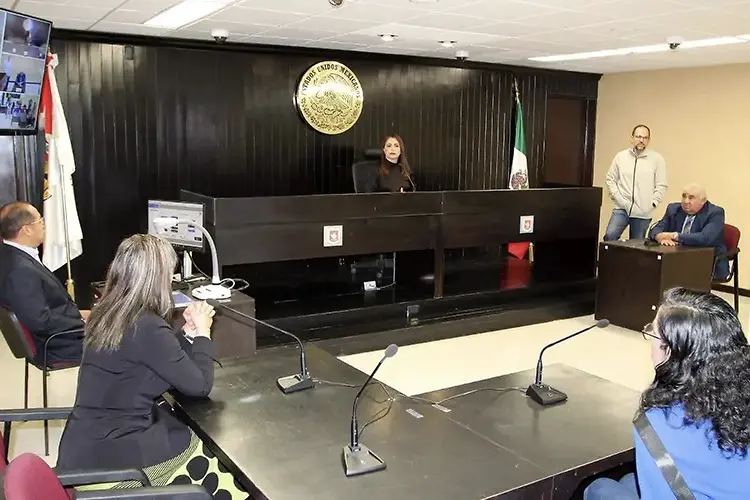
Automation and centralized control
The use of integrated control systems allows all AV components to be managed from a single interface: microphone volume, camera selection, content projection, or recording management. This improves operational efficiency and reduces errors during hearings.
AV technology for more efficient justice
In summary, implementing audiovisual technology in courtrooms not only modernizes the infrastructure but also improves the quality of judicial services, promotes transparency, and optimizes resources. When correctly designed and installed, these systems are not just technical tools but guarantors of clear and fair communication, the fundamental basis of any legal process.