














In the maritime world, reliable communication is essential for the safety and operation of vessels.
From majestic cruise ships to robust cargo vessels and elegant yachts, the integration of a public address and general alarm (PA/GA) system has become an indispensable pillar for coordinating operations and managing emergencies at sea.
Clear, interference-free communication onboard is essential for multiple functions. In routine situations, the system allows for broadcasting general orders to the crew, announcing itineraries, or playing ambient music that contributes to a pleasant experience for passengers. However, in emergencies, the same infrastructure must be capable of transmitting immediate and coordinated alerts to ensure evacuation or proper crisis management. This dual functionality makes the PA/GA system a vital component, where the clarity and power of the sound can mean the difference between an effective response and a critical failure.
Technical requirements and challenges of the maritime environment
The maritime environment imposes extreme conditions: abrupt temperature changes, humidity, vibrations, and constant exposure to the elements are just some of the challenges that communication equipment onboard must face. Therefore, current systems must meet rigorous technical requirements. A maritime public address system must provide high output volume and impeccable voice intelligibility, regardless of environmental conditions or location within the vessel. Likewise, it is essential that the design be robust and durable, ensuring optimal performance even in the most adverse situations.
The integration of these systems involves a meticulous process of planning and adaptation. Each vessel has its own unique characteristics: the layout of spaces, internal topology, and safety regulations vary significantly between a cruise ship, a cargo vessel, or a yacht. Therefore, communication systems must be highly customizable to meet the specific needs of each type of vessel. Interconnecting the different areas of the ship, from the bridge to the outer decks, is essential to ensure that both the crew and the passengers receive information simultaneously and without distortion.
Tailored solutions for each type of vessel
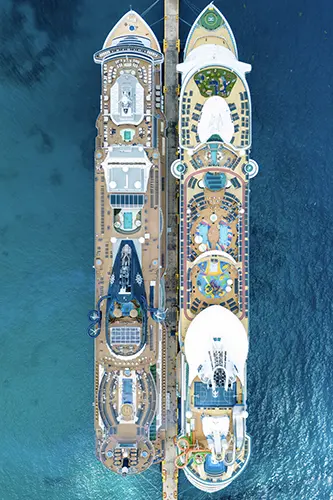
Versatility is one of the main attributes of modern maritime public address systems. In the case of cruise ships, technology enables smooth communication between the crew and guests, which not only improves safety but also enhances the onboard experience. Instructions, event announcements, and emergency messages are transmitted clearly throughout the vessel, from lounges and corridors to expansive decks, ensuring that every message is understood regardless of ambient noise. On the other hand, cargo vessels, which operate in complex and dispersed environments, greatly benefit from these systems. Effective coordination between different sections of the vessel translates into increased operational productivity, as orders and alerts are communicated immediately and accurately. This is especially crucial during loading and unloading maneuvers, where crew synchronization is vital to avoid accidents and ensure operational efficiency.
For their part, yachts require solutions that combine functionality with an aesthetic design that matches their level of luxury. Communication systems adapted for recreational vessels not only allow for controlling emergency situations but also for setting the ambient sound, integrating discreetly and elegantly into the yacht’s environment. This customization enables even high-end vessels to feature cutting-edge technology without compromising style or exclusivity.
Towards comprehensive connectivity at sea
 Technological advancements in maritime communications are marking a turning point in the management of onboard operations. The current trend is towards integrated systems that, in addition to meeting safety requirements, offer constant connectivity linking all areas of the vessel. This enables centralized real-time monitoring, where any incident or anomaly is detected and addressed immediately.
Investing in these systems represents a commitment to long-term reliability. With solutions designed to withstand the harsh conditions at sea and adapt to the specific configurations of each vessel, owners and operators can be confident that their investments will pay off over time, reducing operational costs and increasing overall safety.
In conclusion, the integration of public address and general alarm systems in the maritime sector is a trend that not only improves operational efficiency but also enhances safety and the onboard experience. By adopting customized and technologically advanced solutions, vessels of all types can set sail with the confidence of having flawless communication, leading to safer and more operationally efficient environments.