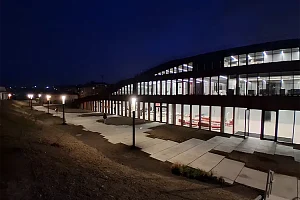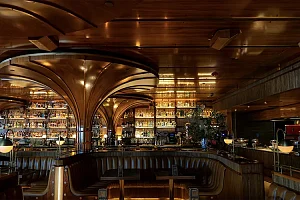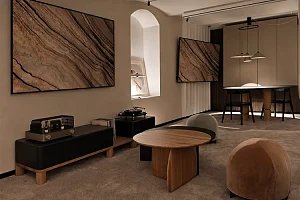













The architecture of the future is undoubtedly a fusion of innovation, sustainability, and advanced technology where audiovisual technology, artificial intelligence (AI), and intelligent security play fundamental roles.
These technologies are not only redefining the aesthetics and functionality of our spaces, but they are also introducing new paradigms in security, energy efficiency, and environmental interactivity. The expansion of these systems in interior design and architecture promises to radically transform our experience of lived spaces.
LED Screens and Advanced Displays
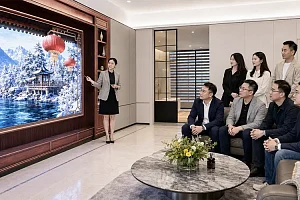
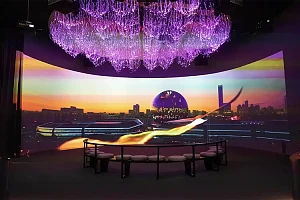
The integration of LED screens and state-of-the-art displays in architectural spaces is allowing for the creation of dynamic and adaptable environments. These technologies offer infinite possibilities for visual customization, from projecting digital artworks to simulating natural environments, providing a new dimension to the spatial experience. The flexibility and energy efficiency of LED screens make them an ideal option for sustainable and technologically advanced design.
Audio and Video Distribution Over Network and DANTE Systems
The distribution of audio and video over the network is revolutionizing the way spaces are designed for multimedia interaction. Systems based on DANTE (Digital Audio Network Through Ethernet) allow high-quality transmission of audio and video signals over existing Ethernet networks, facilitating the integration of complex audiovisual systems without the need for additional wiring. This technology ensures that spaces can adapt to different sound and visual environments efficiently and effortlessly.
The Importance of Planning in Architecture
The inclusion of these technologies underscores the importance of meticulous planning in the early phases of architectural design. Proper planning of conduits for modern wiring is essential to seamlessly integrate technology into buildings, minimizing the visual impact of wiring and ensuring future functionality of the space. This involves close collaboration between architects, engineers, and system designers from the start of the design process.
Fire-resistant Cables
Safety is another primary consideration in the architecture of the future. The use of fire-resistant cables in the design of electrical and communication systems ensures that, in the event of a fire, critical security and communication systems can continue to operate, thus protecting the building's occupants and facilitating rescue operations. These cables are designed to withstand high temperatures and maintain circuit integrity during a fire, being a crucial component in the construction of safe and resilient buildings.
Domotic Light Control in Interior Design
Light plays a central role in creating environments and in the well-being of individuals. The domotic control of light, which allows the automated regulation of interior lighting, is transforming interior design. Through the use of intelligent systems, it is possible to adjust the lighting according to the specific needs of each moment of the day, enhancing the spatial experience and optimizing energy consumption. Lighting thus becomes a dynamic tool for design, capable of adapting the interior atmosphere to different activities, moods, or events, reinforcing the connection between the user and their environment.
In summary, the integration of audiovisual technology, AI, intelligent security, and advanced control systems in interior design and architecture is opening new frontiers in the creation of spaces that are not only aesthetically impressive and functionally rich, but also safe, sustainable, and deeply connected with the needs and well-being of their users. These trends promise a revolution in the way we understand and inhabit our spaces, making the future of architecture more exciting than ever.