













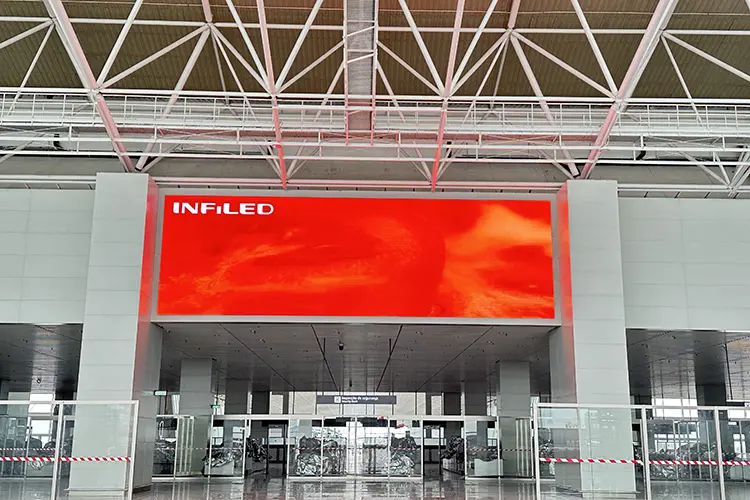
The unmatched quality INFiLED screens are now operational at the new Angola airport.
In November 2023, a collection of high-performance screens was installed by INFiLED at the Dr. Antonio Agostinho Neto International Airport in Luanda, Angola.
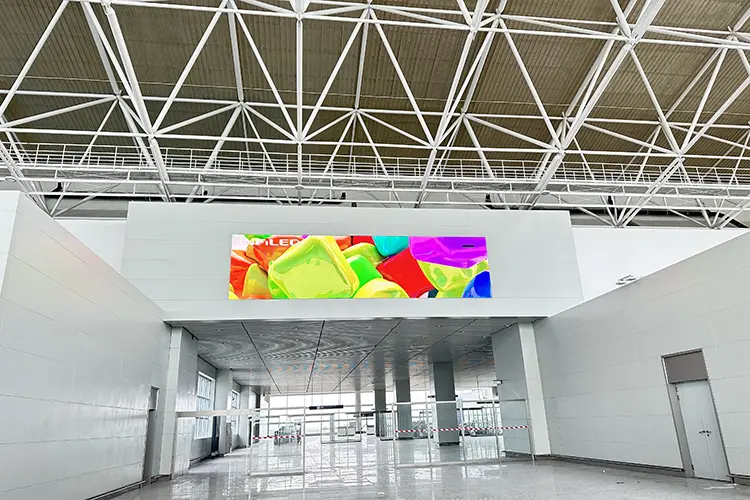
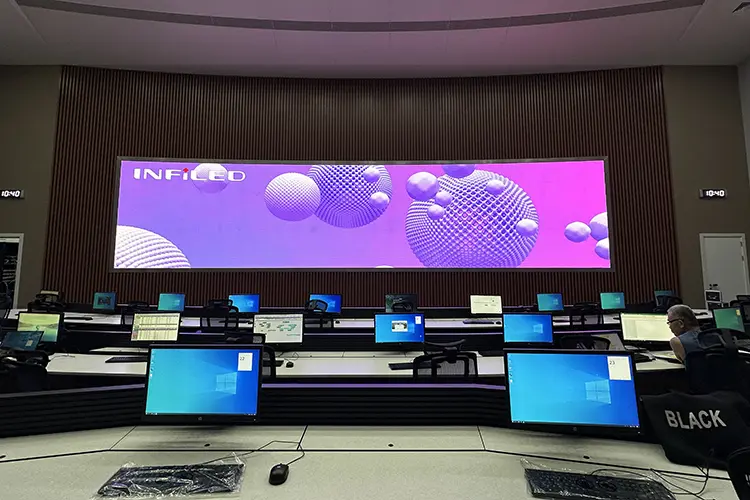
GX series screens were positioned at various locations within the terminal, such as Domestic Arrivals and Departures, International Arrivals and Departures, the TOC (Terminal Operation Center), and the AOC (Airport Operations Centre). Besides, LX series digital billboards were placed above the Security Check area.
 |
 |
The airport commenced operations in March 2024 and is situated approximately 40 kilometers southeast of Luanda. Spanning across 1,324 hectares, it boasts dual runways and is projected to accommodate 15 million passengers annually. Upon its opening, it will stand as one of the largest contemporary international airports on the African continent.
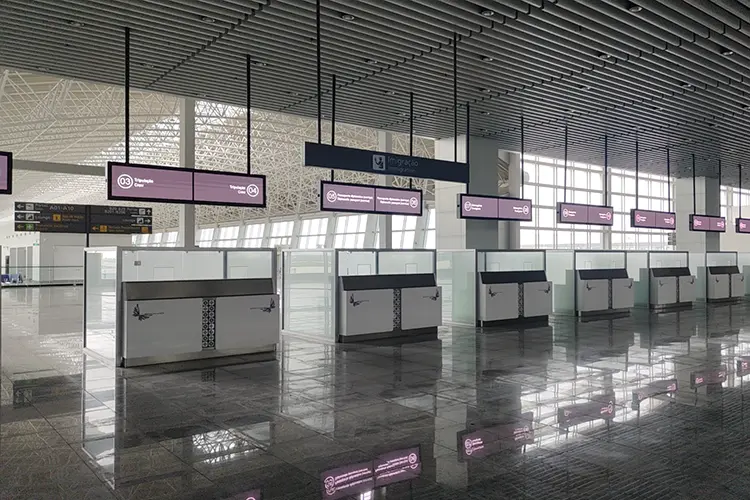
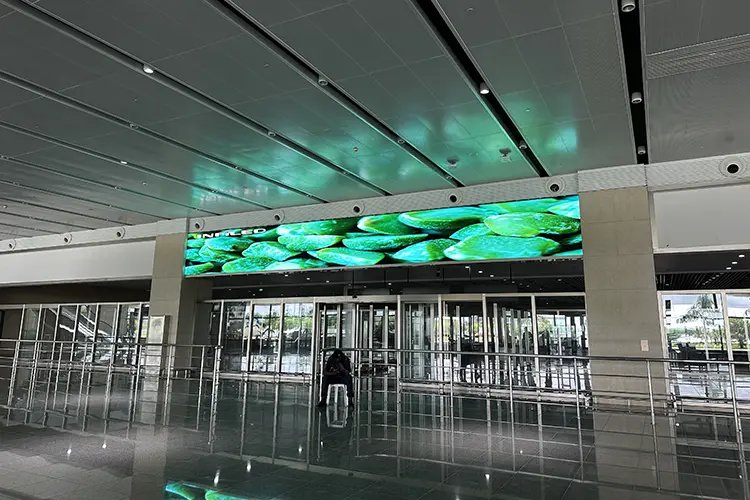
There are two GX series screens mounted above the entrance for Domestic and International Arrivals, each measuring 20.25m². These screens display content to passengers with a pixel pitch of 2.5mm and a resolution of 5400*600. Moreover, 26 pieces of smaller screens of the same series are installed above the check-in counters, each measuring 1.25m², showing the counter numbers in high clarity and vivid colors.
 |
 |
In both the TOC and the AOC, there are GX series screens individually installed in each center. This configuration aims to ensure that relevant personnel are informed about the current status of the terminal and the airport. With a resolution of 5000*1100 and a high refresh rate of 3840Hz, these screens show essential data with exceptional image quality, significantly contributing to the airport's efficient functioning.
Positioned above the Security Check area are two LX series screens. Known for their reliable performance, these well-designed LED screens come equipped with a DMS (Display Monitoring System).
This system enables the real-time transmission of screen status data to the operational backend through a cloud server. As a result, technicians can promptly resolve any potential issues that may occur.