







AV integration is moving towards more connected and easier-to-manage ecosystems.
The evolution of professional spaces is forcing a rethink of audiovisual design. Offices, classrooms, control rooms, retail environments and event spaces no longer need only a good display or a capable sound system: they require video, audio, interaction, control and management to operate as a single infrastructure.
This change is also transforming the integrator’s role. Each new project involves more devices, more sources, greater configuration requirements and, frequently, more locations to monitor. The challenge is becoming less about selecting a specific piece of equipment and more about ensuring that the entire system is coherent, scalable and easy to operate after installation.
Hikvision’s expanded ProAV offering is built around this idea, bringing together LED displays, control systems, WonderHub interactive displays, professional and commercial audio solutions, and device and content management platforms within a single portfolio.
From standalone products to the complete operation of the space
For an integrator, a modern AV project may involve visualisation, sound reinforcement, collaboration, signage, control and remote management. The value of the system depends on how these layers interact and how easily they can be maintained once the project has been delivered. Hikvision places this integration at the heart of its new offering.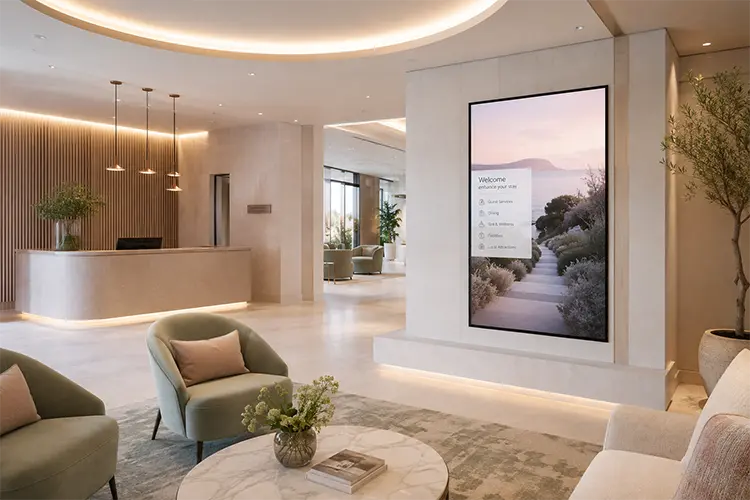
For many integrators, one of the main challenges of an audiovisual project does not lie in a specific product, but in coordinating the different elements involved. Hikvision ProAV brings together broader audiovisual capabilities and support resources to help partners manage this complexity more efficiently and create better user experiences, explains Wenson Zhou, Product Marketing Director at Hikvision.
This is particularly relevant in installations where the system must expand over time or be managed from different locations. This is where platforms such as HikCentral and HikMedio come into play, centralising monitoring, configuration, device operation and content distribution tasks.
One concept, very different requirements
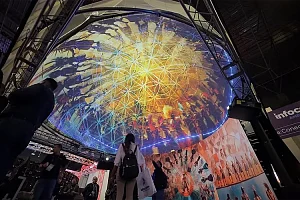
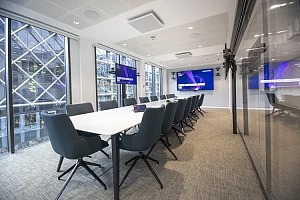
There is no single solution for every space. A control room prioritises visibility and operational continuity; a corporate meeting room requires simple collaboration; a retail environment seeks visual communication and atmosphere; and a stage requires synchronisation between video and sound.
From an integration perspective, what is interesting is that these applications increasingly share the same technological infrastructure.
Hikvision’s ProAV offering is structured around four main areas:
- LED displays and control systems, for projects of different sizes and configurations.
- WonderHub interactive displays, designed for collaboration, training and presentations.
- Professional and commercial audio, ranging from conference systems to background sound solutions.
- HikCentral and HikMedio platforms, for managing devices and content from a common layer.
This approach makes it possible to treat a project not as a collection of independent devices, but as an ecosystem designed to meet the specific use of the space.
Less complexity during integration and after delivery
Interoperability remains one of the most challenging aspects of any AV installation. The more manufacturers and systems involved, the more work is generally required to configure, test and maintain the complete system.
Hikvision aims to reduce some of this complexity by bringing different technologies together within a single portfolio. For the integrator, this can simplify certain stages of design, configuration and support, particularly when several components share management tools and a common architecture. However, the real impact becomes apparent after commissioning.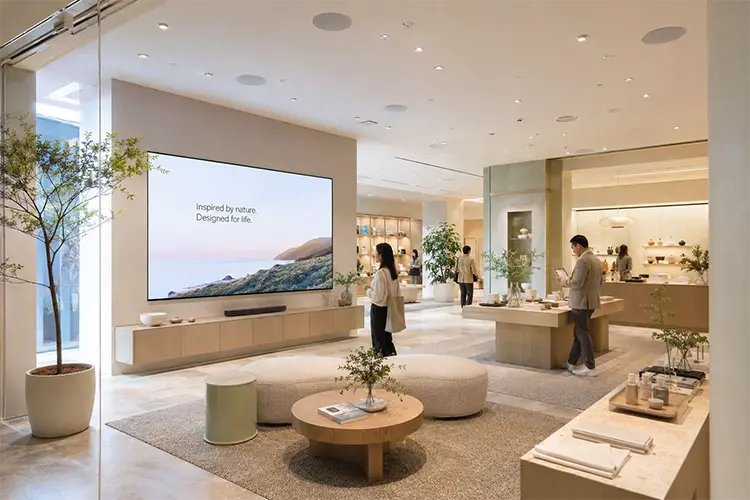 In distributed installations—such as retail, education, corporate buildings or multi-site organisations—the ability to check device status, modify configurations or update content centrally can reduce site visits and simplify maintenance.
Management therefore becomes a more important part of the project’s initial design.
Technology must adapt to the space, not the other way around
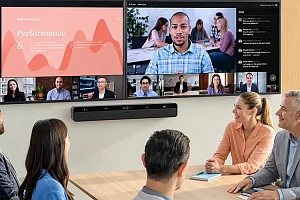
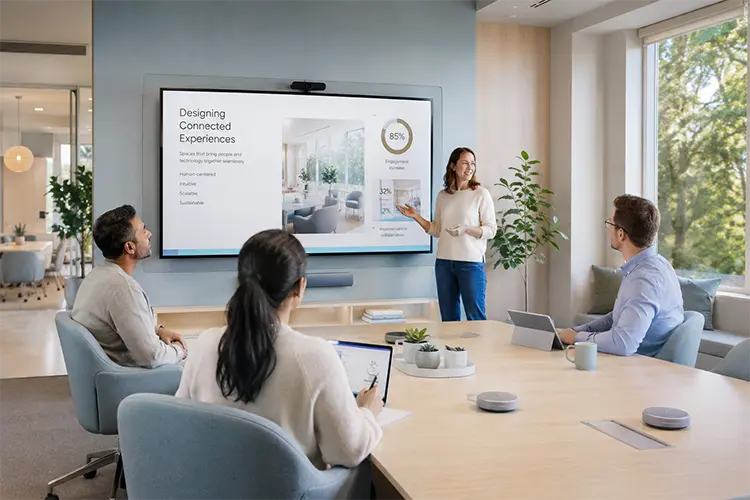
The starting point remains the use case. At an event, the objective may be to coordinate a large-format LED display with professional audio. In a training room, the priority may be direct interaction with content. In a hybrid office, it may be to allow in-person and remote participants to share information without adding unnecessary complexity.
Control rooms present a different scenario: various information sources must be organised clearly on screen and remain continuously available. In retail, by contrast, video and sound can be integrated with the interior design to strengthen communication and create different atmospheres within the same establishment.
Collaboration between AV integrators, architects, interior designers and technology managers is becoming increasingly important. The audiovisual system is no longer an addition installed afterwards but becomes part of the space’s original design.
AV as connected infrastructure
The expansion of Hikvision’s ProAV portfolio reflects a broader market trend: the transition from independent audiovisual solutions to connected, manageable infrastructures capable of adapting to different uses.
LED displays, audio, collaboration and management platforms are beginning to share the same project, network and operational logic. For the integrator, this expands the possibilities but also requires greater attention to issues such as scalability, maintenance, remote management and user experience. This is probably where one of the keys to the next generation of AV spaces lies: not in having more technology, but in ensuring that all of it works as a natural part of the space.