













Shaped by systems integration, artificial intelligence, and the evolution of digital.
With a career linked to major technology projects across the Middle East, Mohannad Mousa has become one of the emerging voices in the AV industry. As Head of Projects at MaktabiTech, he shares his perspective on how artificial intelligence, sustainability, and AV/IT integration are reshaping the present and future of digital signage.
The industry is talking about AI, retail media, and personalization. Which technologies do you believe will create truly sustainable business opportunities in digital signage over the next three years, and which do you think remain overrated?
The technologies generating real and tangible value right now are those that close the loop between content logic and operational data. Specifically, edge-computing media players capable of running inference locally—eliminating the latency and bandwidth consumption associated with cloud-dependent decision-making—combined with computer vision systems that go beyond simple demographic estimation to include dwell-time analysis, attention mapping, and conversion correlation.
When that data feeds back into a CMS with rule-based or machine learning-driven content scheduling, you end up with a system whose outcomes can be directly linked to key performance indicators (KPIs). That is what gets budgets renewed.
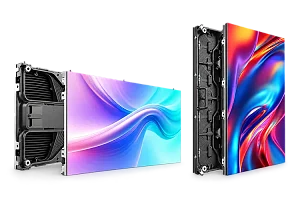
On the immersive side, LED processing has matured significantly. We are deploying multi-zone, high-refresh-rate LED videowalls with real-time video distribution through NDI and SDVoE in projects such as NEOM and PIF, and the reliability gap between premium LED systems and projection has virtually disappeared in permanent installations. That combination of LED, real-time signal processing, and control system integration is where the largest tenders are currently being generated.
And what is overrated? Generative AI content creation as a standalone feature. Many vendors are wrapping a diffusion model inside an interface and calling it intelligent signage. It is not. Until generative AI is integrated into the content logic layer and makes decisions based on audience data, operational context, and business rules—rather than simply producing scheduled images—it will remain a demonstration feature. I have yet to see an implementation where it has significantly improved outcome metrics compared to a properly configured rules engine.
The digital signage market is entering a phase of consolidation and increasing competitive pressure. How is your company’s strategy evolving to differentiate itself beyond hardware or CMS platforms?
We differentiate ourselves at the systems integration layer, and that is a deliberate architectural decision. Our value does not come from promoting a proprietary CMS or a specific display brand, but from how we engineer the interconnection between AV, control systems, IT infrastructure, and operational data systems.
In practice, this means that on complex projects we specify and commission control systems such as Q-SYS, Crestron, or Extron not merely as audiovisual distribution tools, but as orchestration layers capable of managing business logic by triggering content states based on inputs from BMS platforms, occupancy sensors, calendars, or real-time data feeds.
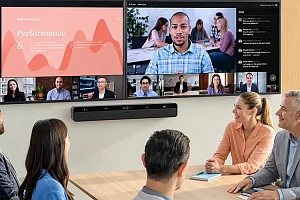
I am certified in both Q-SYS and Extron precisely because that level of depth is essential when commissioning a command center or a cognitive collaboration space where every subsystem must interoperate without manual intervention.
The CMS becomes a node within a broader architecture rather than the central element. That shift in mindset—from managing screens to orchestrating environments—is where we are finding the greatest differentiation and, frankly, where many competitors are still lagging behind.
The industry increasingly demands integration between AV, IT, data, and analytics. Do you believe the integration channel is prepared for this new environment, or is there still a significant technology gap?
No, and I will be specific about where the shortcomings lie.
The first is protocol expertise. Many AV integrators are still comfortable in HDBaseT, HDMI, and serial control environments. The transition to AV-over-IP, SDVoE, NDI, or SMPTE 2110 requires networking engineering skills that most AV companies do not possess internally. Configuring IGMP Snooping, maintaining PTP/IEEE 1588 time synchronization for latency-free switching, or implementing QoS tagging on managed switches are no longer optional—they are baseline requirements. When the networking team and the AV team do not speak the same language, problems emerge during commissioning.
The second gap is in data integration. Connecting a digital signage network to real-time analytics systems, extracting data from a warehouse, feeding BI dashboards, managing API authentication, or handling data schemas requires software engineering capabilities. Integrators who are closing this gap are hiring hybrid talent or forming formal partnerships with IT consultancies. Most are still improvising.
The third is cybersecurity. IT departments are subjecting network-connected AV devices to the same level of scrutiny as any other corporate endpoint. VLAN segmentation, certificate-based authentication, and vulnerability disclosure policies for media players and displays are now part of procurement discussions. The integration channel, generally speaking, is not prepared for that.
Sustainability is no longer limited to energy consumption. How does it influence your decisions regarding product design, manufacturing, maintenance, and the lifecycle of installations?
Through my work with AVIXA’s Sustainability Advisory Group, I have promoted an approach that treats sustainability as an operational discipline, not simply a box-ticking exercise.
From a technical standpoint, this begins with evaluating the lifecycle of components during the design phase. When I specify a videowall or processing system, I want to know the MTBF values, the availability and cost of field-replaceable units, and whether the manufacturer offers certified refurbishment or equipment recovery programs.
A system that requires replacing entire panels after five years because the controller boards cannot be repaired is not a sustainable design, regardless of its energy efficiency.
In control and processing systems, we are prioritizing modular architectures, selecting platforms where computing capacity can be upgraded without replacing the entire chassis and where firmware lifecycles are clearly defined. Ecosystems such as Q-SYS perform reasonably well against this criterion. Some media player manufacturers continue to offer closed, non-upgradable hardware with no clear end-of-life policy, which is increasingly excluding them from our specifications.
Regarding commissioning and maintenance, we are incorporating remote monitoring and diagnostics as a standard deliverable rather than an add-on service. Proactive fault detection through SNMP, API-based health monitoring, and automated alerting systems reduces technical site visits, extends component lifespan, and lowers the carbon footprint associated with service operations. It is a sustainability argument with direct operational cost benefits, and that is how you achieve customer adoption.
End users increasingly demand more immersive and dynamic experiences, but they also expect operational simplicity. How do you balance creativity, automation, and ease of management in today’s projects?
The design principle I follow is that the operational architecture must be defined before the creative brief is finalized. It may sound contradictory, but it is the only way to avoid visually spectacular systems that become unmanageable within less than a year.
When it comes to automation, I distinguish between rule-based automation and conditional logic automation. Basic scheduling is already a minimum requirement. The real value emerges when the content engine receives structured data from occupancy sensors, Exchange or Google Workspace calendars, BMS systems, or real-time operational feeds and can modify states automatically without human intervention.
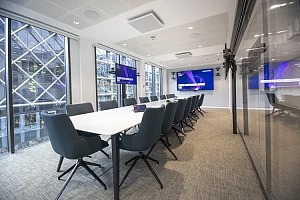
We have implemented this approach in command centers where the visual environment automatically changes layouts, content priorities, and alert hierarchies according to real-time operational status using ActivU software.
To achieve operational simplicity, the answer is almost always role-based abstraction. Operators should not be exposed to the full complexity of the system; they should interact with an interface designed around their actual workflow. Complexity must remain in the background. The user experience should involve virtually no cognitive load.
Retail media and DOOH are rapidly converging with traditional digital signage. What real opportunities do you see, and what role will manufacturers and technology platforms play?
My perspective comes more from infrastructure than from advertising or media. What this convergence is doing is fundamentally changing the technical requirements of an installation from the outset.
When a display network needs to be measurable, addressable, and potentially connected to programmatic ecosystems, design decisions change substantially. It becomes necessary to specify hardware with sufficient processing capability for local analytics, network architectures that allow data output without compromising security, and content systems with APIs capable of accepting external triggers.
The opportunity for the integration channel lies in becoming the bridge between the physical installation and these connectivity and data requirements: selecting the right edge hardware, designing network segmentation correctly, and ensuring the infrastructure does not become a bottleneck when the client’s media or IT teams later want to integrate with it.
What I advise against is treating it purely as a software issue. The infrastructure must be designed with these requirements in mind from the beginning. Retrofitting a display network for programmatic capabilities later is expensive, disruptive, and usually results in compromised performance.
If you had to define what a truly competitive digital signage platform will look like in 2030, which capabilities do you consider indispensable today?
By 2030, a competitive platform will be defined by three technological pillars: native multi-system orchestration, hybrid edge-cloud computing, and closed-loop attribution.
Native orchestration means the platform will not simply be a CMS with webhooks, but an environment capable of natively integrating structured data from BMS platforms, IoT sensors, ERP systems, and third-party APIs, using that information to govern content logic, layout changes, and operational states without relying on middleware. The API architecture will need to be bidirectional and event-driven.
Hybrid edge-cloud computing means every process runs where it is most efficient. Audience analytics, privacy-compliant anonymization, and real-time content decisions will take place at the edge. Campaign management, report consolidation, and model training will occur in the cloud. The platform will need to manage that distribution transparently while maintaining operation even when cloud connectivity fails.
Closed-loop attribution means the platform will be capable of linking content delivery events to measurable downstream outcomes—not merely impressions, but verifiable behaviors or transactions. Achieving this will require deep integration with the client’s data ecosystem.
What is already non-negotiable today includes: fully documented REST and GraphQL APIs, role-based access control (RBAC) with SSO/SAML support for enterprise environments, SOC 2 Type II compliance or equivalent, and service-level agreements (SLAs) backed by transparent incident reporting. If a platform does not meet these fundamental requirements, it is not considered for serious enterprise deployments. And that is precisely where sustainable revenue is generated.