












For years, AV system design has followed a clear and predictable logic: capture, transport, processing, and distribution.
Even with the arrival of AV over IP, that model did not disappear; it simply became virtualized. Signals stopped traveling through physical matrices and moved onto the network, but the underlying structure remained unchanged. The core —whether a DSP, a server, or a control system— was still where the critical operations took place. That paradigm is now beginning to break down.
The real introduction of edge computing in AV is not about adding “intelligence” to devices, but about shifting critical decision-making away from the system core. This is not an incremental improvement: it is an architectural shift.
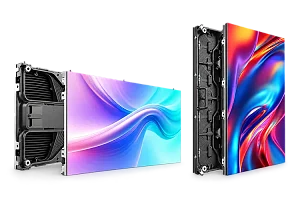
In displays, this change is already tangible. The integration of SoCs with inference capabilities —typically based on ARM architectures with dedicated NPUs— enables analytics to run directly on the screen. This removes the need to send video to a server for processing. In corporate signage or retail environments, this translates into systems capable of adapting content in real time based on presence, audience density, or basic behavioral patterns, without relying on network latency or external infrastructure.
In environments such as hotels or university campuses, this allows dynamic signage to adjust based on real-time people flow within a space, without requiring centralized backends or cloud processing. The decision happens at the endpoint.
 In cameras, the shift is structural. Edge AI is no longer limited to functions such as auto-framing or tracking. What is evolving is the entire pipeline: the image is analyzed before being transmitted. Technologies such as smart cameras with embedded analytics allow metadata to be sent instead of continuous video streams. This drastically reduces bandwidth consumption, but more importantly, it redefines what data is actually relevant.
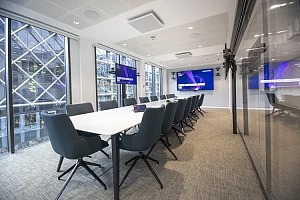
In conference rooms, this enables participant tracking or camera switching without centralized processing. In universities, it allows occupancy analytics without storing video. In corporate environments, it enables automation without compromising privacy or overloading the network.
DSPs are evolving in the same direction, although with less commercial visibility. From deterministic systems based on fixed signal paths, they are moving toward adaptive logic driven by context. This includes dynamic gain control, contextual noise reduction, or processing adjustments based on occupancy and real usage of the space. It is no longer just signal processing: it is distributed decision-making.
The critical point where all of this converges is latency. Not as an abstract metric, but as an operational limit. In boardrooms with bidirectional collaboration, hybrid auditoriums, or control environments, any reliance on centralized processing introduces cumulative delays (capture, transport, processing, return) that degrade user experience. Edge computing does not just reduce latency: it removes it as a structural dependency.
However, the most significant shift is not at the device level, but in the behavior of the system as a whole. When multiple endpoints process, analyze, and make decisions locally, the system stops behaving as a linear chain and becomes a distributed network of semi-autonomous nodes. This breaks several core assumptions of traditional AV design.
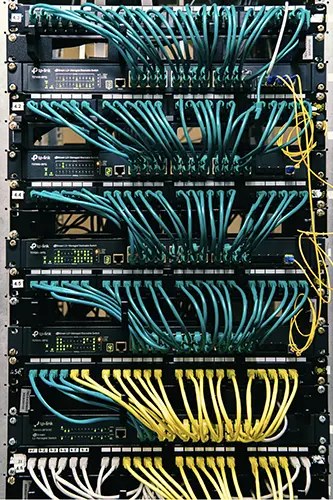
The first is hierarchy: the rack is no longer the absolute center. The second is data flow: not all information is transported, nor in raw form, nor continuously. The third is system responsibility: if intelligence is distributed, failure is distributed as well. Errors are no longer centralized; they become systemic.
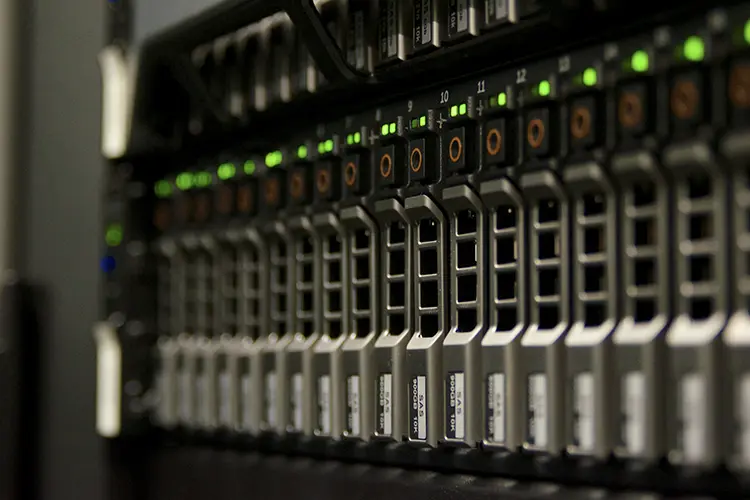
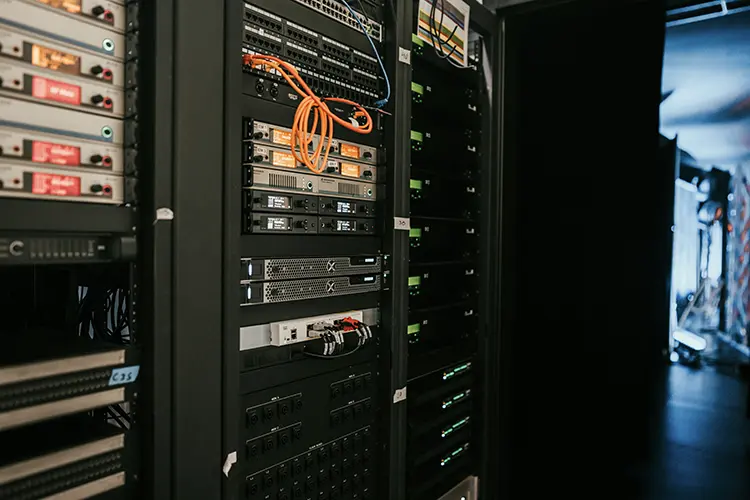
This forces a redefinition of the AV rack concept. It is no longer a signal aggregation point, but one node within a distributed architecture. It may still concentrate certain functions, but it is no longer the sole location where system logic resides.
This introduces variables that were traditionally outside the AV domain: workload management at the endpoint level, thermal dissipation in devices running continuous inference, network segmentation (VLANs, QoS) based on service types, and, critically, cybersecurity in devices that are no longer passive but active and mission-critical.
The role of the integrator is also changing. Designing an AV system is no longer just about routing signals, synchronizing sources, and defining control. It involves deciding where processing should occur, what data actually needs to move, and how to maintain operational consistency across distributed nodes. This is closer to systems architecture than to traditional AV integration.
In corporate environments, this results in meeting spaces that operate without constant dependence on servers. In universities, classrooms that adapt automatically to usage. In hotels, spaces that respond in real time to events and occupancy. This is not just a technical improvement: it is a direct operational advantage.
Edge computing does not eliminate the core, but it redefines it. The center is no longer where everything happens, but where what is already happening across distributed nodes is coordinated.
For decades, the value of AV systems was defined by the ability to transport signal with maximum fidelity. Today, that value is shifting toward what happens to that signal before it even moves. And that is not just another technological evolution. It is a fundamental shift in how audiovisual systems are designed, operated, and understood.