









The transition toward AV as a service models is often explained in financial terms, such as the shift from CAPEX to OPEX.
However, the most profound change in the professional audiovisual sector is happening elsewhere: in contracts. The growing connectivity of AV systems, their dependence on software and their integration into corporate networks are forcing a redefinition of responsibilities between manufacturers, integrators and end customers. Mandatory update clauses, cybersecurity-related obligations or service agreements based on real user experience are beginning to appear in projects where previously the focus was only on equipment and installation.
The contract no longer ends with the installation
For years, the business model of audiovisual integration was relatively stable. The client acquired the infrastructure, the integrator designed and installed the system, and the contractual relationship was limited to the warranty and, in some cases, corrective maintenance. The system was conceived as a relatively static infrastructure intended to operate for years without significant changes.
This model is beginning to fall behind. The introduction of AV over IP architectures, remote management platforms and connected devices has transformed many audiovisual installations into living technological infrastructures that depend on software and continuous update processes. As a result, the contract can no longer be limited to describing the delivery of a system, but increasingly begins to regulate its evolution over time.
This shift is bringing professional audiovisual closer to IT models, where infrastructure ceases to be a closed product and becomes a managed service.
Continuous updates as a new contractual obligation
 One of the most visible signs of this transformation is the emergence of clauses related to firmware and software updates. In environments where AV systems are connected to the corporate network, firmware is no longer an element that remains unchanged after installation.
Updates become a necessary mechanism to correct vulnerabilities, maintain compatibility with collaboration platforms or adapt to new versions of protocols and standards. This introduces a new type of operational responsibility. Each update can improve the system, but it also implies a potential risk of incompatibilities or service interruptions.
For this reason, some contracts are beginning to include update management processes that involve prior validation, maintenance windows and rollback protocols in case of incidents. What was once a one-off task is becoming a structural obligation within the system’s lifecycle.
When AV enters the field of cybersecurity
The convergence between AV and IT has also opened a front that until recently remained outside the sector’s usual concerns: network security.
Today’s audiovisual devices —from videoconferencing codecs to digital signage systems or room controllers— are part of the same digital infrastructure that supports the critical services of many organizations. This means that any vulnerability in these devices can become a potential entry point for attacks.
Faced with this reality, contracts are beginning to explicitly address issues related to security patch management, remote access control or the integration of AV systems into the client’s cybersecurity policies. The key issue is no longer purely technical but also legal: determining where the manufacturer’s responsibility ends, where the integrator’s begins and what role the organization’s IT department should play.
SLAs focused on real user experience
Another evolution beginning to emerge in the sector affects service level agreements. For years, these agreements were mainly based on technical indicators such as system availability or response times to incidents.
However, in corporate environments where audiovisual rooms are used for hybrid collaboration, training or internal events, technical availability does not always reflect the real experience of users. A system may be technically operational and still provide a poor experience if meetings take too long to start or if audio and video quality are not adequate.
For this reason, some contracts are beginning to introduce metrics that are much closer to real user experience. This requires integrators to adopt more advanced monitoring tools and to develop more proactive support models aimed at detecting problems before they become visible incidents for the user.
The integrator as a technology operator
The combined effect of these transformations is redefining the role of the integrator within the audiovisual ecosystem. The traditional figure of the provider who designs and installs infrastructure is giving way to a profile much closer to that of a technology service operator.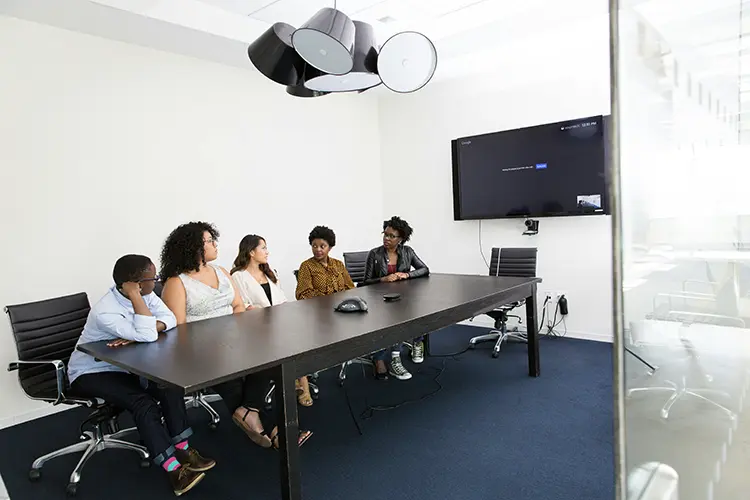 In service-based models, the integrator is responsible not only for the quality of the installation, but also for the continuous operation of the system, its technological evolution and compliance with certain service levels over time.
In practice, this means assuming operational risks that in the past fell on the client or simply did not form part of the scope of an audiovisual project.
A revolution that begins in contracts
In the debate around AV as a service, much of the attention has focused on financial models or on the budgetary advantages for organizations. However, the most profound change in the sector may be occurring in a much less visible area: the way responsibilities are defined within contracts.
As professional audiovisual systems become increasingly integrated with the digital infrastructure of companies, contracts are beginning to reflect an evident reality. AV is no longer simply equipment installed in a room, but an active part of an organization’s technological architecture. And this evolution is forcing the sector to rethink, from the ground up, the rules that for decades have defined the relationship between clients, manufacturers and integrators.