








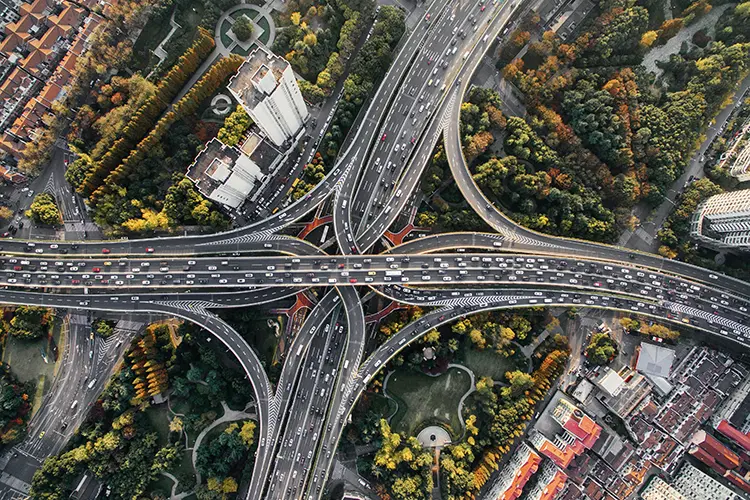
The evolution towards smart cities has become one of the main drivers of innovation.
The rise of distributed sensors, the emergence of new communication protocols, and the exponential increase in data processing capacity have enabled urban mobility challenges to be tackled with a comprehensive and real-time approach.
Below, we present a more technical overview detailing how the implementation of IoT technologies, data analytics, and dynamic management platforms is revolutionizing the way traffic is understood and managed in urban environments.
IoT infrastructure and communication protocols
The technological foundation of a smart city focused on mobility lies in the infrastructure of sensors and IoT devices (Internet of Things). Smart traffic lights, video analytics cameras, vehicle counting devices, and speed measurement radars, among others, generate a constant flow of data that is shared with traffic control centers. To ensure this information is delivered in a reliable and secure manner, selecting the appropriate communication protocols and networks is crucial.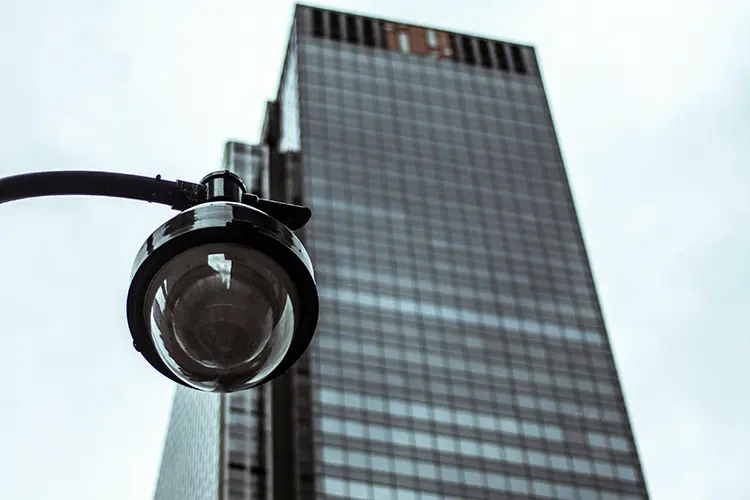
- LPWAN Networks (Low-Power Wide-Area Network): Technologies such as LoRaWAN and Sigfox are ideal for low-power, long-range sensors. They allow the deployment of wireless devices that report traffic data, air quality, or road conditions without requiring high energy consumption.
- NB-IoT and LTE-M: These cellular standard variants were specifically designed for IoT, offering good coverage in dense environments and the capability to transmit data in near real-time.
- 5G Networks: With its low latency and high speed, 5G enables the transmission of large volumes of information generated by high-resolution cameras and video surveillance systems. Additionally, it supports autonomous driving applications, an important pillar in the future of smart mobility.
The selection of communication technology largely depends on the type of device (sensors, cameras, control systems) and on the requirements for latency, bandwidth, and coverage. For system integrators, it is essential to assess the needs of each measurement point and design a robust network architecture that ensures service continuity.
Data integration and management platforms
Once data from multiple sources is collected, the key lies in its ingestion and processing on unified management platforms. These solutions, which rely on Big Data architectures, store and manage massive volumes of information in real time.
- ETL and Data Streaming: Extraction, Transformation, and Loading (ETL) processes feed data lakes and data warehouses where millions of daily events (for example, vehicle counts, traffic light waiting times, incidents reported by municipal police) are consolidated. However, in mobility scenarios, real-time data is especially critical, which is why data streaming technologies such as Apache Kafka or RabbitMQ are increasingly used.
- Advanced Processing and Analytics: Machine learning techniques and predictive analytics help detect patterns that optimize decision-making. For example, an algorithm can anticipate unusual congestion based on historical data and contextual variables (rain, peak hours, major events) and propose adjustments to traffic light cycles. Libraries and frameworks like TensorFlow, PyTorch, or Spark ML—running on clusters of high-availability servers—are employed for this purpose.
- Integration and Visualization Platforms: Typically, traffic operators work with dashboards that display a real-time city map, incident alerts, vehicle counts, and immediate action recommendations. These platforms, based on software such as SCADA (Supervisory Control and Data Acquisition) or specific traffic management systems (ATMS, Advanced Traffic Management Systems), must have well-defined APIs to connect with other urban services and facilitate interoperability.
Real-time control and response
One of the most challenging aspects is the ability to execute actions automatically and dynamically. The goal is to reduce congestion and improve safety by acting on infrastructure (traffic lights, information panels, reversible lanes) based on optimization algorithm outputs.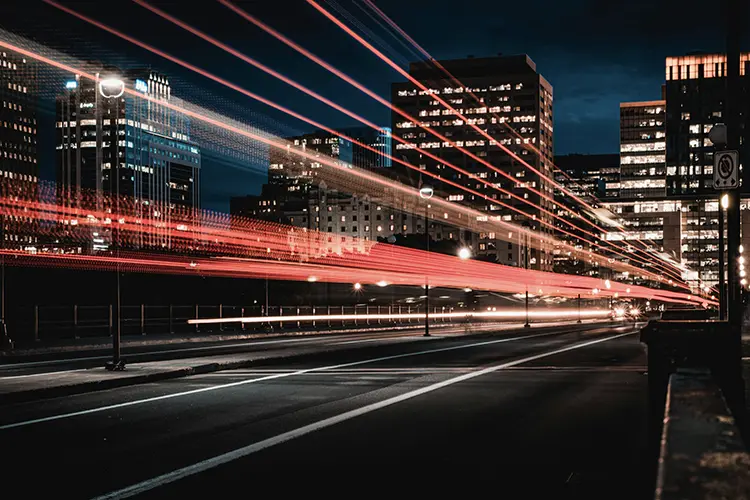
- Smart Traffic Light Systems: These use traffic controllers that adjust the duration of phases based on actual demand detected by inductive sensors or video cameras with image analysis. The use of protocols such as NTCIP (National Transportation Communications for Intelligent Transportation System Protocol) in some regions ensures compatibility among different manufacturers and facilitates infrastructure evolution.
- Adaptive Lane Management: In areas with high vehicle density, reversible lanes can be enabled or public transportation prioritized during peak hours. Variable message signs and smart signage are updated in seconds to reflect changes in traffic direction or the priority passage for buses and trams.
- Interconnection with Emergency Services: Prioritizing ambulances, firefighters, and police is made possible through real-time communication between emergency vehicles and the traffic light network, reducing response times and enhancing public safety.
Cybersecurity and privacy
The introduction of thousands of IoT devices and the continuous connection of critical systems in traffic management pose considerable cybersecurity risks. Cities must implement defense-in-depth strategies that include end-to-end encryption, network segmentation, and continuous monitoring to detect any intrusion attempts. Additionally, regular audits and the adoption of international standards (such as ISO/IEC 27001) reinforce the capacity to respond to potential incidents. Furthermore, the massive collection of location data and citizen mobility patterns presents privacy challenges. To prevent misuse of personal data, many systems employ anonymization and aggregation techniques that block individual traceability. Ensuring citizens' trust in management platforms is essential for the success of smart mobility initiatives.
Integration with other urban subsystems
In a smart city, mobility cannot be considered in isolation. It is essential to establish synergies with other urban subsystems:
- Electric Grid and Electric Transportation: The incorporation of charging stations for electric vehicles involves coordinated control of energy demand, avoiding peaks that could compromise grid stability.
- Smart Buildings: Information on occupancy and activity schedules in corporate buildings can help predict traffic peaks during entry and exit times, thereby optimizing public transport routes and pedestrian flow.
- Water Supply and Waste Management: Coordinated management of water supply and waste collection, based on knowledge of off-peak hours, reduces the interference of heavy trucks in overall traffic flow.
This holistic vision requires a standard or framework for interoperability that facilitates the seamless exchange of information between platforms. Proposals such as FIWARE, a set of open-source software components, have become the reference option in the European Union, enabling integrators to implement scalable and homogeneous solutions.
Conclusions
The application of IoT technologies, data analytics, and real-time management systems in urban mobility forms the core of smart cities. From the careful selection of communication protocols and data processing platforms to the orchestration of predictive algorithms and integration with energy and building subsystems, deploying these solutions demands a high level of expertise from industry professionals.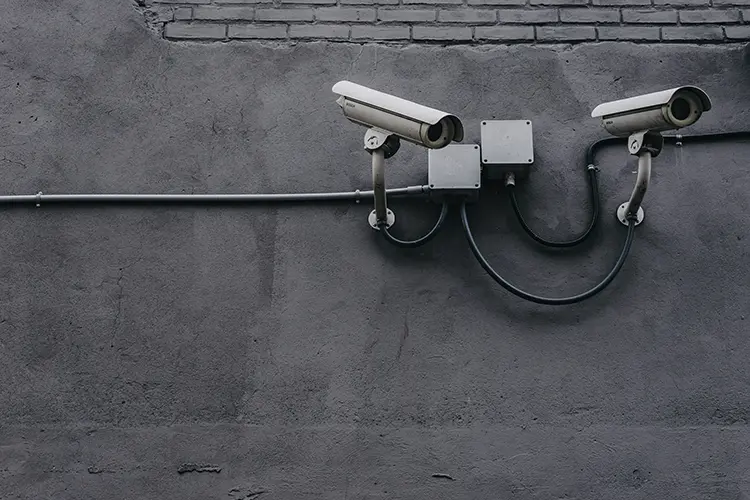 The promise of agile, safe, and sustainable urban mobility not only translates into shorter travel times and reduced pollution but also into the creation of a robust technological ecosystem capable of adapting to future challenges.
As the industry evolves, collaboration among government agencies, system integrators, telecommunications providers, and software developers becomes indispensable to realize the potential of smart cities and ensure that digital transformation yields tangible benefits for the population and genuine optimization of urban infrastructure.