










Digital transformation has redefined security for companies, institutions, and commercial spaces.
While proximity cards and physical keys were once standard in access control, mobile credentials are now emerging as the most innovative, secure, and efficient solution. Could this mark the end of traditional methods?
Mobile credentials: smart access
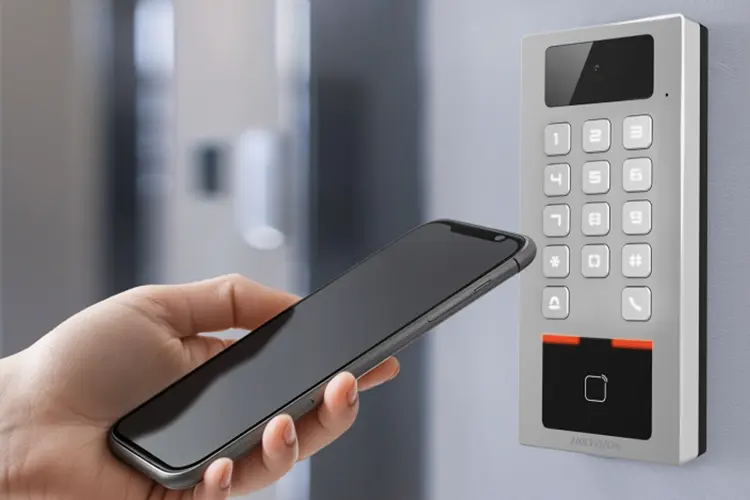
Mobile credentials are digital authorizations stored on smartphones and smartwatches, allowing users to enter facilities without physical cards. They use technologies such as Near Field Communication (NFC), Bluetooth Low Energy (BLE), and QR codes to authenticate identities quickly and securely.
Unlike traditional systems, these credentials can be updated or revoked in real-time and often include biometric authentication and advanced encryption to minimize risks of unauthorized access.
Key benefits of mobile credentials
- Enhanced security, fewer risks: Physical cards can be lost or cloned, whereas mobile credentials minimize these risks by operating from personal devices with multifactor authentication (MFA).
- Convenience and accessibility: Users no longer need to carry additional cards or keys; access is managed directly through their mobile device.
- Sustainability: Eliminating plastic cards reduces ecological footprints and promotes responsible resource management.
- Integration with other platforms: From time and attendance controls to building automation, mobile credentials integrate seamlessly with various management platforms.
Impact on businesses: efficiency and savings
For organizations, implementing mobile credentials not only enhances security but also optimizes operations and reduces costs:
- Lower spending on physical cards: No printing or replacements due to loss or wear.
- Remote, real-time management: Full access control from anywhere.
- Improved experience for employees and clients: Quick, hassle-free access.
- Greater control and traceability: Real-time access monitoring and data collection.
Where are they being implemented?
- Businesses and offices: Entry to buildings and restricted areas without physical cards.
- Universities: Digital authentication for campus and library access.
- Hospitals: Secure entry to operating rooms and sensitive areas.
- Hotels: Digital keys for room and facility access.
- Events and commercial spaces: Streamlined access control using digital credentials.
Challenges and considerations
Although mobile credentials offer many advantages, adopting them requires certain adjustments:
- Battery and device dependence: Users must maintain charged and functioning devices.
- Adapting infrastructure: Ensuring compliance with existing NFC or BLE systems.
- Regulatory compliance: Protecting user data according to regulations such as GDPR.
Conclusion: the future of access control is digital
Mobile credentials represent the future of access control, driven by digitalization and the growing need for advanced security in corporate and commercial environments. As digital transformation continues accelerating, traditional access cards might soon become a thing of the past.
In a rapidly digitalizing world, will physical access cards soon become obsolete?