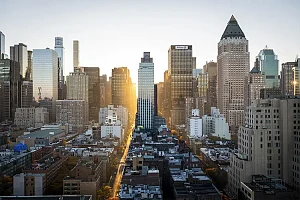













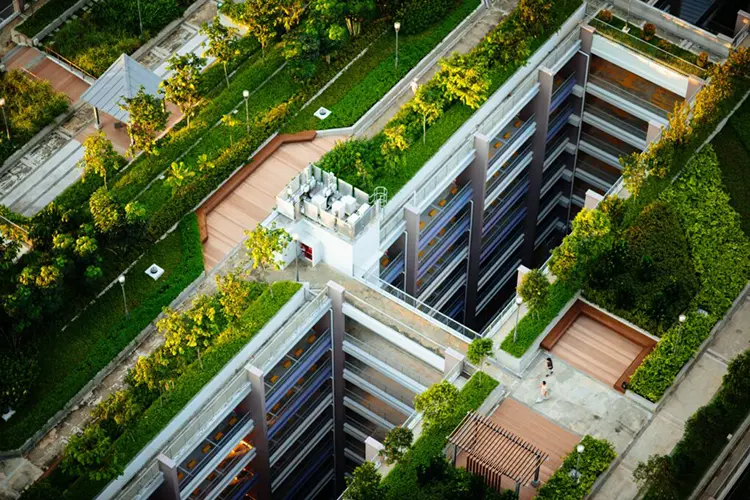
Cities face global challenges where buildings play a key role due to their impact.
In a context of climate change, urbanization, and new technologies, it is essential to rethink their adaptation to address these complex demands.
We are facing a paradigm shift that involves practicing integral regeneration of the built environment to reduce emissions. Integral regeneration of the environment is a way to cooperate in reducing CO2 emissions, addressing the environmental challenges of society, and improving citizens' quality of life.
Focusing on population needs
The United Nations’ 2030 Agenda has the motto "Adapting our homes and buildings deeply and with an integrated perspective, and improving our neighborhoods and territories, is a sine qua non condition to face the major challenges of the 21st century and the foundation for medium- and long-term well-being that leaves no one behind."
This agenda, together with national Urban Agendas, the New European Bauhaus, and the Architecture Quality Law, sets the references and the roadmap for urbanism in the present and future, always from a sustainability perspective: revitalizing urban areas by integrating economic, social, functional, cultural, and environmental factors to create more resilient and sustainable cities, ultimately moving toward a more just and equitable society.
In this process, public administrations (especially), entities, and companies in the sector, as well as professionals, together with civil society, must seek and offer innovative, creative, and respectful solutions for our historical and cultural heritage to optimally respond to current challenges and population needs. Improving urban environments and their adaptation to the challenges of our time.
Decarbonization in building
Buildings, in a context of climate change, have a significant impact: at the European level, they are responsible for 40% of energy consumption and 36% of CO2 emissions derived from energy. At the national level, they account for 30.1% of final energy consumption and 25.1% of emissions, of which 8.2% are direct emissions.
The building stock is inefficient and outdated, and most of our environment is already built. Therefore, investing in integral rehabilitation and sustainability in construction is no longer an option but a necessity. Acting on building decarbonization throughout its lifecycle, from construction to use, will help achieve a net-zero emissions future.
As Dolores Huerta, General Director of Green Building Council Spain, stated in an interview published on our blog, "Decarbonization is the most visible challenge (though not the only one) that will transform the building sector in the coming years." It is the main challenge, leaving no room for excuses, as its impact on the climate and atmosphere is direct, and the ultimate goal is to improve people’s quality of life.
In both interventions in existing buildings and the construction of new ones, other important criteria beyond decarbonization cannot be ignored: rational use of resources, sustainable water management, health and comfort inside buildings, impact on biodiversity, physical and economic accessibility to housing and facilities, and adaptation to climate change effects, among others.
In this process, circular design is becoming a 'must,' redefining the lifecycle of resources, promoting reuse, recycling, and waste minimization. In urban contexts, this translates to sustainable building materials, modular infrastructures, and renewable energy systems.
Shifting from a linear to a circular economy is another major challenge, bridging environmental and economic goals. This implies advancing toward hybrid urbanism models as a suitable transitional dynamic for all contexts.
Ultimately, ensuring a renewed building stock in resilient, sustainable cities that act as active agents of environmental and social regeneration.
Responsive and conscious cities
Focusing on people means discussing 'responsive cities,' which integrate smart technologies and citizen participation to dynamically adapt to emerging needs. Using sensors, data analysis, and communication networks, these cities optimize energy consumption, water management, and urban mobility. This model not only mitigates climate change effects but also promotes social equity and quality of life.
Cities are conscious to the extent that their citizens are conscious. Their state depends on the citizens who inhabit, manage, and use them. A conscious city must be managed responsibly by accountable individuals (with collective responsibility). We must be proactive and demand planners, decision-makers, and managers ensure cities respond to new life models and demands.
Citizens must demand changes in administrative structures and regulations, integrating bodies that currently systematically separate projects (reducing efficiency).
Here, communication and information should gather construction technology and strategy. Providing stakeholders with actionable data (avoiding manipulation) and ensuring information serves us and participation is self-critical—that is consciousness, as well as access to knowledge.
Initiatives and examples for urban regeneration
The Aalborg Charter and the Leipzig Charter emphasize the importance of comprehensively addressing urban area needs, including economic, social, and environmental aspects, with a particular focus on improving disadvantaged areas.
In addition to these documents, internationally, the aforementioned UN 2030 Urban Agenda, as well as the Amsterdam Pact (European Urban Agenda) and the Quito Pact, set the path forward. At the national level, the Spanish Urban Agenda establishes up to ten strategic objectives.
Three prominent global cases illustrate this transformation: the regeneration of the Abandoibarra area in Bilbao, the integral intervention in vulnerable communes in Medellín (Colombia), and the Cheonggyecheon River project in Seoul (South Korea). These examples show how urban regeneration can address multiple dimensions to create resilient and sustainable cities, turning challenges into development opportunities.
However, there are many other 'micro' initiatives that are equally significant and useful, such as building rehabilitation offices and citizen information offices. These play a fundamental role in providing access to information, advice, and assistance processing, building trust, and facilitating the process.
Other notable works include the report Decarbonization of buildings throughout their lifecycle: a step-by-step guide for cities, prepared by GBCE in collaboration with the citiES platform and the Carbon Neutral Cities Alliance (CNCA). This document serves as a guide or compilation of recommendations and best practices for Spanish cities to expand their decarbonization initiatives throughout all phases of a building’s lifecycle.
At the national level, the 2030 Observatory of CSCAE has issued the report City and Territory in Regeneration, which facilitates coordination and activation of necessary measures among public administrations, sector companies, and professionals for fair progress that bridges urban gaps and avoids unequal growth.
In Europe, NetZeroCities is known for bringing together 34 city networks and leading research organizations from 13 countries. Internationally, the Global Fab City Initiative is a pioneering movement transforming cities worldwide through social innovation projects, urban research, and educational programs.
Construmat 2025 will showcase how to move towards a better society for all, ensuring environmental and territorial rebalancing.