













In the era of hyperconnectivity, audiovisual technology is transforming traditional physical spaces.
By 2025, hotels, airports, shopping malls, universities, and corporate environments will not only be more efficient but also more immersive, interactive, and sustainable. AV integration, combined with artificial intelligence (AI), IoT, and automation tools, is redefining how people experience and use these spaces.
The key to this revolution lies in turning physical spaces into intelligent ecosystems. For example, in a hotel, a guest will no longer need to manually adjust the temperature or lights upon entering their room. Automation systems driven by sensors and predictive data will automatically set the environment according to user preferences. In a shopping mall, digital displays will not just show promotions but also recognize behavioral patterns to offer personalized content for each customer, increasing engagement and conversion.
In airports, travelers will experience much more intuitive navigation thanks to dynamic digital signage combined with directional audio that individually guides each user, avoiding information overload. Augmented reality (AR) could be added to provide real-time interactive maps, optimizing foot traffic and reducing the stress of navigating terminals. This not only enhances the user experience but also optimizes energy use, reduces operational costs, and increases sustainability.
New tools for AV integration
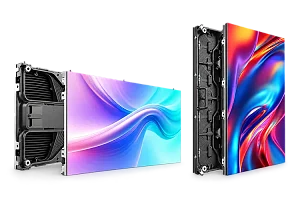
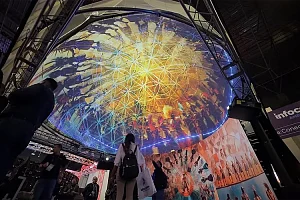
Technological advances are taking AV integration far beyond traditional solutions. High-resolution modular LED screens, which already dominate the market, are evolving into ultra-thin and curved formats, perfect for architects pursuing cutting-edge designs. Next-generation laser projectors, more compact and with extended lifecycles, are revolutionizing applications in large venues such as stadiums and event spaces.
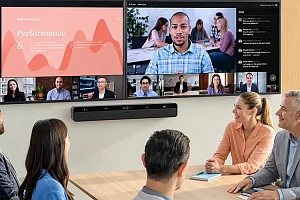
AI is playing a central role in this transformation. For instance, AI-based centralized management systems enable monitoring and controlling audiovisual devices across multiple locations from a single interface. This not only simplifies daily operations but also provides valuable analytical data to optimize equipment use and anticipate failures before they occur.
The role of AV integrators, architects, and designers
For AV integrators, this landscape opens up a world of possibilities. Technology is no longer just a tool to fill a space; it is an integral part of the design and functionality of buildings. For example, by collaborating with architects, integrators can ensure that AV systems are fully integrated into the space's design, achieving a balance between aesthetics, functionality, and sustainability.
Designers and project managers have the opportunity to work with AV specialists to create environments where every detail is designed to enhance the user experience. From selecting materials that improve acoustics to strategically placing screens and speakers, everything can be planned with unprecedented precision.
A future driven by sustainability
In parallel, sustainability is shaping the agenda for audiovisual integration. Energy optimization through smart sensors, automatic shutdown systems, and low-consumption AV devices is increasingly in demand. The ability to measure and reduce the environmental impact of projects has become a key added value for clients across all sectors.
By 2025, physical spaces will not just be functional places but complete experiences designed to surprise, inspire, and adapt to the changing needs of people. For AV integrators, engineers, architects, and designers, the question is not whether this transformation will happen but how they can lead it. Are you ready to redefine the concept of space in the next era of audiovisual integration?