The integrator must stay at the forefront of technologies to offer robust, scalable, and efficient solutions.
AV integration has transformed with the advent of IP networks, advanced automation, and increasing user expectations regarding quality and ease of use.
This guide aims to provide audiovisual integrators with a set of strategies and technical knowledge to excel in modern audiovisual system integration.
AV Integration Fundamentals: Understanding the Network and Traffic
The design of a modern audiovisual system cannot be conceived without a solid network infrastructure. Today, most AV systems are integrated with IP networks, allowing for more flexible transmission of audio and video, but also posing challenges regarding bandwidth and latency.
| |
|
| |
- Prioritize AV traffic: Use Quality of Service (QoS) on switches to ensure audio and video streams take precedence over conventional data traffic.
|
| |
|
| |
- Use managed switches: Implementing managed switches that support AVB or Dante protocols will allow for greater control and reliability over AV transmissions.
|
| |
|
| |
- Adequate bandwidth: Ensure the infrastructure supports 4K video resolutions or higher, with enough bandwidth for multiple simultaneous streams without affecting the quality of the user experience.
|
| |
|
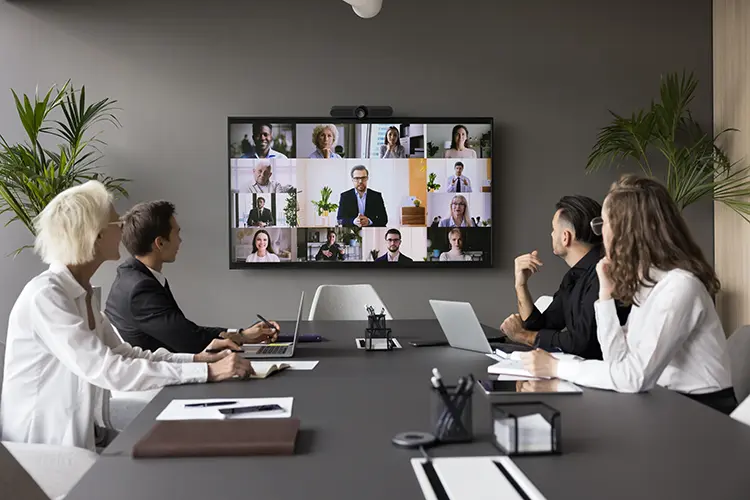
AV over IP: Changes and Challenges
The migration of audiovisual systems to IP networks has revolutionized the way solutions are designed and implemented. The use of AV over IP allows for greater design flexibility as well as the ability to expand systems without costly infrastructure changes.
| |
|
| |
- Protocols like Dante and AVB: Become familiar with the main standards dominating audio-over-IP integration. Dante is widely used in audio solutions for its low latency and ease of configuration, while AVB ensures precise synchronization in complex AV environments.
|
| |
|
| |
- Compression vs. Quality: If you work with networks limited in bandwidth, consider using codecs like H.264 or H.265, although these may introduce slight delays. For real-time environments where latency is critical, it is better to prioritize an infrastructure capable of handling uncompressed or minimally compressed video.
|
| |
|
System Control and Automation: Maximizing Efficiency
Automation and centralized control are essential for delivering efficient and user-friendly AV solutions. Control systems allow users to manage all audiovisual components from a single interface, eliminating complexity and improving the user experience.
| |
|
|
| |
- IP-based control systems: Platforms like Crestron, AMX, or Extron allow device control through intuitive interfaces, customizable to the client's needs. These systems facilitate centralized management of conference rooms, auditoriums, and even complex installations such as stadiums or educational centers.
|
|
| |
|
|
| |
- Integration with BMS: If the project requires it, it is advisable to integrate AV systems with the client's Building Management System (BMS), allowing for complete control not only of AV but also lighting, climate control, and other building functionalities, creating a fully automated environment.
|
|
| |
|
|
| |
- Event-based automation: Configuring automatic actions in response to certain events (such as turning on the projector when it detects movement in the room or adjusting lighting based on the time of day) adds value to the integration and improves the user experience.
|
|
| |
|
|

The Role of Cybersecurity in AV Systems
With the growing reliance on IP networks for audiovisual systems, cybersecurity has become a critical concern. Integrators must design solutions that are not only functional but also secure.
| |
|
| |
- Network isolation: To minimize security risks, segment the AV network from the client's main data network. This can be achieved through VLANs or dedicated firewalls.
|
| |
|
| |
- Constant firmware updates: Many AV devices connected to the network are vulnerable to security risks if not updated regularly. Keeping the firmware up-to-date is key to preventing potential attacks.
|
| |
|
| |
- Authentication and encryption: Implement secure authentication methods, such as using strong passwords and multi-factor authentication, in addition to encrypting sensitive data traffic when necessary.
|
| |
|
Project Planning and Management: Optimized Workflow
Planning is one of the most crucial aspects of any AV integration project. From the initial design phase to the final installation, having a structured and efficient workflow is essential to avoid issues during implementation.
| |
|
| |
- Discovery phase: Before designing any system, thoroughly understand the client's needs. This includes not only technical requirements but also the desired user experience.
|
| |
|
| |
- Detailed documentation: Ensure meticulous documentation of every step of the process, from the wiring scheme to device configurations. This makes future expansions or maintenance easier.
|
| |
|
| |
- Testing and verification: Before project delivery, conduct thorough tests to ensure the entire system functions as expected. This includes both performance tests and a review of the final user experience.
|
| |
|
Conclusion
Audiovisual system integration in a professional environment requires a deep understanding of emerging technologies and industry standards. By mastering IP networks, advanced automation, cybersecurity, and project planning, integrators can offer powerful and efficient solutions that meet the growing expectations of clients. The future of AV lies in the convergence of IT and AV, and professionals who adapt to this new paradigm will be better positioned to lead in a constantly evolving market.