












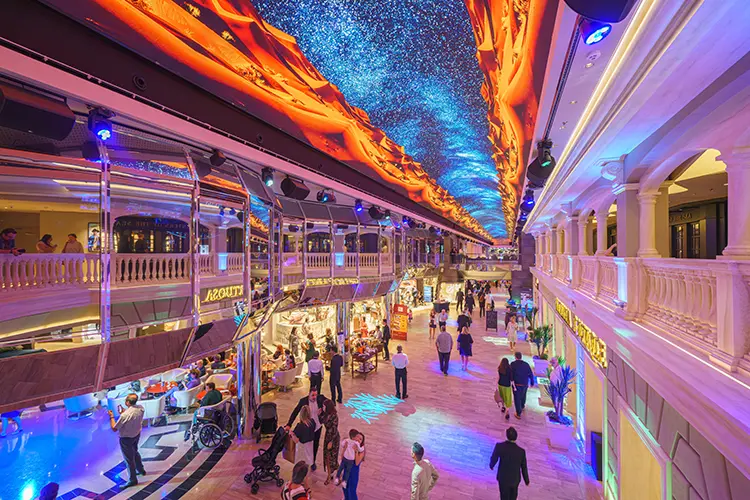
In 2024, audiovisual integration in cruise ships and transatlantic vessels has reached a new level of complexity and technical demands.
It is not just about enhancing the passenger experience but ensuring that every audiovisual (AV) element operates optimally in a dynamic and challenging maritime environment.
Next-generation LED screens, AVoIP, and audio and video systems specifically designed to withstand the extreme conditions of the sea have redefined how AV installers approach projects in these environments.
This article provides an in-depth look at the key challenges and solutions faced by industry professionals, focusing on critical technologies, integration planning, and the impact on daily operations for both passengers and crew.
High-performance led screens in marine environments
LED screens are undoubtedly an essential component in large cruise ships and transatlantic vessels. However, the technical demands they must meet go beyond what is typically found in land-based installations. Outdoor screens must provide high levels of brightness (nits) to ensure visibility in direct sunlight, in addition to being built with enclosures resistant to salt corrosion and marine weather. IP65 certification or higher is mandatory in these contexts. Furthermore, integrators must consider the refresh rate to avoid flickering and ensure a seamless visual experience, even during live sporting events or nighttime shows.
The additional challenge for integrators is the correct calibration of color and uniformity in an environment where lighting conditions and available space change drastically between different locations on the ship. Preventive and corrective maintenance, therefore, plays a crucial role in ensuring the longevity of these screens, and the choice of technologies with integrated self-diagnostic systems can significantly reduce downtime.
AVoIP: optimizing communication and entertainment onboard
The deployment of AVoIP is one of the most significant advancements in audiovisual systems for cruise ships and transatlantic vessels. Distributing audio and video signals over IP networks not only offers unprecedented flexibility but also enables centralized integration of AV systems onboard. In large vessels, where physical distances are considerable, AVoIP is essential to ensure latency-free transmission of audiovisual content, from cinemas and theaters to private cabins.
For integrators, this involves not only designing the network infrastructure but also managing bandwidth and prioritizing AV traffic to avoid latency issues or packet loss. Setting up dedicated VLANs and using protocols such as Dante or AES67 for audio, along with SDVoE or NDI for video, are key to achieving stable and high-quality distribution in environments with such specific demands. Additionally, network redundancy must be a priority, as a failure in the AV distribution system can impact not only entertainment but also critical and emergency communications.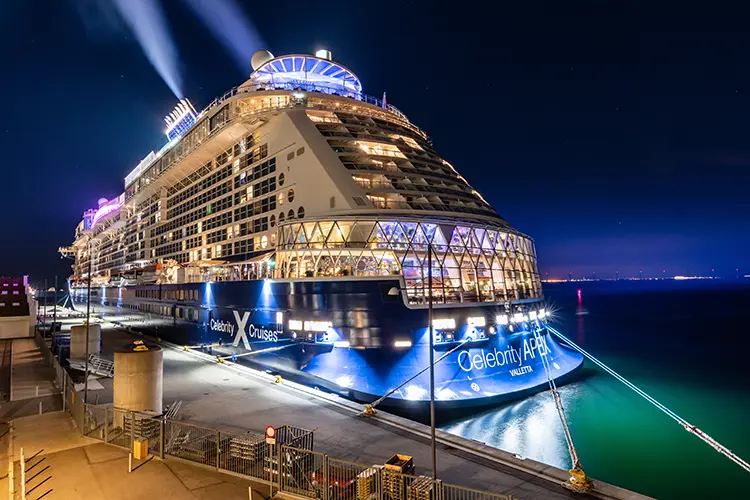
AV systems designed for marine environments
AV equipment used in marine environments requires a specific design to withstand adverse conditions. Speakers, for example, must be made from corrosion-resistant materials and, in many cases, be waterproof or hermetically sealed to prevent damage from moisture and salt. Marine speakers, microphones, and intercom systems must comply with specific safety regulations, such as DNV or SOLAS certification, ensuring not only durability but also their functionality in critical situations.
Furthermore, integrating AV systems on cruise ships involves considering the constant vibrations of the vessel. This affects not only the installed devices but also the support structures and wiring, necessitating specialized mounting and damping solutions. Rack units must be secured with anti-vibration mounts, and cables should be used with ties and conduits designed to prevent wear from friction or movement.
AV planning: key to successful integration
AV planning and design on cruise ships is a phase that cannot be underestimated. It involves meticulous coordination between AV integrators, infrastructure engineers, and ship operators. In these types of projects, early planning is critical to avoid incompatibilities between AV systems and other ship networks, such as data networks, security systems, and building management systems (BMS).
Planning for redundancy and scalability of the system is essential. In many cases, cruise ships or transatlantic vessels may undergo renovations and upgrades, so the systems must be flexible enough to adapt to future changes without the need for a complete overhaul of the infrastructure. Integrators should consider emerging trends in AV, such as the adoption of 8K, HDR, and immersive audio, to ensure that the system installed today remains relevant and efficient in the coming years.
Impact on daily operations: enhancements for passengers and crew
Audiovisual systems on cruise ships not only enhance the passenger experience but also optimize onboard operations for the crew. In-room entertainment systems, with on-demand content and interactive panels, allow for a fully personalized passenger experience, while digital signage systems in shops, restaurants, and other commercial areas facilitate the management of announcements, promotions, and events.
For the crew, AV systems play a crucial role in safety and operational efficiency. AVoIP-based communication systems allow for clear and rapid dissemination of messages throughout the ship, especially in emergency situations. Voice alarm systems, integrated with the general AV systems, ensure that critical announcements are broadcast simultaneously in all areas of the ship, including entertainment spaces and common areas.
Conclusion
In 2024, AV integrators face unique challenges in designing and installing audiovisual solutions for cruise ships and transatlantic vessels. The implementation of LED screens, AVoIP systems, and equipment specifically designed for the marine environment not only enhances the passenger experience but also optimizes the daily operations of the crew. Meticulous planning, proper equipment selection, and attention to the particularities of the maritime environment are key factors for success in these types of installations. With a focus on durability, flexibility, and scalability, AV integrators play an essential role in the technological evolution of the maritime sector.